
Tech Life Journal
Tech Life Journal 
  • Home
  • Categories
    • Innovation
    • Digital Tools
    • Smart Living
    • Health Tech
    • Gear Review
    • Digital Life
    • Tech Travel
    • Voices in Tech
  • Featured
August 11.2026
1 Minute Read

Anatomy of an Online Con: How Famous Scammers Weaponize Trust to Steal Millions

Did you know over $4.2 billion was lost to online scams in just one year? Understanding how high-profile scammers manipulate trust is crucial to protecting yourself. Learn the tactics to identify and avoid these sophisticated cons before they drain your savings.

In this comprehensive guide, we’ll break down the exact ways scammers build false credibility online, prey on human nature, and turn everyday interactions into elaborate traps. You’ll gain not only awareness, but also tools you can use to stay safe on social media, email, and text messages.

What You'll Learn About How to Spot High Profile Online Scam Tactics

  • How high profile scammers target human psychology

  • Key signs of an online scam in social media, email, and text messages

  • Detailed breakdowns of the most trusted online scam tactics

  • Expert advice on ways to protect yourself from famous schemes

The Rise of High Profile Online Scam Tactics

"The smartest fraudsters don’t just steal your money—they steal your trust first."

Faceless scammer operating multiple devices – online scam in a dimly lit digital home office with glowing screens

The rise of high profile online scam tactics reflects the digital world’s vulnerability and the adaptability of scammers. No longer are online scams random; instead, they are orchestrated, often exploiting major social media platforms, email, and text message channels. Scammers target every demographic, using the credibility of technology companies and the urgency of manufactured crises to break down the walls of skepticism.

Today’s online scam is not just about quick theft; it’s about engineering trust before the con. Social media especially has become a hunting ground, with fraudsters delivering well-crafted messages directly to your phone or inbox, making scams harder to spot and easier to fall for. By understanding these evolving threats, you’ll be better equipped to respond to warning signs and defend your data and finances.

The evolution of online scam techniques is driven by increased access to victim data via breaches, artificial intelligence, and the rapid public sharing of information online. Major news stories about lost money, hacked accounts, or identity theft contribute to a sense of urgency and fear, which scammers deliberately exploit. Recognizing how social media posts, email or text messages, and even phone calls can be weaponized is the first step in spotting red flags before it’s too late.

Why Scams Target Vulnerabilities in Human Psychology

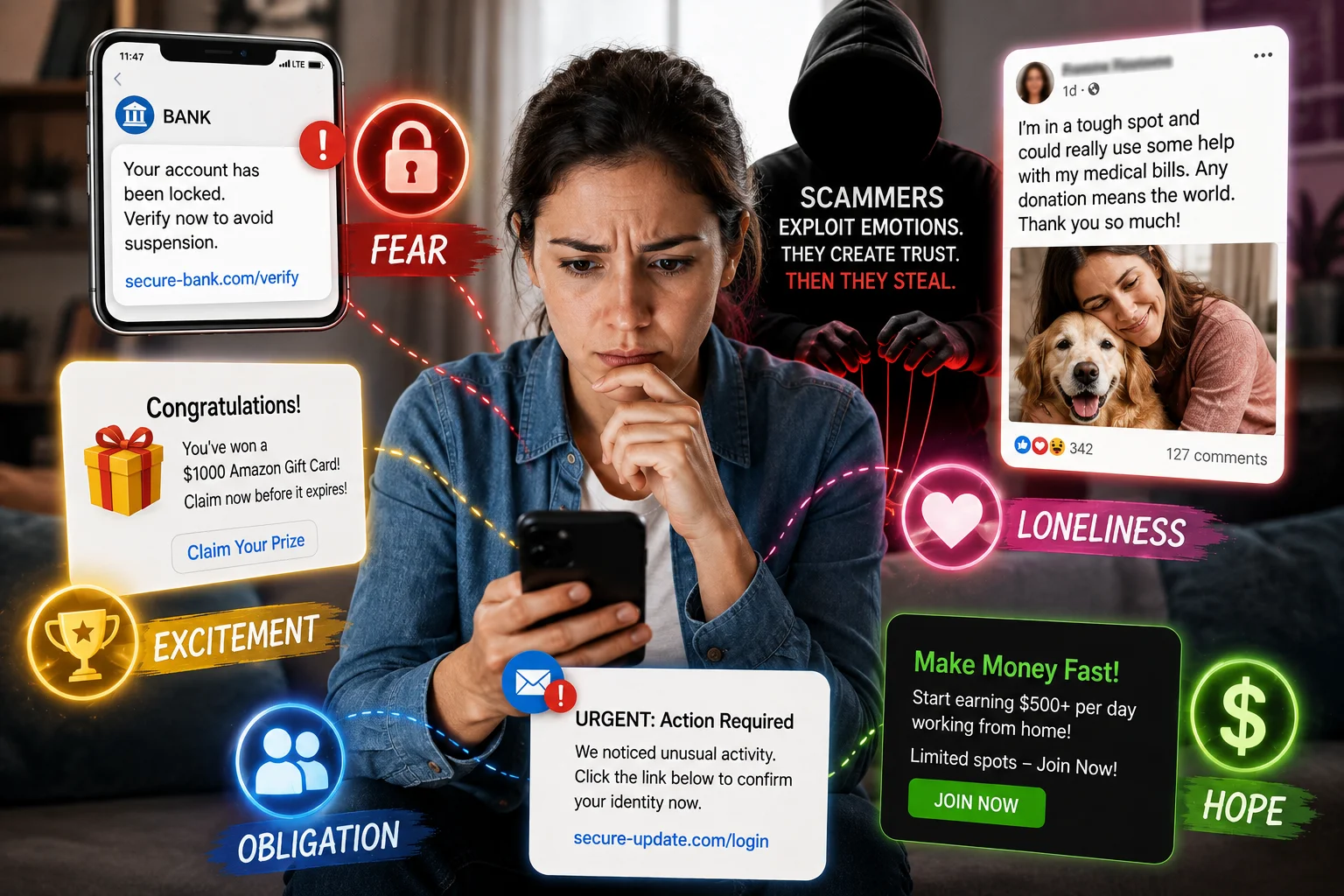
High profile online scam tactics work so well because they are meticulously designed to exploit our natural psychological blind spots. Scammers target emotions such as fear, excitement, loneliness, and obligation—turning moments of doubt, hope, or panic into opportunities for deception. Whether it’s a fake urgent text message from a “bank” or a heartfelt story on social media, these messages play on our willingness to trust.

By offering a great deal, scaring you with a crisis, or impersonating a family member or technology company, scammers pull you into their carefully constructed narrative. Understanding how scams target human psychology is essential for defense, since awareness is often the strongest barrier to manipulation.

Critical to their success is the ability to move fast—scammers ramp up the pressure so victims have little time to verify facts or consult others. This manufactured urgency, combined with the illusion of credibility (like fake testimonials or endorsements), makes it harder to resist.

People who have lost money to scammers frequently report feeling “pressured” or “pulled in” at the critical moment, showing just how powerful these emotional triggers are in online scam tactics.
Online Scam Trends and Emergence on Social Media Platforms

Social media platforms have become hotbeds for online scam activity. Scammers exploit the trust we place in familiar brands, friends, and even influencers, often by hijacking legitimate accounts or creating near-perfect imitations. They use messaging features and public profiles to reach vast audiences quickly.

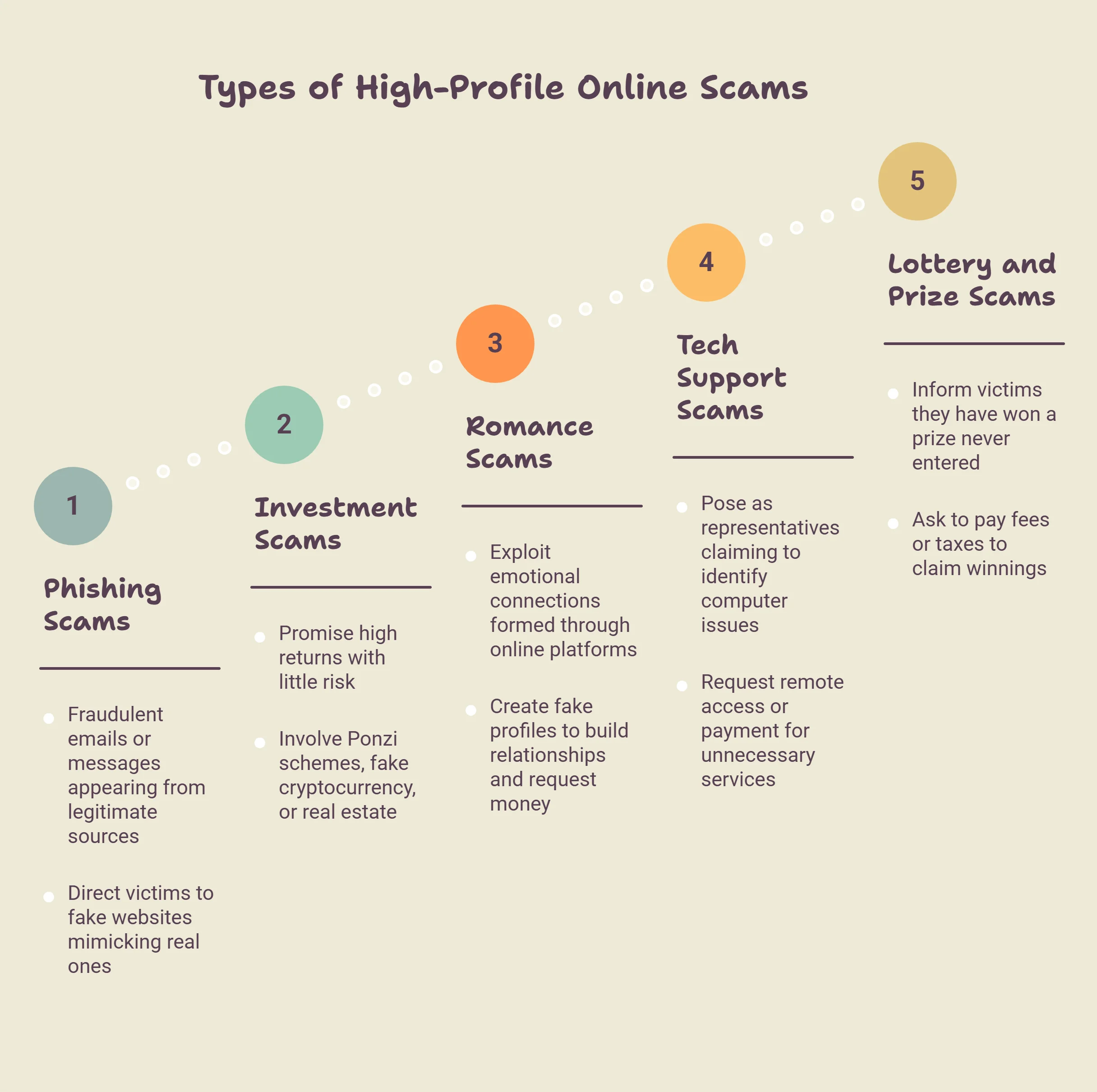
Common scam trends include fake giveaways, romance scams, and fraudulent investment opportunities—each crafted to appear as a great deal or urgent offer. Among the most dangerous is the transition from public posts to private direct messaging, where scammers manipulate victims out of public view.

These tactics are not limited to individuals; technology companies themselves face impersonation scams where official-looking accounts attempt to acquire sensitive login details or credit card numbers under the guise of “customer support. ”

Emerging trends also highlight the use of artificial intelligence in crafting convincing dialogue, fake videos, or deepfake images. Combined with the global reach of social media, a single scam can spread faster than ever before.

Recognizing red flags—like pushy requests for secrecy, offers that seem too good to be true, or messages that pressure you to move conversation off-platform—is critical for anyone active online.

Profiling the Masterminds: How Famous Scammers Operate Online

Social Engineering as a Foundation for Online Scams

At the core of nearly every high profile online scam is the principle of social engineering—the manipulation of people into divulging confidential information or performing risky actions. Social engineers are experts at reading cues and exploiting trust. They often begin by establishing a sense of familiarity, mimicking the tone and style of technology company representatives, friends, or even government officials.

Their aim is to erode skepticism and get you to drop your guard, priming you for later requests for personal or financial data such as your credit card, bank account, or social security number.

These scammers may plant credibility by referencing current events, exploiting your connections on social media, or faking testimonials about their legitimacy. The tactics might shift based on medium, but the psychological underpinnings are consistent: build rapport, escalate urgency, and isolate you from outside input.

Often, they’ll subtly ask you not to tell anyone, moving conversations to encrypted text messages or outside email platforms. Red flags such as these are universal—if someone is working hard to build trust quickly while restricting your ability to seek outside verification, it’s a sign you’re being socially engineered.

Social engineer using smartphone and laptop, engaged in scam tactics in a cafe environment

Case Study: Technology Companies and Social Media Scams

Technology companies have become both a shield and a target in the online scam landscape. Scammers often impersonate official representatives or create fake websites, cleverly designed to collect your login credentials, credit card info, or personal identification. A common example is the phishing scam, where an email or text claims to be from a trusted technology company alerting you to a problem (like a “locked account” or required payment).

They provide an official-looking link—yet a closer look reveals subtle discrepancies in the web address, unusual grammar, or requests for information the real company would never seek in this way. One of the most notorious email scams involves fake security alerts supposedly from reputable brands, tricking unsuspecting users into giving up sensitive info or installing harmful software on their devices.

Social media is another main channel, where scammers use hacked or cloned accounts to approach friends and followers with seemingly legitimate support messages or great deals. For the average user, the scammer’s ability to mimic language, branding, and procedures of top technology companies can make fake communications almost indistinguishable from the real thing. Always verify by contacting the company directly through official channels before taking action on unsolicited messages.
Spotting the Patterns: Hallmarks of High Profile Online Scam Tactics

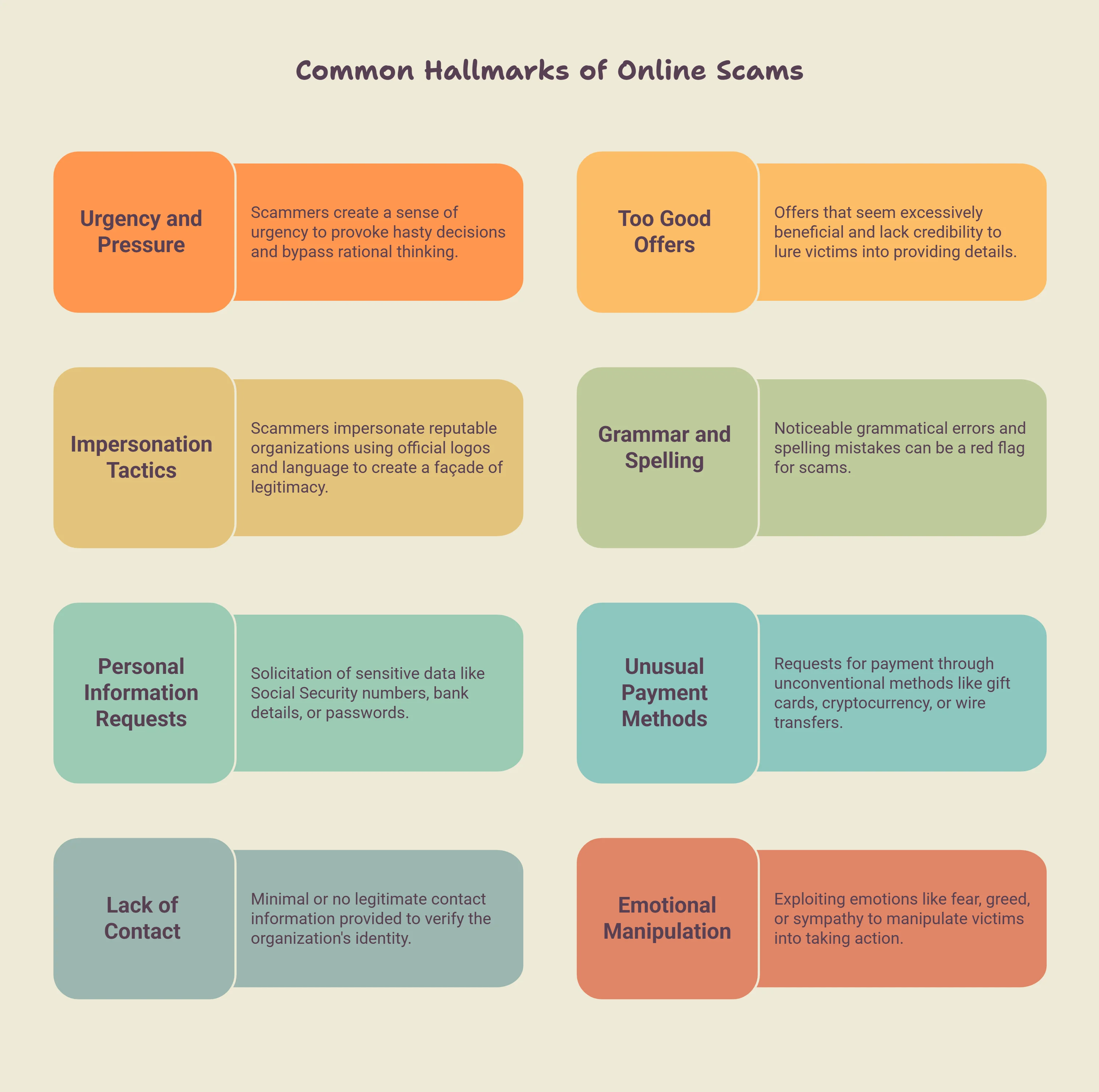
  • Urgency and manufactured crisis

  • Planted credibility (fake endorsements, testimonials)

  • Requests for secrecy and privacy

  • Moving conversations to text message or encrypted platforms

"If it seems too urgent or secretive, that’s your red flag waving."

Scammers are masters at creating patterns that bypass our logical defenses and speak directly to emotion. Among the clearest warning signs are sudden demands for urgent action—like needing a payment, sharing a one-time code, or confirming your social security number—without giving you a chance to verify.

Often, scammers “name drop,” referencing a technology company or public figure, or provide fake testimonials to build false credibility quickly. Another hallmark is the immediate request to keep the situation private, either for supposed “security” or to avoid “complications. ”

Finally, a major indicator of an online scam is the push to take the conversation off of secure platforms to places like private text messages, encrypted chat apps, or unofficial websites. In these spaces, there is little oversight, and communication is much harder to trace.

Be vigilant: the main keyword in this context is how to spot high profile online scam tactics—look for urgency, requests for secrecy, unsolicited payment requests via unorthodox means (like gift cards), and sudden requests to move conversations away from official sites.

Common Channels: How Online Scams Spread Across Social Media, Email, and Messaging

Scam Tactics Found in Social Media
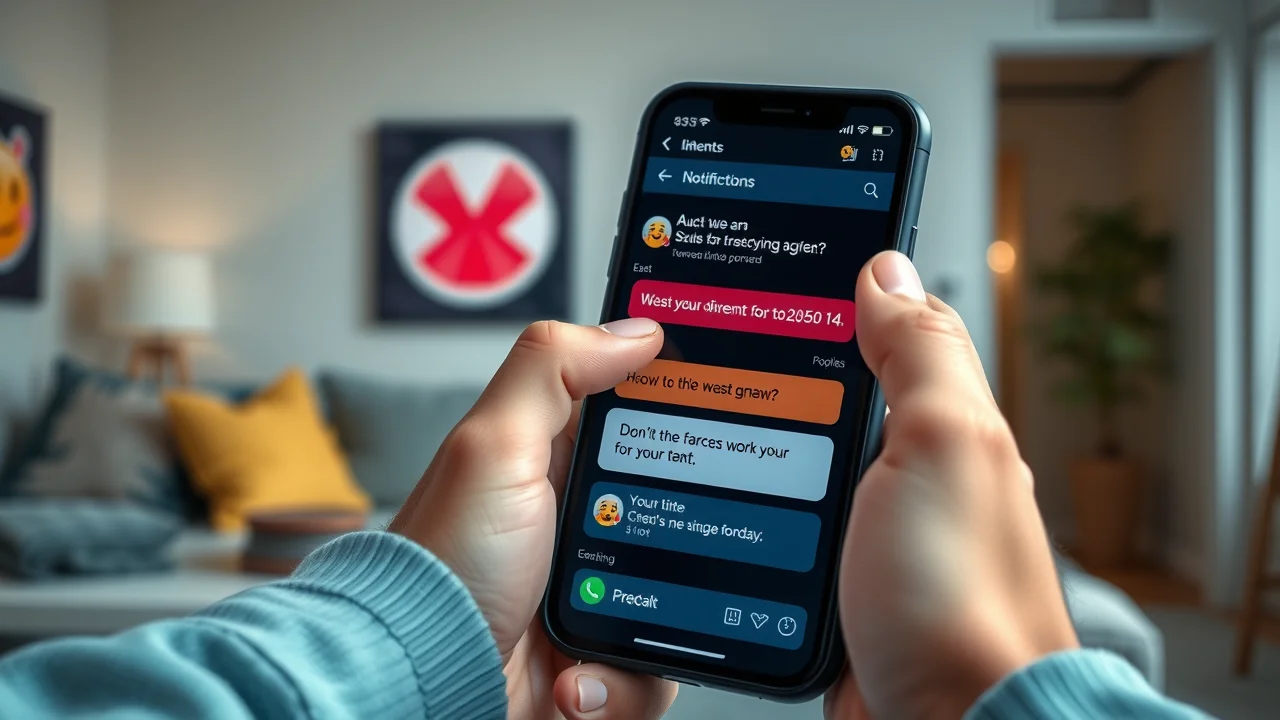
Smartphone screen displaying scam social media messages with anxious user

Most online scam tactics thrive in environments where information spreads quickly and trust is assumed—social media fits this description perfectly. Scammers use messages on social media, comments, and even sponsored ads to approach targets.

They might pitch investment opportunities, promote fake giveaways, or exploit current trends to get your attention. Once you engage, the scammer often moves you to private chat, where they can ramp up pressure and extract personal or financial information.

Social media scams often hijack the look and language of technology companies or trusted public figures, offering a great deal, but insisting you act immediately. If you receive a direct message from someone you don’t know, or even from a friend whose language seems odd or whose story escalates quickly to financial need, be suspicious. The key to how to spot high profile online scam tactics here is always to verify independently and avoid clicking on a link in any message that feels off.

How Text Message and Email Scams Target Victims

Scam tactics delivered via text messages and email play into our digital dependence and constant state of alert. These scams might warn of a problem with your credit card, bank account, or utility company, urging you to respond immediately.

Red flags include unknown phone numbers, misspelled names, suspicious-looking links, and requests for personal information, such as your social security number. Many use “spoofing” technologies to mimic the sender IDs of major technology companies, making the messages appear legitimate.

Email or text scams thrive because they catch victims off guard. An inbox message disguised as an official communication from the federal government, complete with deadlines and legal threats, can scare recipients into acting without proper verification.

Others offer fantastic opportunities, promising jobs, lottery wins, or great deals, but will ask for a processing fee or your bank details. Always pause, check the sender via their official website, and never send money or sensitive info without confirmation from a known and trusted source.

(Video not playable here. See Forensic Video below. ) Picture a split-screen view: on one side, a scammer sends a text message loaded with personal details (gathered from social media), while on the other, the victim is pressured to act quickly. Expert commentary reveals how artificial intelligence boosts the scammer’s ability to personalize messages and make them more convincing, reminding viewers why it’s so important to slow down and double check.

Human Weaknesses High Profile Online Scam Tactics Target Most

Loneliness and Romance Scam Exploitation

Solitary person reading a romantic scam message online – hopeful and hesitant

One of the most emotionally devastating types of scams target people experiencing loneliness or longing for connection. Romance scams, frequently orchestrated through social media, involve fake profiles that build emotional bonds over weeks or months. The scammer soon invents a crisis—a medical emergency, a stranded family member—and requests money or help. Victims, drawn in by sympathy and hope, have often lost money and even experienced long-term psychological pain as a result of these manipulations.

The red flags to look for include declarations of love too soon, repeated excuses for not meeting in person, or requests to move to private text messages or unofficial apps. Scammers often use information you’ve posted yourself to make their messages more personal and believable. Protect yourself by remaining skeptical of rapid emotional intimacy and always verifying identities through multiple channels.

Authority Bias: Impersonation of Technology Companies or Famous Brands

Scammers weaponize authority bias by pretending to represent trusted technology companies, utility providers, banks, or government agencies. The psychological power of these brands often overrides our suspicion—especially when the scammers use urgent language or copy official logos. You might receive a phone call stating your account is compromised or a text demanding immediate verification of your security number.

Red flags include pressure to give up your credit card, social security number, or other personal information immediately, especially when the communication comes out of the blue. Official communications from technology companies will never ask for passwords or payment details via unsolicited email or text message.

Always contact the company through their official website or customer service channels before acting. If you spot urgency, secrecy, or inconsistencies in language or branding, assume the worst and verify independently.

From Conversation to Con: Step-By-Step Breakdown of a High Profile Online Scam

Stage

Online Scam Tactic

Psychological Trigger

Warning Sign

Initial Contact

Friendly outreach on social media

Trust building

New, unsolicited contact

Grooming

Personal story sharing

Connectivity & empathy

Quick emotional escalation

Crisis

Claims of emergency or opportunity

Urgency, fear

Pressure to respond fast

Payment Request

Escalating loyalty or need

Obligation

Untraceable payment request

Ways to Protect Yourself from High Profile Online Scam Tactics

Security Practices for Technology Companies and Individuals

Bright home office workspace with security icons – typing a strong password to protect against online scam
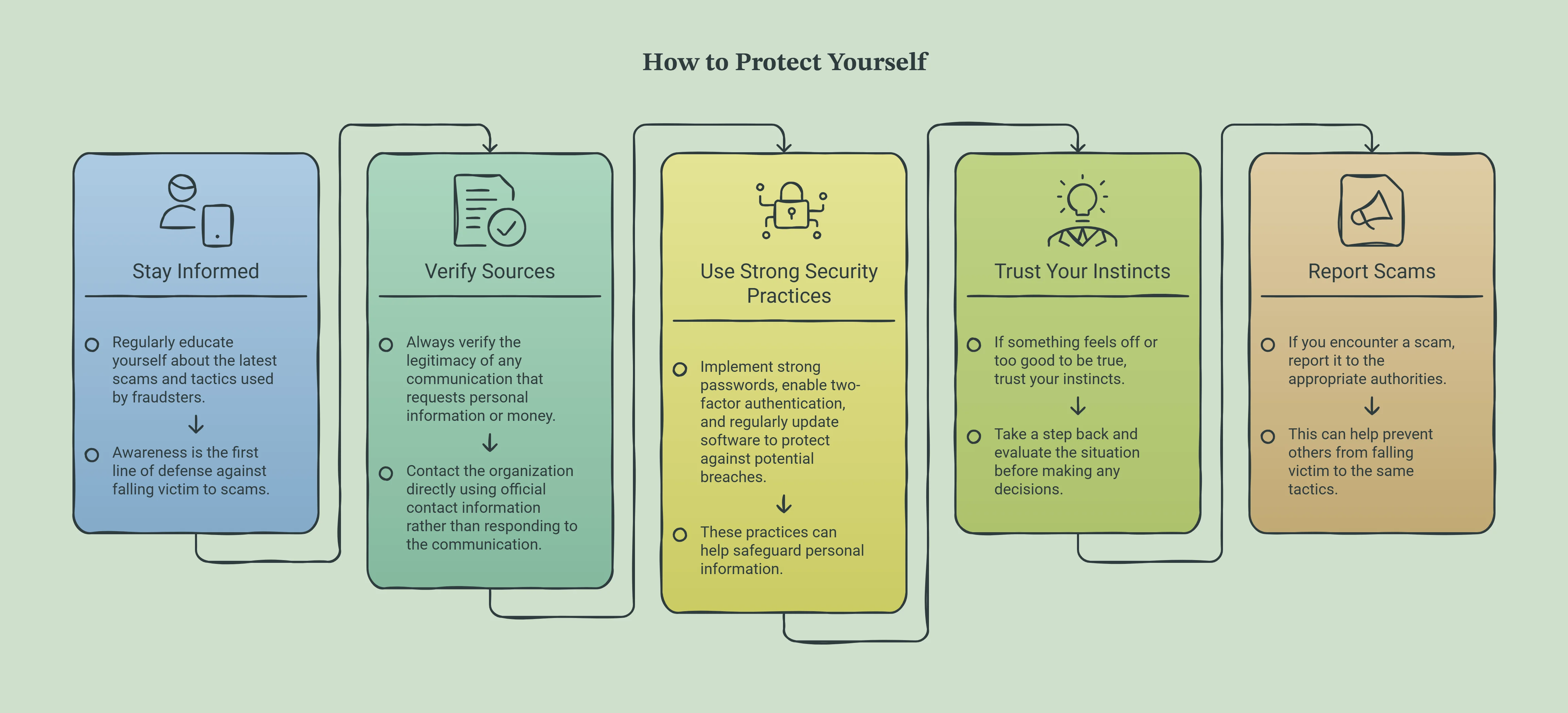
  • Use strong, unique passwords and enable multi-factor authentication

  • Never click on suspicious links or respond to unsolicited requests

  • Verify requests for money or information via independent channels

  • Educate yourself and share knowledge with others

Protection against high profile online scams begins with strong habits and continuous awareness. Implement tough-to-crack passwords and enable multi-factor authentication wherever possible. Don’t click on a link in a suspicious message and always triple check sender details, even if the logo or language appears legitimate.

Technology companies and individuals alike should report suspicious messages through official channels and share scam warnings with friends and family. The best way to protect yourself is to trust your instincts—if it seems off, assume it is and verify before acting.

Finally, remember that responsible companies will never demand urgent action via text message or email for sensitive account changes or payments. When in doubt, go directly to the company’s official website or use their published phone support—not links provided in messages. Spreading awareness and reporting scams helps disrupt future attempts and protects your community from harm.
Frequently Searched Questions About High Profile Online Scam Tactics

How to trick an online scammer?

While some pursue 'scam baiting,' it is not recommended, as it can endanger your privacy. The best approach is to disengage and report the scam via legitimate technology company channels.

How do you know if you are chatting with a scammer online?

Look for inconsistencies in language, pressure for secrecy, requests for personal or financial information, and rapid shifts from casual to urgent.

How to tell if the person you're talking to online is real?

Ask for a video call, check their social media consistency, and use reverse image searches. Legitimate connections won't avoid reasonable verification.

How to tell if someone is scamming you online?

Beware of sudden requests for money, requests to move to private texting, and stories that escalate emotional urgency.

Per Expert : Victims and Investigators on Online Scam Tactics

"Victims consistently say they 'felt something was off.' Trust your gut—doubt is your best scam filter." — Dr. Lila Roselli, Digital Forensics Analyst

Key Takeaways from Decoding High Profile Online Scam Tactics

Diverse group learning online safety together – decoding online scam tactics
  • Scammers weaponize psychological tricks to manipulate trust and urgency.

  • High profile online scam tactics are most effective across technology companies, social media, and text messages.

  • Protecting yourself requires skepticism, verifiable communication, and continuous education.

FAQs About High Profile Online Scam Tactics

  • What is the number one sign of an online scam?
    A sense of urgency combined with an unsolicited request for personal or financial information is the biggest warning sign.

  • Should I report suspicious messages or ignore them?
    Report them to the official website or technology company support channels for investigation and to help protect others.

  • Can technology companies stop all online scams?
    No system is foolproof. Even with advanced anti-scam measures, scammers adapt quickly, making user awareness essential.

  • Is scam baiting ever safe?
    No; baiting scammers can escalate risks. It's safer to ignore, block, and report suspicious contacts or messages on social media and other platforms.

  • Where do most scams target people today?
    Major targets remain social media, text messages, and email due to their global reach and ease of personal manipulation.

A professional explainer video with on-screen digital forensics experts analyzing a recreated online scam event, using split screens to show both scammer and victim’s interactions, includes highlight overlays for red flags and expert commentary.
Stay Proactive: Reliable Resources on High Profile Online Scam Tactics

  • Federal Trade Commission Scam Alerts

  • FBI Internet Crime Complaint Center

  • Major technology company safety resource centers

  • Nonprofits fighting online scams

Protect Yourself with Knowledge from PersonalSafetyPrep.com – Your Trusted Source

The Privacy Hack: 3 Safe Ways to Share Photos Without Revealing Your GPS Location

Your Digital Life Has 3 Weak Spots. Here's How to Lock Them Down

Deepfake Video Call Protection: How to Verify Your Family Members’ Identity in 2026

Conclusion:

At the end of the day, staying safe online comes down to a mix of smart habits and gut checks. Keep learning how the latest scams work, and don’t ignore that little voice when something feels off. Talk about what you’ve seen and share tips with friends and family — your story might be exactly what someone needs to hear.

Remember, the more proactive you are, the harder it is for scammers to get through. Stay alert, stay curious, and take action today to protect yourself and your community.

To deepen your understanding of high-profile online scam tactics, consider exploring the following resources:

  • “A Complete Guide to Instagram Scams” by F-Secure provides insights into identifying fraudulent profiles on social media platforms, highlighting indicators such as low-quality profile pictures, vague bios, and suspicious follower ratios.

  • “How to Spot Fake Profiles and Stay Safe Online” by KF.Social Guides offers a comprehensive checklist for detecting fake accounts, emphasizing the importance of scrutinizing profile photos, bios, and engagement patterns to recognize potential scams.

Knowing how these scams work is half the battle. Use these tips to stay one step ahead of online fraudsters.


Digital Life

0 Comments

Write A Comment

*
*
Please complete the captcha to submit your comment.
Related Posts All Posts
08.09.2026

Amazon Fire Stick: Unlock Endless Streaming Freedom Now

Quick Overview – Why the Amazon Fire Stick Matters Plugs directly into your TV’s HDMI port for easy setup Access to thousands of streaming apps like Netflix, Prime Video, Disney+, and YouTube Supports HD video and Dolby Audio Comes with Alexa Voice Remote for hands-free control Compact, portable design for use at home or on the go If you want to instantly turn any TV into a smart hub for your favorite shows and movies, the Amazon Fire Stick delivers big convenience in a small package. As someone with years of experience helping consumers choose the right streaming device, I understand how overwhelming it is to compare the options—but getting streaming right really makes a difference in your daily entertainment routine. In this review, I’ll explain exactly what the Fire Stick offers, who it’s best for, where you’ll see the most value, and how it stacks up next to pricier streaming gadgets—all while avoiding technical jargon and keeping things clear. If you’ve felt limited by your TV’s built-in apps or hate fiddling with multiple remotes, you’ll want to read on. Buy On Amazon Why We Chose the Amazon Fire Stick To make sure we recommend only devices with true everyday value, we researched streaming sticks across ease of use, app selection, performance, and cost. Here’s why the Fire Stick stands out: Reliable access to leading streaming services without the steep price of most smart boxes Intuitive Alexa-enabled remote makes it ultra-simple for all ages Portable enough to travel, so you can use it on any compatible TV, even in hotels or friends’ houses While more advanced (and expensive) devices claim faster speeds or higher resolution, for most viewers the Fire Stick covers the essentials without the extras you may not need. Who Is the Amazon Fire Stick Ideal For? The Amazon Fire Stick fits people who want simple, affordable streaming with fewer cords and little fuss. If you’re upgrading an older TV, connecting in a den or guest room, or simply want an easy entertainment solution for parents or kids, this device just works. Anyone wanting to cut the cable cord for streaming simplicity Travelers or students needing a portable TV solution Families who don’t need 4K or premium audio features Users already invested in Amazon’s Alexa ecosystem Not for: Viewers expecting 4K Ultra HD, those needing advanced gaming or home theater integration, or anyone looking for the fastest performance possible. Buy On Amazon Specifications & Practical Impact Spec What It Means for You HDMI plug-in device Easy set-up; works with any TV with an HDMI port Supports Full HD (1080p) Good picture quality for most TVs; not 4K Wi-Fi connectivity Streams media wirelessly—no Ethernet needed Alexa Voice Remote Search and control playback using your voice Portable size Carry it in your pocket for travel or moving between TVs Alexa Voice Remote: Convenient Hands-Free Control The Amazon Fire Stick’s Alexa Voice Remote is one of its most appreciated features. You simply press the microphone button and ask Alexa to find a show, play music, or check the weather, saving you time scrolling or typing. This is especially handy for kids, seniors, or anyone who struggles with traditional remote navigation. You can even pair the Fire Stick to compatible smart home devices to dim your lights or adjust the thermostat while you’re watching TV. Buy On Amazon App Selection and Compatibility: Stream What You Love With access to thousands of apps, the Fire Stick stands out for flexibility. You can enjoy Netflix, Hulu, Prime Video, Disney+, YouTube, Apple TV+, and dozens of niche channels—plus live TV options with separate subscriptions. Unlike some smart TVs with limited app libraries, the Fire Stick is updated frequently, so you can expect continued support for new apps and features. However, some very advanced apps or gaming services may require a more premium device. Performance: Fast Enough for Most, With Some Limitations The Fire Stick offers smooth streaming in HD for most shows and movies, though it might lag slightly on large 4K TVs or during heavy multitasking. For everyday streaming in bedrooms, kitchens, or on-the-go, it does the job very well. If you want instant loading times for complex apps or plan to use advanced gaming or high-speed home theater setups, you may notice some minor slowdowns compared to premium streaming devices. Pros and Cons of the Amazon Fire Stick Every device comes with trade-offs. Here’s a simple breakdown to help you decide if the Fire Stick matches your needs: Easy and affordable way to stream on any TV Compatible with thousands of apps and live TV services Simple voice remote with Alexa support Small, portable, and easy to set up for travel Limited to Full HD—no 4K support Not ideal for heavy gaming or advanced smart home integrations Occasional lag on very large or high-end TVs Buy On Amazon What Customers Are Saying About the Amazon Fire Stick Customer feedback for the Fire Stick is generally positive, with repeat praise for its ease of setup, solid voice control, and a wide range of streaming options. Users love the value compared to more expensive streaming devices. Some mention that the interface can get a bit crowded with suggested content, and a few have noted that advanced settings are limited. If you don't need top-tier specs, most users find it a reliable movie and TV companion. Review Feedback Highlights The Fire Stick is super easy to set up, and having Alexa built in makes finding shows so much faster. My parents use it daily and haven't needed help once! — Emily R. ⭐⭐⭐⭐⭐ For the price, you get just about every major app and the voice remote is honestly great. You do notice some lag if you try to do too much at once, but for normal movie nights, it's perfect. — Trevor M. ⭐⭐⭐⭐ Works well for basic streaming, but I wish it was a bit quicker and had more storage for bigger apps. Still, as a travel option it's hard to beat. — Jess P. ⭐⭐⭐ Frequently Asked Questions About the Amazon Fire Stick Here are answers to some common questions based on what most shoppers want to know: Is the Amazon Fire Stick compatible with non-smart TVs? Yes, as long as your TV has an HDMI port, you can use the Fire Stick—even on older TVs. Do you need an Amazon account to use the Fire Stick? Yes, you’ll need a free Amazon account to set up and download apps, but not a Prime membership. Can I use my Fire Stick in different locations? Absolutely. Its small size makes it a good choice for travel, dorms, or shifting between rooms. Is there a monthly fee for the Fire Stick? No fee for owning the device—only for paid streaming services you choose to subscribe to. Warranty Coverage & Support Details It’s important to know you’re covered in case something goes wrong with your device. The Amazon Fire Stick typically comes with a limited one-year manufacturer’s warranty, which covers defects in materials or workmanship under normal use. To claim warranty service, you'll need your original purchase info and to contact Amazon’s customer support. Damage from accidents, misuse, or unauthorized repairs is generally not covered, and some retailers may offer additional plans. Always check the retailer’s warranty terms for extra protection. Our Final Verdict on the Amazon Fire Stick Buy On Amazon The Amazon Fire Stick is a great value for anyone wanting easy access to streaming apps, smooth voice control, and the flexibility to use it anywhere. For those not needing the absolute top specs or 4K video, it covers nearly every entertainment need at a budget-friendly price. Premium streaming devices may offer faster speeds and higher resolution, but for most people, the Fire Stick is all you need for everyday TV and movie enjoyment. This article contains affiliate links. If you purchase using these links, we may receive a small commission at no extra cost to you. This helps support our work and keeps our content free for readers.

07.14.2026

Know the New Rules of Online Visibility Before It’s Too Late

Imagine you’re a small business owner sipping your morning coffee. You open your laptop and, overnight, your website traffic has plummeted. Your heart sinks. The analytics dashboard paints a story you don’t understand—one you didn’t sign up for. If you’ve ever felt at the mercy of algorithms or invisible updates, you’re not alone. In 2024, anyone seeking a strong online presence must know the new rules of online visibility—or risk being left behind. This in-depth guide decodes those rules, spotlights real experts, and puts practical solutions at your fingertips.Scenario-based introduction: Imagine a small business owner suddenly noticing their website traffic drop, unsure of the cause or solution.Why You Should Know the New Rules of Online VisibilityToday’s digital landscape is shifting at warp speed, and the rules you trusted last year may not serve you now. For leaders, creators, and organizations alike, online visibility is more than a buzzword—it’s the difference between being discoverable and being invisible. The fundamentals of search engine optimization (SEO), once a sure route to the front page, are evolving as artificial intelligence (AI) search, modern social media algorithms, and integrated digital ecosystems redefine what it means to connect with potential customers. For example, a strong online presence now requires agility: adapting to the nuances of AI visibility, understanding how Moz Pro and other data tools shape keyword research, and knowing why some search results reward authenticity over clickbait. When search engines and social platforms control the gateways to your audience, not knowing the new rules can stop your business growth cold. This guide explores these shifts—so you can move from uncertainty to real impact, even in periods of dramatic algorithm change.How Online Visibility Has Changed in 2024: An OverviewIf you still think visibility means “ranking high in traditional search alone,” 2024 offers a sharp wake-up call. Today, AI search—powered by generative systems on platforms like Google and Bing—does more than show a list of links; it curates and synthesizes, often spotlighting brands that display originality, trustworthiness, and genuine relevance. Meanwhile, social media platforms set their own, often unpredictable, standards for what goes viral or stays buried. “We’re all building visibility on platforms we don’t control—learning these new rules is essential for resilience. ” – Digital strategist, interview excerpt The outcome? A brand can vanish from search results pages if it fails to keep pace, while competitors who embrace change and pursue cutting-edge visibility strategies thrive. This article provides practical, people-first insights and actionable strategies—spotlighting the leaders, techniques, and perspectives you need to navigate the new rules with confidence.As you adapt to these evolving standards, it's crucial to recognize how artificial intelligence is influencing both the technical and creative sides of marketing. For a deeper dive into the dual impact of AI on modern marketing strategies, including practical examples and emerging trends, explore the two fronts of AI’s impact on marketing and see how these shifts can directly affect your visibility efforts.What You'll Learn About the New Rules of Online VisibilityA concise breakdown of practical takeaways readers can expect from this article.Key new rules and their implicationsWhere AI search and social platforms shift the playing fieldTrusted expert strategies for sustainable online visibilityAnswers to common questions about online visibilityDefining Online Visibility: Core Concepts Behind the New RulesWhat Does Online Visibility Mean?Clarify 'online visibility' and what it looks like in today's digital landscapeOnline visibility once meant being easy to find—usually through specific search engines or a highly ranked business profile. In today’s digital landscape, it’s much more. Online visibility is your brand’s ability to be not just seen, but recognized, trusted, and chosen across multiple digital touchpoints. It encompasses how your business, personal brand, or mission appears in search results, on different social media platforms, and now—how AI systems decide to surface your content or story. Strong online visibility requires more than keyword stuffing or link-building. It’s about being a relevant signal in a sea of digital noise. Whether optimizing your content for traditional SEO, engaging in digital PR, or adapting for new AI-driven search, brands need to recognize the intersection of all these forces. Modern visibility isn’t just an outcome; it’s a dynamic, continuous process of learning, adapting, and contributing meaningful value where your audience spends their time.How Search Results, Social Media, and AI Visibility IntersectDefine search results, explain traditional search vs. AI search, and how they impact online visibilityDiscuss the role of social media platforms in shaping discoveryThe classic vision of search meant optimizing for a results page where your link appeared next to (or above) competitors’. But as AI systems evolve, that results page is now curated by generative engines that summarize, review, and sometimes even cite only a handful of voices. AI search (think Google’s Search Generative Experience, or Bing in “AI mode”) increasingly uses its own assessments of trust, expertise, and originality to surface information. Your visibility depends not just on keyword research, but how AI engines assess whether a brand is genuinely serving users. Meanwhile, social media amplifies discoverability, but on its terms: fast-evolving algorithms, ephemeral trends, and community-driven content all play their part. Being “visible” means having your content, philosophy, or offering recognized both by AI and by human communities—each with distinct standards of relevance and engagement.The Rise of AI Visibility: How AI Search is Changing the RulesUnderstanding AI Search and Its Impact on Online VisibilityAI-powered search is not simply a new skin on traditional Google or Bing results. AI search engines now rely on generative models—massive neural networks that can synthesize, interpret, and even “summarize” complex queries in organic, conversational language. Engines like Google AI mode and Bing AI use these models to prioritize not just what’s most popular, but what’s most useful, novel, and trustworthy at that moment. “AI-powered results often surface new types of content—prioritizing utility and originality over volume. ” – AI ethics researcher In practice, this means your brand appears in different ways, sometimes quoted directly, other times synthesized by the system, or even omitted altogether if the AI system judges it as less authoritative. Keyword research still matters, but it is now intertwined with questions about digital reputation, audience engagement, and value delivered over time. The AI visibility journey demands brands constantly review how they’re perceived by both algorithmic and organic audiences.Practical Examples: AI Search in ActionHow Google SGE, Bing AI, and other engines now influence search resultsWith traditional search, users type keywords and sift through pages of links. By contrast, AI search pulls in content, context, and even “aggregated wisdom” to answer questions directly—sometimes referencing source sites, other times delivering its own concise synopsis. Google SGE might generate a mini-article blending multiple authoritative sources, while Bing’s AI mode could recommend a business profile based on social proof, reputation, and recent activity. For small business owners and organizations hoping for attention, this means your online presence must be strong in depth (useful content, genuine community) and breadth (diverse mentions, fresh engagement). Brands that thrive in the AI system era are those who continually update their strategies, participate in digital communities, and avoid shortcuts that erode trust with both algorithms and people.Adapting to AI Visibility: Best PracticesPatterns: Why some brands thrive as AI search evolves, while others disappearAs AI-driven search becomes dominant, clear patterns separate those who maintain visibility from those who fade into digital noise. Brands that adapt embrace authenticity—showing deep subject matter expertise, sharing unique perspectives, and building digital reputation across platforms. Successful organizations monitor their performance not just through analytics, but also qualitative feedback—peer recommendations, independent reviews, and community-driven mentions. The core best practice? Consider every content update an opportunity to demonstrate new value—not just to search engines, but to AI systems constantly learning from user behavior. Regular audits with tools like Moz Pro, alongside consistent, multi-channel engagement, keep your visibility resilient against future algorithm shifts. The brands that disappear are those relying exclusively on old SEO tactics while ignoring emerging standards set by AI and digital communities.Social Media’s Evolving Role in Online VisibilityShifts in Algorithm and Attention: Social Media Versus Traditional SearchThe 70/20/10 rule in social media—what it means nowYou can no longer count on reaching your audience solely through traditional search. Social media is where spontaneous discovery happens—where brands, creators, and movements catch fire overnight or disappear in a heartbeat. Algorithms favor those who engage, not those who merely broadcast. The modern marketer or entrepreneur must grasp both the broad attention shifts (how algorithms prioritize content) and the subtler patterns of community-driven recommendation. “Community-driven discovery is reshaping what ‘visible’ means for creators and organizations. ” – Social media strategist The classic 70/20/10 rule—which advised brands to share 70% value-adding content, 20% shared resources, and 10% promotional messages—is taking new shape. Because platforms now demand adaptability, creativity, and rapid experimentation, the most visible brands diversify their presence and test how different communities respond to their story. In essence, social platform strategies must evolve alongside behavioral shifts not just in search, but everywhere people interact online.What is the 70/20/10 Rule in Social Media?Explanation and new best practices for platform diversityThe 70/20/10 rule in social media historically helped brands balance informational posts, curated shares, and self-promotion for optimal audience trust. In 2024, however, the rule’s spirit matters more than its ratio. Platforms now reward diverse storytelling and active listening—originality, responsiveness, and positive engagement surface your content more reliably than repetition alone. Best practices? Develop distinctive value for your primary community (about 70% of your output), experiment regularly with new content formats or platforms (20%), and keep self-promotion scarce and authentic (10% or less). Whether you’re scaling a business, building a movement, or elevating a cause, platform diversity and thoughtful experimentation keep your brand resilient and visible. Ultimately, sustainable visibility now means giving more than you take, prioritizing long-term trust over short-term reach.Expert Tools and Processes: Building Sustainable Online VisibilityKeyword Research, Moz Pro, and Data-Driven Next StepsUsing Moz Pro and other tools to inform strategyData is a double-edged sword—too much can overwhelm, but the right tools elevate clarity. Moz Pro has become a go-to for those seeking to do keyword research that actually moves the dial today. This platform offers not only keyword tracking and backlinks analysis, but powerful competitor research, ranking diagnostics, and actionable recommendations—the raw inputs for designing a high-impact strategy. In 2024 and beyond, combining such data with qualitative insights is essential for success. Pair Moz Pro with reviews, peer dialogues, and niche community feedback to continually refine your approach. “A strong online presence isn’t built overnight,” one peer shared, “but iterating with the right data and a listening attitude puts you ahead of the curve. ” Each adjustment, each lesson learned from analytics or expert interviews, informs future actions—so online visibility grows in tandem with real-world impact.How to Improve Online VisibilitySimple, actionable steps for any organization or personal brandPeer voices: Short quotes on techniques that deliver real impactImproving online visibility in today’s environment means blending classic techniques with a “trust-first” posture. Start by auditing your current online presence: How does your website perform in search engines? Is your content resonating on social media? Next, focus on creating genuinely useful, original content—answering questions, solving problems, and sharing fresh insight are all engines for new visibility. Don’t overlook digital PR: Engage with other creators, secure independent reviews, and build community partnerships. Keep your profiles optimized with current info, ratings, and engagement (vital for local SEO). As one digital marketing leader put it, “Visibility expands when you elevate others as much as yourself. ” And above all, use tools like Moz Pro to monitor, measure, and optimize—never letting your strategy go stale.Pattern Recognition: Recurring Tensions in Online VisibilityAuthority, Authenticity, and the Signal-vs-Noise ChallengeWhy ‘traditional’ SEO doesn’t always equal true visibilityNaming common barriers and opportunities seen across industriesOne of the great lessons from observing hundreds of brands: Traditional SEO wins may not translate to meaningful visibility. Why? Because AI engines and communities reward signals of real authority and authenticity. Shallow tactics—keyword stuffing, low-value guest posts, or volume-driven campaigns—will increasingly get filtered as “noise. ” On the other hand, businesses who consistently solve problems, share thoughtful analysis, and nurture positive digital reputations get “signals” picked up by both algorithms and human curators. Across industries, common barriers include stagnating tactics, ignoring community feedback, or treating all platforms the same. The greatest opportunities come from pattern recognition—spotting where your expertise or mission uniquely serves a community, then amplifying that signal through smart, adaptable practice. In the battle for ai visibility, clarity, substance, and service to others matter far more than chasing the latest trend.Community-Safe Practices: Ethical Guidelines for the New Rules of Online VisibilityTrust-First Approaches in AI Visibility and Social MediaGuardrails for reputation management, wellbeing, and long-term engagementTrust is your strongest asset—online and off. As AI systems and digital communities grow more sophisticated, ethical visibility means setting clear guardrails for communication, privacy, and engagement. Treat your digital footprint as foundational: What you share, and how you interact, creates ripples that AI engines and people both remember. Leaders who establish “trust-first” approaches not only manage their reputation but prioritize wellbeing—for staff, followers, and communities. This means transparent policies, responsive engagement, and care in responding to criticism. It also means taking the long view: sustainable visibility is built by platforms, but anchored by real values.Who Sets the Rules? Platform Control, Community Influence, and Your AgencyPlatforms and communities co-create the norms for online interaction. Search engines may set technical parameters, but it’s people—community moderators, reviewers, passionate users—who decide what’s actually valued. The best leaders negotiate these tensions by listening deeply, adapting policies transparently, and advocating for their communities’ needs in the technology ecosystem. Your agency matters: you have power to choose how you participate, what you amplify, and when to say “no” to practices that erode trust or mental health. Real digital influence comes not from being everywhere, but from being trustworthy wherever you are seen.Mini-Interview Panel: Insights from Visibility LeadersThree micro-profiles or interview excerpts with experts in online visibility, ai search, and social mediaKey takeaways synthesized at the end of this section1. Digital Community Leader: “In the end, visibility is about being worth finding—for people and algorithms alike. Show up with real help, not just noise. ”"Visibility, in the end, is about being worth finding—for people and algorithms alike." – Digital community leader2. AI Search Specialist: “Don’t underestimate the learning curve as AI engines change. What worked for me was collaborating with subject-area communities—AI search picked up my content more once I was cited by real peers, not just optimized for Google. ”3. Social Media Strategist: “The best way to ride out algorithm shocks? Diversify early, and keep measuring engagement quality, not just totals. Create for people—not just platforms. ”Synthesized Takeaway: Each expert highlights the need to ground online visibility in substance, community, and adaptive learning. Modern rules reward those who stay close to audiences and amplify true value over hype.Case Study Table: Comparing Online Visibility ApproachesApproachTraditional SearchAI SearchSocial MediaOutcome/NotesNonprofit CampaignRanks for local SEO keywords via blog postsFeatured in AI mode roundup after director’s interview is shared in reputable forumsBoosted by shares from community partnersResult: Broad exposure by blending SEO with authority and partnershipCommunity LeaderStagnant—old search results rank but offer little engagementCited by AI search after being quoted in educational podcastsGains authentic following via LinkedIn & Twitter conversationsResult: Increased impact by embracing new content types and peer learningEntrepreneurRelied on keyword stuffing—traffic dropped after algorithm changeRecovered by focusing on helpful explainer videos cited by AI enginesEngages niche Instagram and TikTok followers for feedback on new productsResult: Sustainable growth with original, community-vetted contentInclude concise case examples: nonprofit, community leader, entrepreneurFocus on actionable lessons learnedLists: 7 Principles for Sustainable Online VisibilityOriginality is your moatPrioritize trust-building over click-chasingEmbrace AI visibility by learning new platformsBalance consistency with experimentationUse data, but frame it with human insightsCurate your digital reputation proactivelyGive more than you take—community over self-promotionThe Rule of 7 in Marketing: Modern Relevance for Online VisibilityWhat is the Rule of 7 in Marketing?Historical background and whether it applies today with new online visibility rulesThe Rule of 7 in marketing suggested that a prospective customer needs to see your message at least seven times before taking action. Originating from broadcast-era advertising, its core insight remains: Repeat exposure builds recognition and trust. In today’s online visibility landscape—where audiences use ai search, bounce between platforms, and face overwhelming content choices—the Rule of 7 still has value, but the context has evolved. The path to trust now winds through digital communities, peer endorsements, and repeated helpful interactions, not just repeated ads. Frequency matters, but meaningful connection is what makes repeat exposure effective in 2024.Repeat Exposure in AI Search, Social Media, and Search ResultsModern ai engines and social media platforms both reward consistent, authentic visibility. For AI systems, repeated citations by trusted sources or communities can make the difference in becoming a go-to reference. For social discovery, ongoing engagement—not just campaign bursts—keeps your message in feeds, conversations, and trending topics. The actionable lesson: Deliberate repetition supports discovery, but each touchpoint should add value. Whether it’s a blog post optimized for search results, a podcast episode cited by generative systems, or a thread that sparks peer dialogue, every encounter shapes your digital reputation and the likelihood your brand appears as an authority—across channels and through time.FAQs: Online Visibility in a Changing Digital WorldWhat does online visibility mean today?Online visibility today means being consistently discoverable and valued across search engines, AI-driven systems, and social communities. It involves not just ranking in search results, but having your brand or content recognized as a trusted, authoritative source by both platforms and people. True online visibility is dynamic: you appear when and where your audience needs you—whether through organic search, AI summaries, or peer recommendations.What is the 70/20/10 rule in social media in 2024?The 70/20/10 rule recommends that roughly 70% of your social content adds value to your community, 20% shares external or curated material, and 10% (or less) is direct promotion. In 2024, this rule is flexible—adapted for each platform and audience. The spirit of the rule remains: Prioritize generosity and conversation over self-promotion, and experiment to meet followers’ evolving needs and expectations.How can I improve online visibility in the age of AI search?To improve your online visibility with AI search engines, focus on creating high-quality, original content that earns citations, reviews, and positive engagement. Leverage tools like Moz Pro for keyword research and analytics, but go beyond numbers: Build relationships with communities and experts who shape algorithmic trust. Stay updated on AI system changes and update your profiles regularly for maximum discoverability.Is the rule of 7 still relevant for online visibility?Yes, but its implementation has changed. In today’s multi-channel environment, the Rule of 7 means building trust through repeated, consistent, and helpful touchpoints across search, social, and community platforms. People still need several “encounters” before acting, but those experiences now must be positive, distinct, and truly relevant to break through the noise and earn lasting attention.Key Takeaways for Leaders, Creators, and Change-MakersEmbrace originality, trust, and adaptive learning to thrive as online visibility rules changeAI search and social media both demand authentic engagement, platform diversity, and consistent, data-informed actionStay curious—visibility is an evolving journey, not a fixed destinationEncourage further exploration and ongoing learning in online visibilityIf you’re ready to take your understanding of online visibility to the next level, consider exploring how AI is transforming the entire marketing landscape. By examining both the strategic and tactical implications of artificial intelligence, you’ll gain a broader perspective on how to future-proof your brand and stay ahead of digital disruption. Discover actionable insights and advanced approaches by reading about the two key fronts where AI is reshaping marketing. This deeper knowledge will empower you to make smarter decisions and unlock new opportunities for sustainable growth in a rapidly changing digital world.Schedule a Conversation to Deepen Your Online Visibility StrategyInvite readers to schedule a 15 minute let me know further virtual meeting at https://askchrisdaley.comSourceshttps://medium.com/@marcprimopuliscidm/the-new-rules-of-digital-visibility-in-2026-what-brands-must-understand-now-58cc022f0efd - The New Rules of Digital Visibility in 2026: What Brands ...https://www.spinutech.com/digital-marketing/webinars/the-new-rules-of-search-visibility/ - The New Rules of Search Visibilityhttps://moz.com/blog/rules-of-ai-visibility - The New Rules of AI Visibility and How To Prepare for Ithttps://valasys.com/online-visibility-rules-for-marketers/ - 5 Rules for Marketer Online Visibilityhttps://ueni.com/blog/5-essential-tools-online-visibility/ - Online Visibility: What You Need to KnowIn the rapidly evolving digital landscape, understanding the latest strategies for online visibility is crucial. The article “The New Online-Visibility Playbook Takes Center Stage” provides insights into how traditional SEO practices intersect with emerging AI optimization (AIO) techniques, emphasizing the importance of content consistency across platforms. (localogy.com) Additionally, “Instagram Posts Are Ranking and Showing in Google and Bing – SEO Meets Social” highlights the integration of social media content into search engine results, underscoring the need for a cohesive approach to content strategy. (searchengineworld.com) By exploring these resources, you can gain a comprehensive understanding of the new rules governing online visibility and adapt your strategies accordingly.

07.11.2026

Transforming Customer Experience: How Looped Empowers Estheticians

Update Understanding Looped: A Game-Changer for Estheticians As professionals in the beauty industry strive to provide exceptional customer service and build lasting client relationships, innovative technologies are redefining the landscape. One such technology, Looped, is designed specifically for estheticians, offering client management and engagement tools that are not only efficient but also user-friendly. This platform allows estheticians to streamline their operations while enhancing client interactions, ultimately aiming to improve client satisfaction and loyalty. The beauty of this technology lies in its ability to adapt and grow with the estheticians' evolving needs. Creating Strong Client Relationships with Technology The beauty and wellness sector places a significant emphasis on customer service, as satisfied clients often lead to recurring business. Looped makes fostering these connections easier by enabling estheticians to manage their appointments, track client history, and send personalized reminders. This seamless integration of technology minimizes administrative tasks, thus allowing beauty professionals to focus on what they do best: caring for their clients. For instance, by having quick access to a client’s past appointments and treatments, estheticians can offer tailored recommendations that enhance the service experience. Empowering Estheticians through Data Insights Data is a powerful tool for understanding client preferences and behaviors. Looped harnesses this power by providing estheticians with comprehensive analytics and reporting capabilities. This insight allows them to tailor services to individual client needs and preferences, fostering a more personalized experience. For example, if a client regularly books facials, an esthetician can proactively suggest complementary treatments, enhancing the overall client experience and potentially increasing revenue. By using data effectively, estheticians can not only improve client satisfaction but also grow their business strategically. Future of Spa and Beauty Services As we look ahead, the integration of technology within the spa and beauty industry is expected to grow substantially. Tools like Looped not only make daily operations more manageable but also enable estheticians to stay ahead of trends and better serve their clientele. By automating routine tasks—such as appointment confirmations and follow-ups—professionals can dedicate more time to creating innovative services and personalized client interactions, which are crucial for standing out in a competitive market. Unique Benefits of Engaging with Looped The beauty of Looped lies in its comprehensive features tailored specifically for estheticians. From automated appointment reminders that reduce no-shows to customizable marketing campaigns, it empowers beauty professionals to create a brand that resonates with current and potential clients. Additionally, the platform's user-friendly interface ensures that even those who are not tech-savvy can harness its full potential. By simplifying operations and enhancing client communication, estheticians can foster a loyal clientele that feels valued and appreciated. This not only makes the day-to-day easier but also builds a community around their services. Embracing Change in the Beauty Industry For estheticians, embracing platforms like Looped is more than just adopting new technology; it's about evolving with industry trends and client expectations. As clients increasingly lean towards personalized experiences, estheticians must prioritize tools that equip them to meet these demands. Looped may well be the answer, combining efficiency with enhanced client relations. Adopting such solutions allows estheticians to compete effectively with larger salons and spas that have more resources. This democratization of technology enables small business owners to provide top-tier services, ultimately transforming the landscape of beauty services. Conclusion: Why You Should Consider Adopting Looped In a competitive beauty landscape, the ability to manage client relationships effectively can make all the difference. Looped offers estheticians a pathway to enhanced customer engagement and streamlined operations. As the technology continues to evolve, now is the time for beauty professionals to explore the innovative solutions available to them to ensure they not only meet but exceed their clients' expectations. Ultimately, investing in solutions like Looped could lead to increased client loyalty, better service delivery, and a thriving business. The future of beauty lies in harmonizing skilled artistry with intelligent technology, and Looped stands at the forefront of this transformation.

Where innovation meets everyday life.

COMPANY

  • Privacy Policy
  • Terms of Use
  • Advertise
  • Contact Us
  • Menu 5
  • Menu 6

ABOUT US

Tech Life Journal explores how technology influences modern living and local business. It features interviews with tech-savvy professionals, insights on smart solutions, and reviews of emerging tools. Perfect for businesses using or creating tech, and readers looking to stay on the cutting edge.

© 2025 CompanyName All Rights Reserved. Address . Contact Us . Terms of Service . Privacy Policy

Terms of Service

Privacy Policy

Core Modal Title

Sorry, no results found

You Might Find These Articles Interesting

T
Please Check Your Email
We Will Be Following Up Shortly
*
*
*