
Add Row
Add Element
Tech Life Journal
update
Tech Life Journal 
update
Add Element
  • Home
  • Categories
    • Innovation
    • Digital Tools
    • Smart Living
    • Health Tech
    • Gear Review
    • Digital Life
    • Tech Travel
    • Voices in Tech
  • Featured
August 11.2025
2 Minutes Read

Harnessing Digital Health Monitoring to Combat Diabetes in Childhood Cancer Survivors

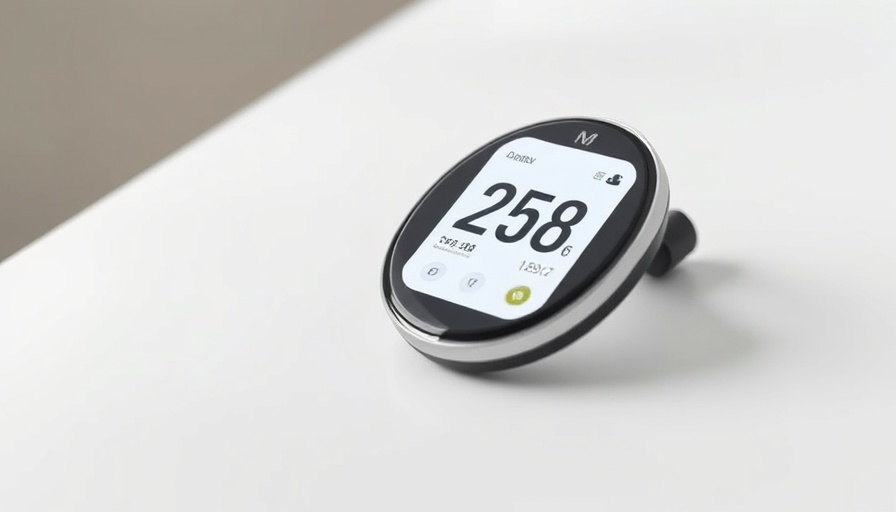
Digital health monitoring device for diabetes risk management

Increased Diabetes Risk Among Childhood Cancer Survivors

Childhood cancer survivors experience elevated risks for serious chronic conditions, including diabetes, due to the treatments they undergo during their fight against cancer. Recent research led by Dr. Yue Liao at the University of Texas at Arlington highlights how digital health monitoring can play a crucial role in intervening early to reduce these risks. With advancements in technology, wearable devices promise to revolutionize the healthcare landscape for these survivors.

How Digital Health Tools Can Transform Monitoring

The core of this research emphasizes the significance of wearable sensors that can continuously track various health metrics, such as glucose levels, vital signs, and even mood variations over time. These 24/7 monitoring capabilities provide insights that traditional one-time clinical visits simply cannot offer. Dr. Liao's review, published in the journal Cancer, discusses how integrating real-time data from these devices can lead to better risk assessments for kids who had cancer. By analyzing daily fluctuations in health data, caregivers can detect early signs of diabetes and design more effective prevention strategies tailored to individual needs.

Redefining Health Strategies for a New Generation

Unlike adults, childhood cancer survivors face unique challenges due to their youth and longer life expectancy. Their survivorship trajectory requires a different approach to intervention planning. Dr. Liao notes that younger patients might be more amenable to digital health platforms, especially those that align with existing technologies they are familiar with, such as smartphones or tablets. This compatibility suggests potential for higher engagement rates among survivors, making modern health interventions more feasible and effective.

The Importance of Early Detection

As Dr. Liao points out, the landscape of health data is rapidly evolving. There is a wealth of health-related information generated by various digital tools, waiting to be harnessed for improving health promotion and disease prevention strategies. By responsibly utilizing this data, healthcare professionals can establish timely interventions, ensuring a brighter future for childhood cancer survivors.

Creating a Healthier Tomorrow

With the fight against childhood cancer far from over, it is essential to focus not only on survival but also on the overall health of these young individuals in the long run. Understanding the interplay between cancer treatments and the risk of subsequent chronic diseases like diabetes is critical. Digital health monitoring is one way to bridge this gap, providing tailored strategies to improve the quality of life for survivors as they grow into adulthood.

This innovative approach signifies a shift in how we view survivorship. Children's health post-cancer treatment isn't just about quantitative measures of survival but qualitative factors that ensure they lead healthier, longer lives.

Health Tech

0 Comments

Write A Comment

*
*
Please complete the captcha to submit your comment.
Related Posts All Posts
03.13.2026

Explore HIMSS26's AI Innovations and Cybersecurity Insights for Healthcare

Update AI and the Future of Healthcare: What HIMSS26 Revealed The recent HIMSS26 Global Health Conference highlighted the rapid integration of artificial intelligence (AI) into healthcare systems across the globe. Leaders discussed the myriad ways AI can enhance clinical workflows and operational efficiency, demonstrating a marked shift in how healthcare providers view technology as an enabler of improved patient care. Driving Innovation in Healthcare This year’s conference showcased technology companies making significant contributions to healthcare innovation. Major announcements included Microsoft’s enhancements to Dragon Copilot, which is designed to streamline clinical documentation for healthcare professionals, allowing them to focus on patient interactions rather than paperwork. Meanwhile, Google Cloud's partnerships with healthcare giants such as Highmark Health and CVS Health signify a growing emphasis on agentic AI, which aims to empower healthcare professionals through smarter decision-making tools. Furthermore, Zoom's integration with Epic's electronic health records seeks to facilitate better communication with patients and reduce the documentation burden, echoing a persistent theme of reducing operational strain on healthcare providers. Challenges Ahead: Cybersecurity and Trust Despite the enthusiasm surrounding AI applications, challenges remain, particularly concerning cybersecurity. A recent survey revealed that although 49% of healthcare leaders expressed confidence in their cybersecurity strategies, an alarming 94% of organizations have faced ransomware attacks. This predicament calls attention to the need for stringent cybersecurity measures as healthcare systems adopt more AI tools. The importance of governance also resonated throughout the conference. Leaders underscored the necessity of establishing frameworks that vet AI tools for clinical decision-making, ensuring trust and oversight, particularly as AI takes a more central role in patient care. Interoperability: A Key to Efficient Care Another focal point at HIMSS26 was the ongoing push for interoperability within healthcare systems. Establishing a seamless flow of information between various departments and organizations is crucial for facilitating timely and effective care. The future hinges on improving data exchange processes, which will support better patient outcomes and higher efficiency levels. As healthcare shifts towards more complex models of care, the interoperability of systems will serve as the backbone for success. Modernized Health Information Exchanges and API-first ecosystems are just some innovations that promise to create a more streamlined exchange of patient data. Conclusion: Preparing for Tomorrow's Healthcare As we look beyond HIMSS26, it is evident that healthcare leaders must prioritize the adoption of AI and related technologies while navigating the associated challenges. Investment in training, infrastructure, and cybersecurity is essential for realizing the full potential of these innovations. By equipping healthcare systems with the right tools and frameworks, the aim of providing efficient and quality care can be achieved, improving the health outcomes of patients everywhere.

03.12.2026

Unveiling Genetic Secret: How Optical Genome Mapping Enhances Acute Leukemia Diagnosis

Update New Insights into Treating Acute Leukemia: Optical Genome Mapping In an exciting leap forward for leukemia treatment, recent studies reveal that Optical Genome Mapping (OGM) uncovers additional genetic variants in nearly 20% of patients diagnosed with acute leukemia. This groundbreaking technology offers unparalleled resolution and sensitivity in identifying complex structural variations, which are critical for tailoring personalized treatment plans. The Challenge of Traditional Methods Conventional cytogenetic methods, such as karyotyping and fluorescence in situ hybridization (FISH), have long been the standard in diagnosing leukemia. However, these techniques often fail to detect cryptic or complex rearrangements that can significantly impact a patient's prognosis. For example, MOLECULE D characterizes a rare genetic abnormality linked to poor treatment responses in patients with B-cell acute lymphoblastic leukemia (ALL). OGM addresses these limitations by offering a comprehensive view of structural variants without the need for cell culture, a significant barrier in traditional assays. How OGM Works OGM works by imaging ultra-high-molecular-weight DNA directly, allowing for the identification of smaller and more complex rearrangements missed by previous technologies. This innovative approach simplifies the diagnostic process by integrating multiple tests into a single workflow, significantly reducing both complexity and turnaround time. Studies have shown that OGM not only delivers results faster but also at a lower cost per sample—up to 50% cheaper compared to conventional methods. Clinical Implications of OGM The detection of additional variants through OGM holds considerable implications for patient management. By revealing genetic anomalies such as IKZF1 deletions and novel gene fusions, this technology facilitates more accurate risk stratification and personalization of therapy. For instance, recent findings have demonstrated that patients with novel fusions like the ETV6::ABL1 are sensitized to specific treatments like tyrosine kinase inhibitors. The Future of Genetic Testing in Oncology The integration of OGM into standard practice offers promising avenues toward enhancing the precision of diagnostic workflows in hematologic malignancies. With the potential to identify previously unrecognized variants that inform treatment decisions, OGM may soon play a pivotal role in the clinical management of acute leukemias. Researchers and clinicians alike are optimistic that as this technology gains traction, it will help improve patient outcomes significantly. Conclusion As OGM continues to establish its place within clinical oncology, its ability to unveil hidden genetic landscapes will transform how acute leukemia is diagnosed and treated. Embracing such cutting-edge technology not only enhances our understanding of complex genetic disorders but also stands to revolutionize personalized medicine in the field of hematology.

03.12.2026

Transforming Healthcare: Microsoft Dragon Copilot's Impact on Health Systems

Update Understanding Microsoft Dragon Copilot: A Game-Changer for Health Systems At the HIMSS26 conference, Microsoft unveiled its innovative Dragon Copilot, a tool poised to revolutionize how health systems operate. This advanced AI engine integrates seamlessly into healthcare workflows, emphasizing efficiency and accuracy in processes such as medical documentation and patient interaction. The implications of such technology can transform everyday practices within hospitals and clinics. The Value of AI in Improving Health Outcomes As healthcare challenges become increasingly complex, tools like Dragon Copilot offer tangible solutions. By automating documentation tasks, healthcare professionals can reclaim precious time to focus on patient care. This shift not only improves productivity but also enhances patient experiences, a crucial factor in today’s healthcare landscape where patient satisfaction is paramount. Future Predictions: What Lies Ahead for AI in Healthcare? The integration of AI tools like Dragon Copilot could pave the way for more personalized care. As these technologies evolve, one can expect enhanced predictive analytics that can inform treatment plans and patient outcomes. Health systems must stay ahead of these trends to fully leverage the benefits AI offers, ensuring that they are not just survivors, but thrivers in an increasingly tech-driven environment. Addressing Concerns: What Are the Limitations? Despite the numerous advantages, there are valid concerns about the implementation of AI in healthcare. Issues related to data privacy and the potential for technological dependence are at the forefront of this discussion. Stakeholders must prioritize establishing safeguards to ensure patient confidentiality while embracing new technologies. Next Steps for Health Systems: Embracing Innovation To successfully integrate tools like Dragon Copilot, health systems need to invest in training and change management. Professionals at every level must feel confident using these technologies, which will promote broader acceptance and longer-term success. By fostering a culture of innovation and adaptability, health systems can utilize tools like Dragon Copilot to navigate future healthcare challenges effectively.

Terms of Service

Privacy Policy

Core Modal Title

Sorry, no results found

You Might Find These Articles Interesting

T
Please Check Your Email
We Will Be Following Up Shortly
*
*
*
