


Imagine struggling to recall the exact verse you memorized for years, only to find your mind overwhelmed by fleeting distractions and diminishing attention spans. In a world engineered around a "distraction economy," traditional scripture memorization falters. Vanguard Verse offers a revolutionary solution, harnessing involuntary musical memory scripture to permanently embed God’s Word through the power of music, bypassing willpower and conscious effort. This article dives deeply into how science, technology, and spiritual conviction combine to transform scripture internalization in our distracted times.
Understanding Involuntary Musical Memory Scripture: A New Paradigm for Scripture Internalization
Defining Involuntary Musical Memory and Its Role in Scripture Memory
Involuntary musical memory scripture represents a paradigm shift in the way scripture is internalized. Unlike traditional methods requiring conscious effort and discipline, this approach leverages the brain’s natural involuntary memory pathways. Music becomes more than a pleasant accompaniment—it is the mechanism that permanently installs scripture in one’s mind without requiring deliberate memorization. This form of memory activates "multimodal encoding," where auditory and linguistic stimuli fuse to create lasting neural pathways. As the Vanguard Verse Executive Summary emphasizes, “By leveraging the brain’s involuntary memory channel, we achieve permanent data installation where traditional, effort-based methods fail. ”
This revolutionary approach recognizes that the human brain does not store raw experiences; it stores patterns reinforced by repetition. When scripture is embedded in music that repeatedly plays on streaming platforms, it taps into automatic cognitive responses—responses that surface under pressure when willpower is weakest and spiritual strength is needed most.
The Neuroscience Behind Musical Imagery and Memory Songs
Neuroscience reveals that music enhances memory by engaging multiple brain areas simultaneously—auditory processing centers, language circuits, and emotional networks. Music linked with scripture activates involuntary "musical imagery," commonly known as “earworms,” embedding verses deeper than rote memorization ever could. This effect happens below conscious awareness and cannot be easily erased. The brain encodes melodies with scripture as recurring auditory cues that replay automatically, reinforcing spiritual truths organically.
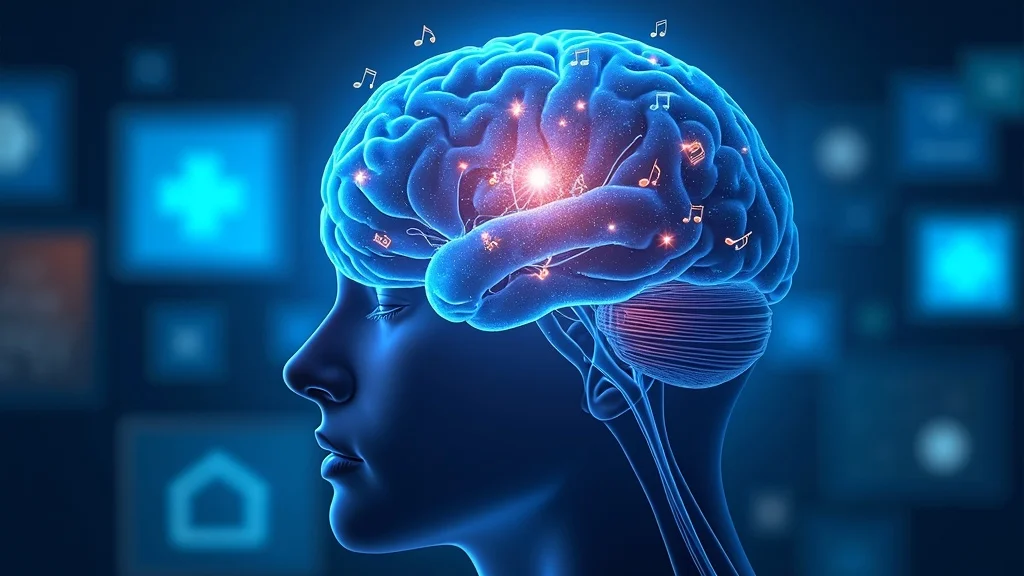
An illustrative image depicts a dynamic human brain with vibrant neural pathways illuminated as musical notes and scripture symbols integrate naturally, illustrating the interconnectedness of music and scripture in memory formation. This visual encapsulates the scientific foundation for why involuntary musical memory scripture is so transformative in spiritual formation.
For a closer look at how these memory songs are intentionally crafted to maximize involuntary recall, you can explore the detailed anatomy and creative process behind a scripture memory song as outlined in Vanguard Verse — Anatomy of a Scripture Memory Song. This resource breaks down the musical and lyrical elements that make scripture stick.
The Crisis in Traditional Scripture Memory and the Distraction Economy Challenge
Why Voluntary Musical Imagery and Memorizing Scripture Are Losing Ground
Traditional scripture memory methods heavily rely on voluntary recall and disciplined repetition, demanding focused attention and cognitive resources that modern life dramatically undermines. The pervasive “distraction economy” harnesses sophisticated algorithms designed to fragment attention, reducing average human focus down to just eight seconds. This makes willpower-based efforts to memorize scripture increasingly ineffective.
Many believers experience frustration: despite earnest intention, scripture easily slips away when most needed during trials or moments of decision. The burden of effort and discipline feels like "bringing a candle to a fire hose," overwhelmed by relentless distractions competing for mental real estate.
The Impact of Reduced Attention Spans on Scripture Memory Songs
Reduced attention spans challenge voluntary musical imagery, where individuals actively try to memorize or sing scripture passages. The fast-paced consumption patterns shaped by social media and streaming reduce the time and mental bandwidth available for sustained engagement with scripture memory songs. This disruption has rendered conventional memory songs less practical, especially when competing with highly engaging, variable-reward content engineered for addiction.
Subconscious engagement becomes rare; instead, intentional concentration is required, which the attention economy actively depletes. This crisis has signaled the need for a fundamentally new approach that does not depend on conscious effort to internalize scripture.
Vanguard Verse’s Innovative Approach to Scripture Memory Using Involuntary Musical Memory
How Memory Songs Bypass Conscious Effort to Install Scripture Permanently
Vanguard Verse’s method centers on involuntary musical memory scripture that bypasses the conscious brain, planting scripture in automatic memory through repeated passive listening. The songs are not merely background music; they are meticulously crafted memory vehicles that transform passive exposure into permanent spiritual ammunition. This unique mechanism allows scripture to surface naturally during moments of temptation, crisis, or spiritual warfare, precisely when it is needed.
As described in the Vanguard Verse Executive Summary, “The verse is not yet installed. The song is the path to installation. The listener returns until the work is done. ” This reflects a strategic cadence that encourages repeated listening—reinforced by streaming algorithms—to ensure scripture is deeply embedded.
Leveraging Streaming Platforms for Scalable and Sustainable Scripture Memory Songs
Vanguard Verse utilizes existing global streaming platforms to distribute their AI-customized scripture memory songs. Platforms like Spotify, Apple Music, and others offer a censorship-resistant, near-zero marginal cost delivery system, reaching hundreds of millions worldwide continuously. The designed songs generate repeat listens, boosting streaming algorithms’ organic promotion and creating a sustainable revenue model through royalties.
This co-opting of the secular streaming infrastructure to deliver Kingdom content is a strategic “Jududo” move that leverages the very platforms designed to rob attention, turning them into carriers of spiritual formation at unprecedented scale.

The Advantages of Using Involuntary Musical Memory Scripture Over Traditional Methods
Permanent Installation Versus Temporary Engagement in Scripture Memory
Unlike methods relying on temporary engagement that often fade without maintenance, involuntary musical memory scripture implants permanent neural patterns that serve as automatic spiritual responses. This permanence means scripture can spontaneously recall in high-pressure or subconscious moments without cognitive effort.
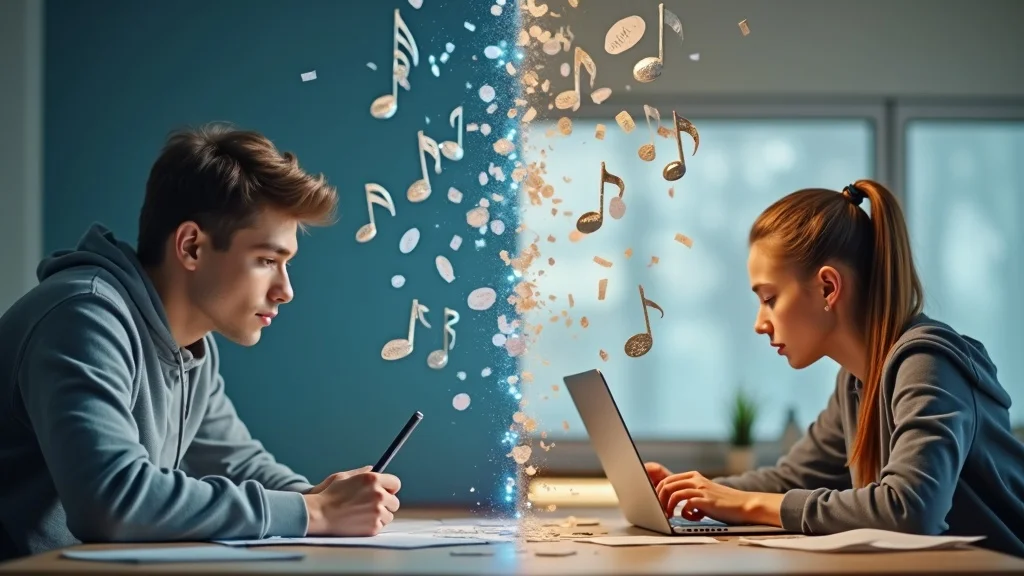
A striking visual comparison shows a young adult enveloped in persistent musical notes representing involuntary memory on one side, contrasted with a distracted student surrounded by fleeting papers symbolizing temporary, effort-dependent scripture engagement on the other.
The Role of Memory Songs in Creating Automatic Spiritual Responses
When scripture is integrated into the involuntary musical memory channel, it cultivates instantaneous spiritual reactions—reflexive application of God’s Word rather than delayed effortful recall. These automatic responses resemble the brain’s natural functioning in language acquisition and habit formation, offering believers a reliable defense mechanism against spiritual attack.
This automaticity — the ability for scripture to “surface without instruction” — is the core transformative benefit, providing a ready reservoir of divine truth accessible anywhere, anytime, under any circumstance.
Common Misconceptions and Challenges in Adopting Musical Imagery for Scripture Internalization
Addressing Skepticism Around Voluntary Musical Imagery and Its Effectiveness
Skepticism arises from traditional associations of music with subjective mood influence rather than concrete memory encoding. Many doubt that passive listening can form lasting scriptural knowledge. However, scientific studies and real-world testimonies from Vanguard Verse users prove involuntary musical memory scripture’s effectiveness in delivering permanent, verifiable scripture retention.
Acceptance often follows understanding that this is not simple entertainment but a rigorously designed memory system integrating AI-guided production with strict theological supervision to ensure scriptural accuracy and sacred purpose.
Why Willpower-Based Scripture Memory Fails Against the Distraction Economy
Willpower-based scripture memory is a losing battle against an infrastructure engineered for distraction. Users find themselves exhausted trying to outmatch platforms designed to fragment attention through calculated cues, variable rewards, and nonstop notifications. As depicted in a contemplative image of a person struggling amidst digital distractions, relying solely on discipline is untenable long-term.
The distraction economy systematically depletes the cognitive resources necessary for voluntary memorization, making alternative mechanisms like involuntary musical memory scripture not only advantageous but essential in today’s digital age.

Actionable Tips for Integrating Involuntary Musical Memory Scripture Into Daily Life
Practical Steps to Use Scripture Memory Songs Effectively
Begin by incorporating scripture memory songs into everyday routines—commuting, household chores, or personal reflection times. Consistency matters more than effort; the key is passive and repeated exposure without pressure. Create playlists of memory songs and allow them to play in the background, or use headphones during focused periods.
An uplifting morning scene shows a diverse individual starting the day with headphones on, surrounded by gentle sunlight and scripture notes, emphasizing the accessibility and serenity this spiritual practice can bring.

Creating a Sustainable Listening Routine to Maximize Memory Song Benefits
Develop a sustainable routine by scheduling scripture memory song sessions multiple times daily, aiming for total cumulative listening time that ensures installation. Repeated listening over weeks allows the brain to convert passive engagement into automatic recall. Avoid burnout by varying musical styles and scriptures to maintain interest without cognitive overload.
Engage small groups or family members to share the experience, allowing relational reinforcement that increases retention and spreads the installed scripture organically through community.
Comparison of Traditional Scripture Memory Methods vs. Involuntary Musical Memory Scripture Approach
Aspect |
Traditional Scripture Memory |
Involuntary Musical Memory Scripture |
|---|---|---|
Memory Mechanism |
Conscious repetition and willpower |
Passive, involuntary auditory encoding |
Attention Requirement |
High sustained focus needed |
Minimal conscious effort, passive listening |
Engagement with Distraction Economy |
Competes directly and often fails |
Uses distraction platforms to its advantage |
Retention Type |
Temporary, effort-dependent |
Permanent, automatic |
Scalability |
Limited by human effort and discipline |
Global reach through streaming infrastructure |
Emotional Connection |
Variable, dependent on user mood |
Engages emotional and neurological reward circuits consistently |
People Also Ask
How to get rid of involuntary musical imagery?
Involuntary musical imagery, often called "earworms," can be managed by redirecting attention through engaging in other cognitive tasks such as reading or puzzles. Listening to the full song causing the earworm can help complete the cognitive loop, reducing the intrusive effect. Understanding its neurological basis allows for strategies that minimize distraction and promote focus.
What causes involuntary musical imagery?
Involuntary musical imagery results from repeated exposure to music and emotional triggers activating neurological patterns that encode melodies involuntarily. This is a natural cognitive process linked to memory encoding and attentional systems, where familiar tunes replay without intentional recall.
Why is 3AM God's hour?
The concept of 3AM as "God's hour" roots in spiritual traditions identifying this time as a moment of heightened spiritual activity and vulnerability. It is often associated with prayer, reflection, and divine encounters when spiritual forces are believed to be especially active.
Does God know you before you are born?
Many theological perspectives affirm that God’s knowledge and plan for individuals exist before birth, emphasizing divine omniscience. This belief highlights God’s intimate involvement and purpose in every human life from its inception.
Key Takeaways
Involuntary musical memory scripture leverages neurological mechanisms for permanent scripture internalization.
Traditional scripture memory methods struggle against the distraction economy and reduced attention spans.
Vanguard Verse’s approach uses AI-generated memory songs distributed via streaming platforms for scalable impact.
Memory songs create automatic spiritual responses that persist without conscious effort or willpower.
Adopting involuntary musical memory scripture can transform personal spiritual formation sustainably.
Conclusion
Involuntary musical memory scripture represents a revolutionary shift in scripture internalization in today’s distracted world. By harnessing the brain’s natural memory pathways and leveraging modern digital infrastructure, this approach delivers scalable, sustainable spiritual formation that transcends traditional limitations.
If you’re inspired to deepen your understanding of how scripture memory songs are designed for maximum impact, consider exploring the broader creative and spiritual strategies that shape these transformative tools. Delving into the anatomy of a scripture memory song reveals not only the technical artistry but also the intentionality behind every musical and lyrical choice. By learning more about the process, you can unlock advanced techniques for integrating scripture into your daily rhythms and empower your spiritual journey with even greater effectiveness. Discover how the fusion of neuroscience, music, and faith can elevate your approach to scripture internalization by visiting Vanguard Verse — Anatomy of a Scripture Memory Song.


Write A Comment