


Introduction: Drawing from Disruption — Why the Age of AI Demands Deeper Reflection
Imagine a moment: a group of people from varied backgrounds, gathered around a table, quietly absorbing the arrival of something unfamiliar but immensely powerful. Some reach for digital devices—tablets, laptops—while others fold their hands around mugs, a silent sense of anticipation animating the room. The city buzzes beyond the window, as yet another wave of technological innovation nears the threshold. This scenario is increasingly common—and not just in tech start-ups. Each time our society faces a seismic shift, from the steam engine to the personal computer, we revisit the difficult questions of adaptation, ethics, and community.
The age of AI places us squarely in this familiar, yet ever-evolving space. With generative AI tools reimagining how we work, create, and relate, the echoes of the past ring louder than ever. Our previous responses to disruption, full of resistance, learning, and adaptation, are not just historical curiosities—they are sources of wisdom for today. In this article, we’ll reflect on the arc of innovation and draw out practical, human-centered lessons.

Observational Scenario: The Familiar Shock of New Technology
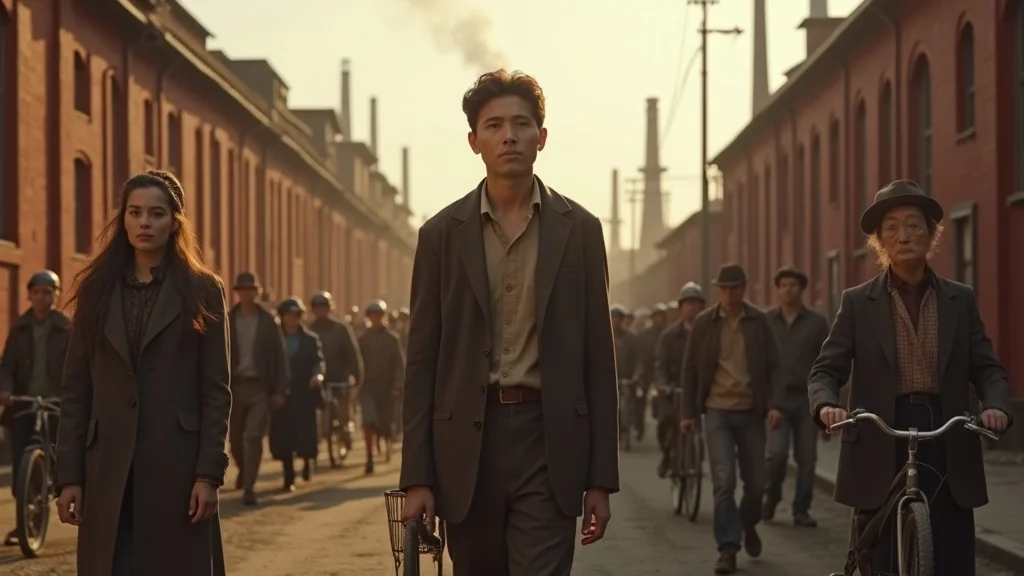
Consider the pattern: New technologies often arrive with a jolt—a feeling equal parts excitement and anxiety. Whether it was the first sighting of a massive, smoke-belching factory, the hum of a home computer, or now, the sudden fluency of an AI chatbot responding in real time—each of these moments triggers both awe and uncertainty.
Communities grapple with questions about their future, businesses wonder how to leverage or compete, and individuals look for ways to apply—or defend against—what the AI tool introduces. The initial shock gives way to a more complex landscape, shaped by memory and adaptation. Our response, both collective and individual, is both a mirror of history and a crucible for what’s next.
From Industrial Revolutions to Artificial Intelligence: Pattern Recognition in Our Response
From the first industrial revolution to today’s advances in artificial intelligence, society’s reflexes to change remain remarkably consistent. We see resistance—old jobs threatened, skepticism rising—as well as friction in integrating new systems. Yet, over time, there’s a pattern of learning, reconfiguration, and ultimately, new forms of inclusion in the economic and social fabric.
The transition from handcrafted to mechanized labor was met with riots and retraining. Decades later, the digital age ushered in the personal computer, cloud computing, and now, generative AI models trained on massive datasets. Each stage reframed what routine tasks meant and invited questions about human identity, dignity, and wellbeing. In the age of AI, these patterns guide our dialogue, inviting us to reflect, adapt, and reimagine actionable hope.
What You'll Learn: Gaining Perspective on How the Past Informs Our Approach to AI
Understand how generative AI compares to earlier disruptive technologies
Identify recurring themes and lessons from previous innovation cycles
Spot patterns in community and workforce adaptation
Develop practical approaches to thrive in the digital age and the age of AI

Encountering Disruption: Lessons from Historical Transformations
Industrial Change and Community Adaptation
When we examine the roots of major technological advances, the industrial era stands out. Communities—often defined by proximity to factories—faced upheaval. Alternative employment became urgent as machines automated repetitive, physical labor, and industries had to adjust not only their tools but their identities. There were painful transitions: strikes, displacement, retraining, but also gradual acceptance and new forms of prosperity.
Yet, out of turbulence, came adaptation. People found ways to integrate innovation with their daily realities. Learning new trades, supporting each other, and building resilience allowed these communities to bridge the gap between fear and possibility. This historical cycle, full of both hardship and collective strength, provides a template for how we might approach the age of AI—with a focus on inclusion and support, not just efficiency.
Digital Age Shifts: From Internet to Generative AI
Fast-forward to the digital age: the rise of the internet, personal computers, and mobile devices fundamentally changed how we learn, work, and connect. With the arrival of generative AI tools, this disruption’s speed and scope have only grown. Unlike tools requiring explicit programming, AI models now generate deep insights, automating not just routine tasks but also creative and analytical work.
The effects ripple through business operations, education, and social media. The AI tool can automate everything from customer service to technical diagnoses, while workplace roles and job expectations shift unpredictably. But as before, communities that approach these changes with inclusive strategies—emphasizing ethical AI use and upskilling—discover that transformation, though uneasy, is possible.
“Every innovation brings disruption, but also opportunity.” — Community Leader Interview
How Can the Past Engagement with Disruption Prepare Us for the Age of AI?
Shared Patterns: Resistance, Friction, and Learning
Looking back, every innovation cycle shares core stages: resistance, initial chaos, gradual learning, and finally, integration. In the context of generative AI, resistance can manifest as skepticism or outright fear of job loss—echoing worries from past eras. Friction is seen in debates over regulation, ethical AI, and the recalibration of work habits. Yet, each friction point becomes a learning opportunity, as individuals and organizations discover new pathways forward.
These lessons underscore that disruption alone is neutral; outcomes depend on how communities and leaders choose to engage. AI tools that replace some routine tasks can also augment others, creating potential to automate the tedious and leave more space for creativity or care. Importantly, the communities that thrive are those willing to wrestle with discomfort, ask hard questions, and learn openly.

Leadership Strategies from Earlier Disruptions
History shows the power of adaptive leadership rooted in humility and clear communication. In times of uncertainty—whether during the industrial revolution or the digital age—the leaders who listened, solicited feedback, and facilitated collective problem-solving reduced the social costs of innovation. They empowered teams, encouraged upskilling, and framed disruption as a shared journey, not an individual threat.
Today’s leaders can carry forward these practices by inviting community participation in AI implementation, prioritizing trust-building, and ensuring diverse perspectives inform decisions. Learning from the past, we see that leadership is most effective when it embraces not just technical training, but social adaptation and ethical reflection. This balance is vital for sustainable progress in the age of AI.
Impacts on Workforce and Identity
As with previous upheavals, the workforce faces profound changes—not just in skills, but in identity and community ties. Where routine tasks are automated, questions of dignity, purpose, and retraining arise. Some fear loss; others spot freedom to explore new opportunities. The need to create new pathways for alternative employment and personal growth mirrors earlier innovation cycles.
Supporting identity formation and belonging during transitions is essential. Communities and institutions that help people remake meaning—through training, peer support, and dialogue about the why, not just the how—lay the groundwork for genuine adaptation. The role of education, mentorship, and collaborative empathy becomes more pronounced as AI systems blur traditional boundaries.
"When communities are invited to co-create, disruption turns into transformation." — Innovation Strategist
The Age of AI: Contextualizing Disruption in Today’s Digital Age
Defining Generative AI and AI Models: Key Concepts
Generative AI refers to artificial intelligence models that don’t just analyze data, but actively create new content. These systems, often based on machine learning, are trained on vast datasets, learning to mimic human language, art, or decision-making patterns. The outputs—whether text, images, or code—can feel uncannily human, opening both opportunities and challenges for society.
An AI model becomes more powerful as it absorbs larger and more diverse data. Unlike traditional software, where set rules define tasks, generative AI learns and adapts continuously. This transition places us in a unique phase of the digital age: the lines between tool and collaborator blur, and our strategies must shift from programming to partnership.

Why Today’s AI Feels Different (and What’s Familiar)
The age of AI feels new because its pace and reach exceed earlier disruptions. AI tools now touch everything—education, healthcare, business operations, and creative industries. Yet, this newness exists alongside patterns we’ve seen before. Uncertainty breeds anxiety and resistance, while curiosity fosters exploration and innovation.
Unlike past waves, today’s generative AI tools interact in real time, customizing experiences and solving problems on demand. Still, the familiar human tensions endure: who benefits, who’s left behind, and how can we all shape the future responsibly? Learning from historic cycles, we are better equipped to shape, not simply react to, this pivotal moment.
"AI is neither a threat nor a panacea. It's a tool, and our engagement determines its legacy." — Respected Technologist
Four Stages of Disruption: Past and Present
Stage |
Industrial Era Example |
Digital Age Example |
AI Era Example |
|---|---|---|---|
Trigger |
Invention of the steam engine |
Rise of the personal computer |
Breakthrough in generative AI models |
Turbulence |
Labor strikes, mechanization fear |
Job displacement, digital divide |
Anxiety over AI tools, regulatory debates |
Transformation |
Factory systems reshape society |
Cloud computing, new business models |
AI integration into business operations and education |
Normalization |
Stable wages, new skilled trades |
Internet is part of daily life |
AI-enhanced collaboration becomes routine |

Practical Learnings: Guiding Principles for Navigating AI Disruption
Maintain adaptive leadership with humility and clarity
Prioritize community resilience—elevate diverse voices
Embrace lifelong learning—both technical and ethical
Cultivate interdisciplinary dialogue (wellbeing, ethics, technology, faith)

Mini-Interviews: Voices of Experience in the Age of AI
"Our best preparation for AI comes from owning our stories of adaptation." — Thoughtful Community Builder
"Real innovation invites us to revisit values, not just processes." — Organizational Leader
Patterns, Tensions, and the Human Side of Adaptation
Recurring Tensions: Opportunity vs. Anxiety
Whenever society faces a technological leap—whether the personal computer or generative AI—there’s a push-pull tension between the promise of progress and the fear of loss. Community leaders, teachers, and workers experience hope for routine tasks to be eased, contrasted with new anxieties: What if AI tools make old skills obsolete? Will we find belonging and purpose in new forms of work?
Recognizing, naming, and normalizing these tensions is crucial. The human impulse to both resist and embrace change is timeless. Naming the discomfort allows communities to work through it—together—rather than simply endure it. Honest reflection and open storytelling foster the resilience needed for collective adaptation, making the opportunities of the AI era more accessible for all.

The Importance of Naming and Normalizing Discomfort
Too often, we hide our uncertainties about disruptive innovations, assuming we’re the only ones unsettled by the unknown. Historic examples remind us: communal adaptation begins with honest conversations. By creating space for anxieties, disappointments, and questions to surface, we lay a foundation for genuine learning and creativity.
More than technical solutions, ethical AI adoption depends on trust—trust built through transparency, active listening, and collective sense-making. When discomfort is normalized, leaders and communities are safer to explore, fail, and iterate, nurturing a shared path through change.
"The tension between hope and fear is where humanity grows." — Interview Excerpt
People Also Ask: What is Strategy in the Age of AI and Disruption?
How strategic thinking must evolve for the age of AI
In the age of AI, strategy is less about fixed roadmaps and more about adaptability and values-driven decision-making. The best strategies embrace curiosity, accept uncertainty, and encourage organizations to experiment and learn in real time with AI tools. They prioritize upskilling, organizational trust, ethical frameworks, and ensure diverse voices help interpret what responsible AI model use means within unique contexts.
Ultimately, an effective AI strategy is collaborative—it involves leadership, the workforce, and even the wider community in discovering the opportunities and limits of these technologies. Organizations that approach AI implementation as a journey, not a destination, will weather disruption with resilience and creativity.
People Also Ask: What are the 4 Stages of Disruption?
Explanation of the four stages with historic and current examples
Disruption consistently unfurls in four stages: the Trigger (introduction of a disruptive innovation), Turbulence (social, economic, and regulatory upheaval), Transformation (reshaping of norms, roles, and institutions), and Normalization (the new reality feels routine).
Historic examples illustrate this cycle: steam engines (Trigger) led to labor resistance (Turbulence), then to the redesign of manufacturing (Transformation), and eventually, the industrialized city became “normal” (Normalization). Today, generative AI tools are in the Turbulence-Transformation phase—challenging expectations and demanding new playbooks for action.
People Also Ask: What is the Best Way to Prevent Workforce Disruption Due to AI?
Policy, upskilling, and community strategies for resilience
Preventing negative workforce disruption in the age of AI hinges on three pillars: forward-looking policy, rapid upskilling, and purposeful community-building. Policymakers should promote educational access, incentives for retraining, and support for the most impacted sectors.
Organizations can prioritize upskilling initiatives—both technical and soft skills—ensuring everyone is equipped to thrive with new AI tools. Engaging communities in open dialogue and collaborative projects fosters resilience and inclusion, empowering people to shape their future rather than fear it.
People Also Ask: What Did Elon Musk Say about AI?
Summary and thoughtful commentary on Elon Musk’s notable statements
Elon Musk has frequently voiced concerns that unchecked artificial intelligence development could pose risks to humanity, calling for careful regulation and robust ethical safeguards. He imagines both potential future prosperity and existential threats. Musk’s comments, while sometimes dramatic, have sparked wider conversations about responsibility, safety, and the social contract underlying rapid AI deployment.
Whether or not one agrees with all his views, Musk’s insistence on humility and caution echoes a historical truth: every technology’s promise is shaped by our collective engagement, governance, and the principles we choose to prioritize as we enter the age of AI.
Case Studies: Stories of Adaptive Leadership and Community Impact
Digital Age—Transformative Community Projects
Across the United States and beyond, communities have responded creatively to technological disruption. In local “digital inclusion” projects, volunteers of all ages collaborate to introduce computers and internet access in under-resourced neighborhoods. These efforts reflect the power of community-driven adaptation: elders mentor youth, learners become teachers, and new social media spaces amplify unheard voices.
Such transformative projects don’t just address gaps—they build relationships, trust, and the habit of curiosity. As AI chatbots and generative AI tools proliferate, the same collaborative, hands-on approach is essential for cultivating belonging and opportunity.

AI Model Deployments in Nonprofits and Education
Educational nonprofits are experimenting with AI models to personalize learning, automate administrative tasks, and reach students with unique needs. These deployments highlight the potential of technology to close divides—if guided by community engagement and inclusive strategy.
However, successful projects keep people at the center, using generative AI as a support, not a replacement. When faculty members and community builders lead AI projects, they ensure humane, relevant, and meaningful integration, advancing equity and purpose alongside innovation.
"Stories are our most powerful tools for collective change." — Community Organizer
Key Takeaways: Moving Forward with Wisdom as We Enter the Age of AI
Disruption is inevitable, but engagement determines outcomes
Leaders play a pivotal role in shaping adaptation, trust, and inclusion
Ethics, wellbeing, and community must guide technological change

FAQs: Community-Sourced Questions on How the Past Prepares Us for AI
What historic disruptions most closely resemble the age of AI?
The industrial revolution and rise of the personal computer share many parallels: jobs replaced or redesigned, new industries born, public uncertainty, and social reconfiguration. Like the age of AI, these transformations demanded adaptation, dialogue, and inclusive leadership to realize long-term benefits.How do different communities respond to new technology?
Responses vary by resources, trust in leadership, and degree of participation invited. Communities that emphasize learning, dialogue, and shared decision-making better weather disruption and find opportunities for civic renewal.What practical steps can organizations take now?
Organizations should invest in upskilling, ethical AI guidelines, and create open forums for feedback and experimentation. Prioritizing people over process and building interdisciplinary teams prepares them for complexity and future waves of change.
Expert Quotes: Elevating Diverse Perspectives on the Digital Age
"Old patterns aren’t blueprints—they’re launching pads for new questions." — Technology Historian
"Ethics and curiosity are our best guides through disruption." — Community Faith Leader
Conclusion: From Disruption to Dialogue—Charting a Wise Path into the Age of AI
Sustaining trust, learning, and care in a rapidly changing world
The age of AI challenges us to lead with context, courage, and care—drawing from history to build the trust, adaptability, and compassion needed for an ever-changing future.
Brief highlight reel illustrating industrial, digital, and AI breakthroughs in context.
Ready to Reflect and Engage?
Schedule a 15 minute let me know further virtual meeting at https://askchrisdaley.com
Reflecting on historical technological disruptions offers valuable insights for navigating the current age of AI. The article “Five lessons from history on AI, automation, and employment” by McKinsey highlights that while technology adoption can cause short-term labor displacement, it ultimately creates new jobs and boosts productivity. (mckinsey. com) Similarly, the World Economic Forum’s piece “The rise of the machines: lessons from history on how to adapt” emphasizes the importance of focusing on skills development and reskilling to leverage new technological opportunities. (weforum. org) By studying these historical patterns, we can better prepare for the challenges and opportunities presented by AI.


Write A Comment