

Add Row
Add Element
Tech Life Journal
update
Tech Life Journal 
update
Add Element
  • Home
  • Categories
    • Innovation
    • Digital Tools
    • Smart Living
    • Health Tech
    • Gear Review
    • Digital Life
    • Tech Travel
    • Voices in Tech
  • Featured
September 06.2025
3 Minutes Read

OpenAI’s $115B Spending Forecast: Transforming AI Infrastructure and Its Implications for Tech

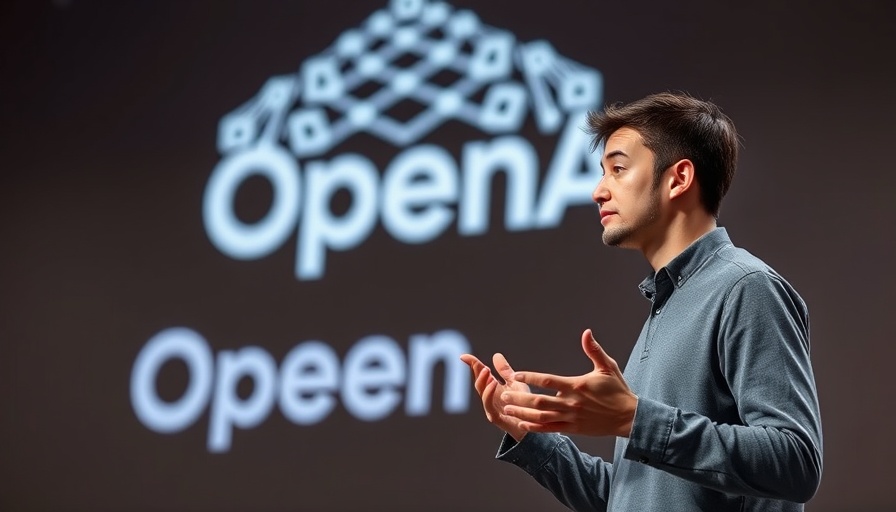
Engaged discussion about OpenAI spending forecast on stage.

OpenAI's Bold Spending Plan: What It Means for the Future

In a significant new announcement, OpenAI, supported by Microsoft, has revealed a staggering forecast that projects its spending could reach $115 billion through 2029. This figure is roughly $80 billion higher than their previous estimate, signifying a dramatic increase in their investment as they aim to bolster the infrastructure that supports their flagship product, ChatGPT. This financial leap reflects OpenAI’s ambition to fortify its capabilities in the rapidly evolving field of artificial intelligence.

Understanding the Investment Landscape in AI

The ramp-up in investment comes at a time of increased competition and innovation in the AI sector. Major tech players are racing to enhance their offerings, and OpenAI is positioning itself as a frontrunner. This growth trajectory showcases not only a commitment to develop advanced AI technologies but also an acknowledgment of the substantial resources required to stay competitive.

Experts suggest that OpenAI's substantial investment is a response to both market demands and the necessity for robust AI infrastructure. In the coming years, we can expect to see advances that will likely reshape various sectors, from healthcare to education, as more companies harness the power of AI-driven solutions.

The Ripple Effect on Microsoft and Tech Industry

As a key backer, Microsoft stands to benefit significantly from OpenAI's developments. With their Azure cloud services powering much of OpenAI's operations, this partnership highlights a strong synergy between the two entities, potentially transforming how businesses operate in the digital age. Microsoft’s push into AI isn’t just a trend; it represents a strategic pivot towards long-term leadership in technology.

Microsoft's role in supporting OpenAI is illustrative of a larger trend within the tech industry—collaboration over competition. Major firms are increasingly recognizing that pooling resources and talents—such as those seen in the partnership between Microsoft and OpenAI—can lead to exponential advancements in technology.

Future Predictions: Where Will This Lead?

The strategic investments by OpenAI not only promise advancements in AI capabilities but also open up discussions about the ethical implications of such powerful technology. As AI continues to integrate into daily life, concerns regarding bias, privacy, and job displacement arise. OpenAI has a fundamental responsibility to address these issues proactively, ensuring that their innovations promote equity and accessibility.

Looking ahead, as OpenAI and its competitors ramp up spending and capabilities, we anticipate an influx of AI applications that could redefine consumer experiences. This includes a more personalized approach across various platforms where AI technologies might predict consumer preferences or automate tasks, enhancing efficiency for both users and businesses.

Actionable Insights for Technological Readiness

Understanding OpenAI’s investments and the broader implications for the tech industry is crucial. Businesses looking to integrate AI should be proactive—investing in training, digital tools, and strategies that align with upcoming advancements. Companies must remain adaptable to harness the power of AI while also prioritizing ethical standards and data protection.

Engaging with AI technologies is no longer optional; it's a strategic move that can potentially place companies at the forefront of innovation. Preparing for this evolution requires a concerted effort from all stakeholders involved.

Innovation

0 Comments

Write A Comment

*
*
Related Posts All Posts
02.08.2026

AI Revolution: Anthropic and OpenAI Compete for Consumers’ Trust

Update AI Giants Go Head-to-Head in a Public Ad Spat As the spotlight of Super Bowl LX approaches, tech giants Anthropic and OpenAI find themselves entangled in a public feud that transcends mere advertising, revealing deeper industry dynamics and rival philosophies surrounding artificial intelligence. Anthropic has unleashed a barrage of ads criticizing OpenAI's controversial decision to implement ads within its ChatGPT product. With its campaign spotlighting slogans like, "Ads are coming to AI. But not to Claude," Anthropic positions its Claude chatbot as the ad-free alternative during an event where both companies seek the attention of potential business clients and consumers. The Roots of Rivalry: A Bitter Split This rivalry is not just a flash in the pan; it’s rooted in a contentious history. Anthropic was founded by former OpenAI researchers who departed over concerns about the pace and approach of AI development regarding safety. While Anthropic has staked its claim on providing a risk-averse, ad-free experience, OpenAI’s CEO Sam Altman publicly criticized Anthropic's assertions as "dishonest," suggesting that users would reject an ad strategy akin to what Anthropic portrayed. This spout of entertaining rival ads hints at broader implications for AI technology and its governance. Contrasting Visions: Monetization vs. Accessibility The philosophical divide between these two AI behemoths underscores differing business strategies. OpenAI is pushing to broaden its democratized access to AI through advertising, arguing that ads help keep the product free for general consumers. Altman articulated this approach as essential for providing AI services to billions who can’t afford paid subscriptions. In sharp contrast, Anthropic maintains that advertisements could compromise the integrity and helpfulness of its chatbot, focusing instead on a subscription-based model targeting businesses and individuals willing to pay for a premium experience. What’s at Stake: The Future of AI Assistance The ongoing skirmish reflects an evolving landscape in the AI field, with implications that could shape user experiences across various platforms. Both companies are preparing to go public, with immense financial stakes attached to their market positions. A successful IPO can heavily influence perceptions of AI adoption and usage among consumers globally. Market analysts are keeping an eye on how these Easter eggs of rivalry will unfold, particularly given that the public perception of AI remains fragile, with skepticism in predominant circles about its long-term impact. Public Reception and Future Implications The reception to these ads may also indicate how consumers view the evolving landscape of AI technology. Reports suggest that only 17% of U.S. adults believe AI will have a positive impact in the coming 20 years. Both companies aim to sway public sentiment in their favor through their Super Bowl presence, hoping to reshape narratives around AI from fear to a tool of empowerment and accessibility. The Final Countdown to Super Bowl LX With millions set to tune in, the tension will undoubtedly escalate further in the coming days as both Anthropic and OpenAI prepare for their respective advertising showcase. Altman stated that OpenAI's Super Bowl campaign is aimed at highlighting its commitment to innovation and universal access, while Anthropic seeks to reinforce its position as the champion of thoughtful, non-intrusive AI interactions. As this contentious drama unfolds, one thing is clear—the battle of the chatbots is more than just a marketing ploy; it's a manifestation of larger principles at play in the rapidly transforming AI domain.

02.06.2026

Jensen Huang on Generational AI Buildout and Its Economic Impact

Update A Generational Buildout in AI Infrastructure In an era marked by unprecedented investments in technology, Nvidia's CEO Jensen Huang has characterized the current phase as a "generational" buildout. Appearing in an interview on CNBC, Huang detailed his perspectives on the investment landscape, emphasizing that technology companies are pouring substantial capital into AI infrastructure. This trend signifies a critical shift in how industries are adopting AI to bolster efficiency and scalability. The Economic Implications of AI Investment According to a Goldman Sachs report, the scale of investment is staggering, with top tech firms expected to collectively allocate over $315 billion towards AI in 2025. These funds are not merely for aesthetic enhancements but aim to build a robust infrastructure capable of supporting complex AI models. Huang's insights align with this, suggesting that the flow of capital into AI may reshape the global economy in significant ways. Contrasting Perspectives on AI Demand Despite the optimistic funding outlook, experts raise critical questions around whether the capital is proportionate to the potential demand for computational power. Some view the current investments as a potential repeat of the telecom boom's excess. Huang acknowledged these concerns but remained optimistic, asserting that advancements in AI will drive increased demand for compute resources, enabling companies to innovate and explore new frontiers. New Applications Driving AI Adoption Historically, the cost of running AI models has declined sharply due to algorithmic breakthroughs. For instance, companies like OpenAI have seen significant reductions in operational costs for their models, which has only amplified the rush toward deploying AI applications. This push is fundamentally about developing new compute-intensive applications that can justify the vast infrastructure investments currently underway. The Rise of AI Agents and Their Implications As AI technology advances, we are witnessing the emergence of AI agents—systems that can handle complex tasks autonomously. These agents could revolutionize industries by performing tasks that range from scheduling meetings to executing extensive research projects without significant human oversight. Huang emphasized the importance of this trend, as it might unlock capabilities previously thought impossible. The Future Landscape of AI and Tech Investment Looking ahead, there are vast opportunities for innovation in AI, powered by the significant infrastructural investments being made today. As noted in Reference Article 2, while the excitement around generative AI has driven consumers and investors alike, the challenge lies ahead in translating this enthusiasm into concrete business applications. In conclusion, as industries continue to embrace these technological advancements, it’s crucial for stakeholders—from entrepreneurs to policymakers—to understand the implications of these investments. Navigating this complex landscape will not only define market leaders but could also significantly influence economic trajectories in the coming years. Staying informed and adaptable is essential for anyone engaged in the tech ecosystem.

02.06.2026

Revolutionizing Wildfire Prevention: The Role of AI Technology

Update Revolutionizing Wildfire Prevention: The Role of AI TechnologyWildfires have become an almost year-round threat, exacerbated by climate change, and new technology is emerging to combat this crisis. As the statistics illustrate—a staggering 77,000 wildfires burned over five million acres in the U.S. in 2025—it is clear that traditional methods of wildfire prevention are becoming increasingly inadequate. In an effort to prevent these catastrophic events before they start, companies are embracing artificial intelligence (AI) in innovative ways.Modern Challenges in Wildfire ManagementTraditionally, utilities managing electrical grids have relied on inspection cycles and emergency power shutoffs to prevent wildfires. However, the increasing complexity of factors that contribute to wildfires—including severe weather, vegetation density, and human actions—makes this approach less effective. Droughts and rising temperatures have transformed wildfire management into a race against time.The AI Solution: Overstory's Innovative ApproachCompanies like Overstory are leading the charge with AI-driven solutions to identify hazardous vegetation near power lines. Using high-resolution satellite imagery and proprietary computer-vision models, Overstory provides utility companies with actionable insights on tree health, moisture levels, and encroachment risks. The aim is not to replace human decision-making but to enhance it by directing crews to the most critical areas needing attention.Fiona Spruill, Overstory's CEO, emphasizes this collaboration: "We help determine where risks lie, but the final decisions still go to the experts in the field." This approach has yielded remarkable results, with Pacific Gas and Electric (PG&E) reporting a nearly 50% reduction in vegetation-triggered ignitions, showcasing the potential of AI in wildfire management.AI Detection Cameras: A New FrontierAnother front in the technological battle against wildfires is represented by Pano AI, a company that has developed AI-powered cameras capable of detecting smoke and heat signatures in real-time. These pan-tilt-zoom cameras operate 24/7, sending images and alerts directly to command hubs. The speed at which Pano AI responds can significantly shorten response times for firefighters, sometimes by as much as 25 minutes compared to traditional 911 calls.CEO Sonia Kastner notes that human verification remains a critical component of the detection process. "Before any alerts are sent out, human analysts confirm the presence of smoke versus other anomalies," she explains. This hybrid model leverages both cutting-edge technology and human expertise, enhancing the reliability of alerts sent to emergency services.Historical Context: The Evolution of Wildfire DetectionThe advent of AI in wildfire management has roots in earlier academic research initiatives, such as ALERTCalifornia. These early programs focused on utilizing camera systems to detect fires before they became widespread, showcasing the potential for technology to revolutionize responses to this natural threat. Future Predictions: How AI Will Shape Wildfire ManagementAs the landscape of wildfire prevention continues to evolve, the integration of AI technologies is anticipated to play an increasingly pivotal role. The ability to provide real-time alerts and data-driven insights will empower utility companies, emergency responders, and local governments to tackle wildfires with much more efficiency than previously possible.Nevertheless, the efficacy of these systems will depend on continued investment in technology and infrastructure. Ensuring that AI solutions remain accessible and affordable will be essential in making a significant impact in various regions, particularly those most prone to wildfires.Conclusion: The Importance of Innovation in Wildfire ManagementThe stakes are higher than ever when it comes to preventing wildfires, and the tools we use must evolve to meet these demands. Innovations in AI technology present promising avenues for more targeted interventions, allowing firefighting resources to be deployed strategically. By fostering collaboration between humans and machines, we can look forward to a future where wildfires can be detected and mitigated before they spiral out of control. As we invest in these solutions today, we pave the way for safer communities in the years to come.

Terms of Service

Privacy Policy

Core Modal Title

Sorry, no results found

You Might Find These Articles Interesting

T
Please Check Your Email
We Will Be Following Up Shortly
*
*
*