

Add Row
Add Element
Tech Life Journal
update
Tech Life Journal 
update
Add Element
  • Home
  • Categories
    • Innovation
    • Digital Tools
    • Smart Living
    • Health Tech
    • Gear Review
    • Digital Life
    • Tech Travel
    • Voices in Tech
  • Featured
September 04.2025
2 Minutes Read

Roelof Botha at TechCrunch Disrupt 2025: Insights on Venture Capital Evolution

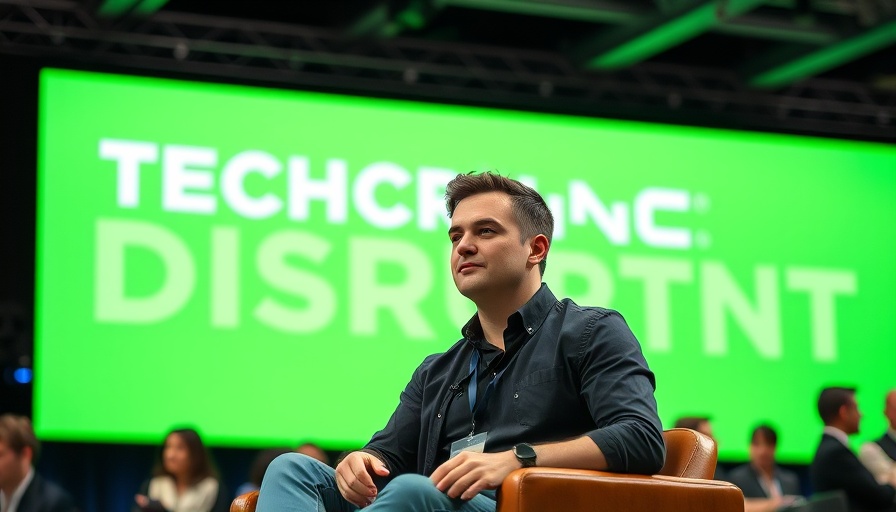
Roelof Botha at TechCrunch Disrupt 2025, engaged in discussion on stage.

Roelof Botha's Vision for the Future of Venture Capital

As uncertainty looms in the venture capital landscape, Roelof Botha, managing partner of Sequoia Capital, steps into the spotlight at TechCrunch Disrupt 2025. With over 20 years in the industry, Botha's insights are invaluable as the venture ecosystem undergoes transformative changes. He is set to engage in a milestone conversation that reflects on the past and anticipates the future of venture capital, particularly as we celebrate TechCrunch's 20th anniversary.

The Shifting Dynamics in Venture Capital

The venture capital world is evolving, with firms increasingly becoming multifaceted investment powerhouses. This expansion signifies a shift where traditional singular focus gives way to broader investment strategies, allowing for greater flexibility in deal-making. As Botha will discuss, these changes affect everything from deal flow to due diligence, particularly in a market shaped by fast-scaling startups and AI-driven development.

Moreover, the dynamics between founders and venture capitalists are changing. Today’s founders are not just seeking funding; they are looking for strategic partners who understand the fast-evolving landscape and can provide the capital needed to push innovative ideas to market. Botha's experience enables him to offer strategic insights into this new partnership model and its implications for startup success.

Celebrating Innovation at Disrupt 2025

TechCrunch Disrupt 2025 isn't just an event; it's a hub for innovation where over 10,000 tech leaders, founders, and investors congregate to share ideas and explore opportunities. With attendees from notable companies like Netflix and emerging tech firms such as ElevenLabs, the event promises to be a rich ground for networking and collaboration. Botha's participation highlights Sequoia Capital's pivotal role in shaping the futures of tomorrow's tech champions.

The Importance of Insights in Today's Tech Landscape

Understanding the current trends and predictions within the venture capital landscape is crucial for every attendee. Botha's insights promise to illuminate how firms like Sequoia navigate new challenges, including an increasingly competitive funding environment and the accelerated pace at which startups need to grow to remain viable. As businesses adapt to the tech-driven market, listening and learning from industry leaders becomes imperative for aspiring entrepreneurs and seasoned investors alike.

Why You Shouldn't Miss This Opportunity

Attending TechCrunch Disrupt 2025 is not merely about learning but about participating in a dialogue that shapes the future. The conference will provide attendees the chance to engage directly with top voices in tech, including Botha, during pivotal discussions that will steer the next generation of venture funding strategies. With early bird pricing concluding soon, this is an unmissable opportunity to gain insights that could influence your venture's trajectory.

Take Action Today

As excitement builds for TechCrunch Disrupt 2025, don't let this opportunity pass you by. Secure your spot today and be part of conversations that matter. The evolving landscape of venture capital awaits, and your engagement could very well shape the future of innovation!

Innovation

Write A Comment

*
*
Related Posts All Posts
11.13.2025

Exploring Amazon Ring 4K Cameras: The Future of Smart Home Security

Update Amazon Unveils Ring 4K Cameras: A New Era in Smart Home Security Amazon's Ring is elevating home security into the realm of clarity and intelligence with its latest releases: the Retinal 2K and 4K cameras. These new models showcase a groundbreaking imaging technology dubbed Retinal Vision, which promises to redefine what we understand about home surveillance. By merging advanced engineering with community-focused features, Ring is not just upgrading its products; it's transforming the very essence of smart security. Decoding the Technology: What is Retinal Vision? The centerpiece of this innovative lineup is Retinal Vision, a proprietary imaging technology designed to deliver exceptional video quality. Unlike conventional cameras, this AI-driven system optimizes exposure, color, and motion detection in real-time. Users can expect to see enhanced low-light performance and a zoom capability of up to ten times. This means that from recognizing a delivery driver to spotting the family pet, every detail is captured with unprecedented clarity. Smart Alerts: Contextual Understanding Redefined Historically, smart cameras tended to send out generic alerts - the infamous "Motion detected" notification. However, Ring’s new AI suite aims to change that. With features like Smart Video Descriptions, alerts now provide detailed context. For instance, instead of merely stating that motion was detected, a notification might read, "Dog spotted in the yard." This shift from reactive to proactive monitoring enriches the user experience and enhances security. Familiar Faces: Personalizing Home Security The introduction of a facial recognition system aptly named Familiar Faces is another significant advancement. This feature allows users to register family members and habitual visitors. By doing so, the camera reduces false alarms triggered by routine activities. If an unfamiliar face approaches, the system sends out an immediate alert. This not only personalizes security but also fosters a sense of safety and familiarity. Alexa+ Integration: An AI-Powered Concierge With the integration of Alexa+, the Ring doorbell can now independently interact with visitors. This feature can autonomously handle deliveries, respond to solicitors, and even engage with known guests. This enhanced capability positions Ring not just as a security device but as an essential home assistant that streamlines daily interactions. Joining the Community: The Search Party Feature One of the most innovative aspects of the new Ring cameras is the Search Party feature, designed to assist in reuniting lost pets with their owners. When a pet is reported missing through the app, nearby Ring cameras begin scanning for potential matches. This collaborative approach exemplifies how technology can transcend individual households, transforming the connected neighborhood into a collective safety net. Privacy and Control: Navigating Modern Security Features Despite the excitement surrounding these new features, privacy concerns continue to be paramount. Amazon emphasizes user control over data storage and sharing concerning facial recognition and AI processes. At the launch, it was reiterated that no footage would be shared with law enforcement without a warrant, a nod to rebuilding trust in their systems. The Future of Smart Home Security As smart home security rapidly evolves, Amazon’s latest offerings show a significant shift in how these devices can operate. The integration of cutting-edge AI technology and practical, community-focused features places Ring at the forefront of the competition with established brands like Nest and Arlo. Now, with the ability to not only observe but intelligently interpret surroundings, Ring is redefining the future of home security. Ready to embrace a smarter, more connected home? These advancements not only enhance personal security but also foster community interaction and support. Consider how the integration of AI in everyday security can make your life easier and more secure.

11.13.2025

Exploring the Eight Unique Personalities of OpenAI’s GPT-5.1 Models

Update OpenAI’s GPT-5.1: A Balancing Act in AI Personalities On November 12, OpenAI introduced its much-anticipated GPT-5.1 models—Instant and Thinking—while aiming to appease a diverse user base with the promise of enhanced conversational warmth and tailored interactions. With these fresh updates, OpenAI is walking a fine line, attempting to please critics across the spectrum and address previous concerns about AI responses. The Shift to Personality-Centric AI One of the most talked-about changes in GPT-5.1 is the introduction of eight distinct personality presets: Professional, Friendly, Candid, Quirky, Efficient, Cynical, Nerdy, and Default. These presets are designed to cater to various user preferences, allowing the AI to adapt its communication style based on the context at hand. This personalization reflects an understanding of the diverse expectations from an AI like ChatGPT, especially considering its adoption by over 800 million users worldwide. Each personality variant alters how the model processes instructions, which can significantly impact user experience. Adaptive Reasoning: A New Dimension Further enhancing its ability to serve different user needs, the GPT-5.1 Instant model incorporates “adaptive reasoning.” This feature allows the model to decide when to invest more computational time into processing prompts, enhancing its response quality. OpenAI claims that these advancements lead to better performance on technical benchmarks compared to the previous version, suggesting that users will find value not only in more engaging conversations but also in smarter, quicker problem-solving capabilities. Navigating a Complex Emotional Landscape The changes come amid rising concerns about the emotional connection users may form with AI and the potential hazards it poses. OpenAI has faced scrutiny over accusations linking its previous models with fostering unhealthy attachments, leading to critical discussions on how AI should engage emotionally with users. This awareness is prudently woven into the development of GPT-5.1, as OpenAI strives to balance warmth and engagement with an awareness of mental health implications. Stakeholders Weigh In: Diverse Perspectives on AI Interaction Different stakeholders have varied opinions on these outcomes. While some users welcome the greater flexibility in personality customization, experts caution against the risk of creating echo chambers where users only hear what they want to hear. OpenAI's own CEO of Applications, Fidji Simo, articulated this concern well: “Personalization taken to an extreme wouldn’t be helpful if it only reinforces your worldview.” The importance of engaging with AI in a way that challenges our reasoning and perspective is essential in shaping a more effective technology. Looking Ahead: The Future of Conversational AI The future of conversational AI hinges not just on technical advancements but also on ethical considerations. As models like GPT-5.1 become increasingly intelligent and engaging, the responsibilities associated with them multiply. OpenAI’s commitment to addressing these challenges while facilitating user growth marks an important crossroads for AI development and interaction. As OpenAI rolls out GPT-5.1 to paid subscribers first before making it available to free users, the tech community watches closely to see if these updates truly enhance user experience and safety.

11.13.2025

Understanding 'AIdeology': How AI Shapes Our Beliefs and Future

Update Rethinking AI: The Emergence of 'AIdeology' Artificial intelligence (AI) has transcended its role as merely a powerful tool, evolving into a complex belief system that Dr. Federico Cugurullo from Trinity College Dublin coins "AIdeology." This radical concept, presented in the journal Antipode, asserts that AI not only shapes our technological landscape but also influences societal values and worldviews profoundly. The Myths of AIdeology Dr. Cugurullo identifies three pervasive misconceptions that AIdeology perpetuates: AI will save the planet: While many believe that AI innovations can enhance sustainability, the reality often involves concealed environmental costs related to massive data centers and the extraction of minerals critical for technology. AI is becoming human: The promotion of human-like robots and digital assistants creates an illusion of consciousness and trustworthiness, which can mislead the public into overestimating AI’s capabilities. AI will end work and capitalism: While the narrative suggests AI could liberate humanity from labor, it often obscures the exploitation of workers who support these systems through typically low-paid or invisible roles. These myths mask significant socioeconomic inequalities and create a dangerous disconnect between reality and the utopian visions painted by those who control AI narratives. Impact on Society and Future Considerations As AI increasingly governs beliefs and cultural norms, it can reinforce existing social hierarchies under new technological frameworks. The implications of this are profound, as societies risk trading unchallenged old frameworks for similarly flawed new ones—now packaged as "innovative." Indeed, Dr. Cugurullo warns, "AIdeology can sell us dreams of progress while obscuring exploitation—from people to the planet." Recognizing and tackling these narratives is crucial for a more equitable future, emphasizing the need for a democratic approach to technology. Imagining a Just Future Dr. Cugurullo proposes a shift in how we conceptualize and govern AI, advocating for its co-creation with citizens, communities, and public institutions. This model encourages ethical data governance and participatory urban planning, ensuring technological advancements align with the collective good rather than merely private interests. Examples of such initiatives include open-source platforms and community-driven projects that prioritize transparency and equity. By fostering democratic participation, we can harness the potential of AI without reinforcing patterns of surveillance and environmental harm. Conclusion: A Call for Awareness This exploration of AIdeology serves as a reminder that while AI holds tremendous potential, its role in shaping societal beliefs must be critically examined. As we develop and employ these technologies, we are faced with pivotal questions about what type of intelligence and future we aspire to create. It’s crucial to engage in these conversations collectively to pave a way forward that benefits all. It is in our hands to advocate for smarter, fairer applications of technology that cater to humanity's collective needs. Only through awareness and active participation can we dismantle harmful narratives and build a more just society.

Terms of Service

Privacy Policy

Core Modal Title

Sorry, no results found

You Might Find These Articles Interesting

T
Please Check Your Email
We Will Be Following Up Shortly
*
*
*