Add Row
Add Element
Tech Life Journal
update
Tech Life Journal 
update
Add Element
  • Home
  • Categories
    • Innovation
    • Digital Tools
    • Smart Living
    • Health Tech
    • Gear Review
    • Digital Life
    • Tech Travel
    • Voices in Tech
  • Featured
June 10.2025
2 Minutes Read

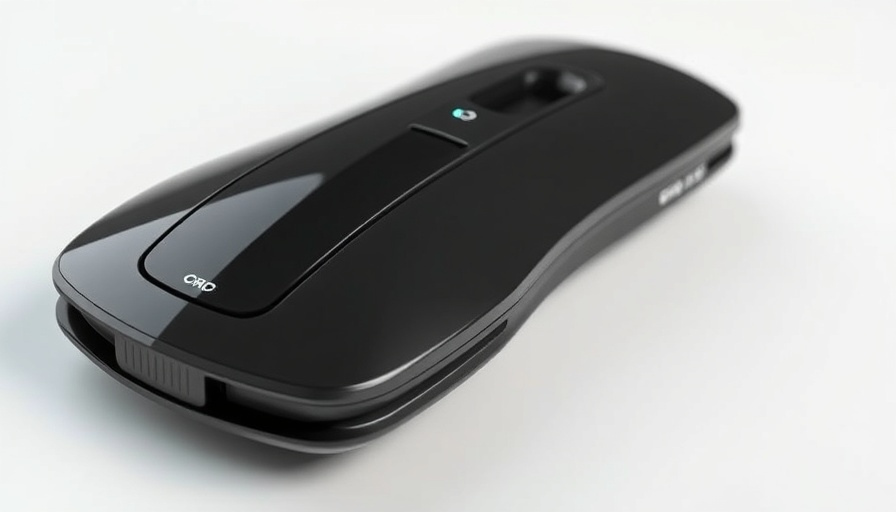
Sonu Band: A Game-Changer in Drug-Free Pediatric Nasal Congestion Relief

Innovative drug-free treatment for pediatric nasal congestion device.

The Groundbreaking FDA Approval of the Sonu Band

The recent announcement from the U.S. Food and Drug Administration (FDA) regarding the Sonu Band marks a significant milestone in pediatric health technology. Designed for adolescents aged 12 and older, this artificial intelligence-enabled wearable device offers a drug-free treatment for moderate-to-severe nasal congestion caused by allergic and nonallergic rhinitis. As the first of its kind to receive FDA approval, the Sonu Band presents an innovative alternative to traditional medications, which often come with unwanted side effects.

How Does the Sonu Band Work?

Utilizing acoustic resonant sound waves, the Sonu Band interacts with the nasal cavity, promoting relief by reducing swelling, opening nasal passages, and assisting mucus drainage. The device is paired with a smartphone app that captures a digital scan of the patient's face, generating a customized acoustic map of their sinuses. Following a one-time scan, users can simply wear the band around their head and turn it on, resulting in many patients experiencing symptom improvement in just 15 minutes. Over 80% of participants reported positive outcomes, emphasizing the device's effectiveness and ease of use.

The Need for Noninvasive Solutions

Many families find themselves in search of safe and effective alternatives to traditional therapies, particularly when long-term use of medications involving steroids or other drug treatments pose various health risks. Dr. Alan Greene, an expert in pediatrics at Stanford University, expressed hope that the Sonu Band is a game changer for children suffering from chronic nasal congestion. It's a noninvasive option that addresses the longstanding concerns many parents have about conventional medicines.

Broader Implications for Pediatric Healthcare

The approval of the Sonu Band not only showcases advances in medical technology but signifies a shift towards prioritizing patient-centered care. Devices like Sonu could redefine treatment methodologies in pediatrics, as more families increasingly seek nonpharmacological solutions for their children's illnesses. This could influence future innovations in similar domains, paving the way for additional FDA approvals of wearable and drug-free health technologies.

Looking Ahead: The Future of Pediatric Health Tech

In a world where health interventions are rapidly evolving, the future seems promising for pediatric healthcare technology. With the Sonu Band's launch, there is hope that more similar innovations will emerge, creating a diverse toolbox for healthcare providers. As technology integrates more deeply into medical treatments, the potential for personalized care and patient satisfaction will likely continue to increase. Parents, healthcare providers, and innovators alike should keep an eye on this trend, as the move towards safe, effective, drug-free solutions changes how we treat common pediatric health issues.

This new FDA approval encourages families to explore these innovative options for managing nasal congestion. Consider discussing the Sonu Band with your healthcare provider, especially if your child suffers from persistent nasal congestion.

Health Tech

Write A Comment

*
*
Related Posts All Posts
12.13.2025

Discover the 'Pain Sponge': Non-Opioid Therapy for Chronic Pain Relief

Update A Promising New Era in Pain ManagementChronic pain is a debilitating condition that affects millions, particularly those battling osteoarthritis. Conventional treatments often come with a litany of side effects, including the risk of addiction to opioids. However, a novel approach developed by SereNeuro Therapeutics could revolutionize pain management and tissue preservation, offering a ray of hope for patients suffering from chronic joint pain.Introducing SN101: The 'Pain Sponge'The groundbreaking therapy known as SN101 employs induced pluripotent stem cell (iPSC)-derived peripheral pain-sensing neurons, or nociceptors. According to Gabsang Lee, a scientific co-founder at SereNeuro, these specially engineered cells act as a "pain sponge" by sequestering inflammatory factors responsible for pain instead of transmitting them to the brain. This counterintuitive approach allows the body to heal joints while mitigating pain.Redefining Pain ManagementThe presentation at the International Society for Stem Cell Research (ISSCR) highlighted SN101’s capacity to distinguish itself from traditional therapies like corticosteroids and ion channel inhibitors. While corticosteroids may provide temporary relief, they are notorious for accelerating cartilage degeneration over time. In contrast, SN101 appears to preserve joint tissues while offering long-term pain relief.Scientific Backing: The Relevance of Piezo2Research from Rush University revealed new insights into pain management, drawing attention to specific sensory neurons that contribute to osteoarthritis-related pain. These findings support the premise that targeting elements like Piezo2 could open new avenues for treatment. SN101 aligns with this philosophy, advancing the conversation around non-opioid therapies.The Collective Push for Non-Opioid SolutionsThe exponential rise in opioid prescriptions has led to a growing dependency crisis in the United States. As highlighted in various studies, including those from Rush University and Johns Hopkins, the search is urgent for effective alternatives. Reducing reliance on opioids is paramount for public health, and initiatives like SN101 could be keystones in this effort.Patient-Centric Benefits of Non-Opioid TreatmentsPatients seeking effective pain management now have more options than ever. Non-opioid therapies like SN101 not only relieve pain but also work to preserve joint integrity, a crucial factor in improving the patient's quality of life. Moreover, this therapy avoids the complexities and risks associated with opioid use, paving the way for safer chronic pain management practices.Moving Forward: Future Implications and PredictionsAs the therapeutic landscape evolves, the introduction of solutions like SN101 could signal the beginning of a new standard in pain management. Advances in stem cell technology may foster further innovations, challenging established norms about treating chronic pain. We may soon see a future where patients rely less on pharmaceuticals and more on regenerative therapies, reshaping how chronic conditions like osteoarthritis are treated.Conclusion: A Call for Awareness and AdaptationThis emerging therapy not only shows promise in ameliorating chronic pain but also serves as a call to action for more comprehensive research into non-opioid therapies. With millions affected by osteoarthritis and other chronic pain conditions, it is crucial to remain informed and advocate for advanced treatment modalities. Whether you are a healthcare professional, a patient, or simply someone seeking to understand the evolving landscape of pain management, staying abreast of these developments could make a significant difference.

12.13.2025

Revolutionary Non-Opioid Pain Sponge Therapy Offers Hope for Chronic Pain Relief

Update The Next Frontier in Pain Management: Non-Opioid SolutionsChronic pain remains a significant healthcare challenge, with millions of individuals seeking relief while negotiating the side effects and risks associated with traditional opioid treatments. However, recent advancements in biotechnology suggest a promising alternative in the form of SereNeuro Therapeutics' innovative 'pain sponge' therapy, known as SN101.Understanding SN101 TherapySN101 is a groundbreaking therapy derived from induced pluripotent stem cells (iPSCs) that aims to alleviate chronic pain and halt cartilage degeneration associated with conditions like osteoarthritis. Unlike typical pain management strategies that often rely on opioids or corticosteroids, SN101 employs mature iPSC-derived nociceptors—pain-sensing neurons that act as a sponge for inflammatory pain factors.As Dr. Gabsang Lee, co-founder of SereNeuro, emphasizes, the therapy effectively sequesters pain signals without transmitting them to the brain. This dual action not only relieves discomfort but also has the potential to preserve joint health, a revelation contrasting sharply with current standard treatments that exacerbate cartilage degeneration over time.Why SN101 Stands Apart from Conventional TreatmentsThe effectiveness of SN101 lies in its biological complexity. Unlike single-target therapies like Nav 1.8 inhibitors, which focus on one pain pathway, SN101 operates on multiple pain receptors and ion channels, addressing pain and inflammation comprehensively. This multifaceted approach positions SN101 as a disease-modifying osteoarthritis drug (DMOAD), capable of promoting healthy bone remodeling and potentially altering the course of osteoarthritis.Highlighting Key BenefitsPatients often face challenges with traditional analgesics, including addiction and diminishing efficacy over time. SN101’s non-addictive profile is a major advantage, offering a compelling strategy for managing pain in a safer manner.Real-World Implications and Future DirectionsPresenting at the recent International Society for Stem Cell Research (ISSCR) Symposium, these findings suggest a paradigm shift in pain management, particularly for individuals suffering from chronic conditions. As researchers continue to develop therapies like SN101, the hope is not just for pain relief but for enhanced quality of life for countless patients.Moreover, SereNeuro is advancing towards Investigational New Drug (IND) studies, indicating that these therapies could soon be within reach for patients in need. As the pharmaceutical landscape evolves with such innovations, it prompts a reevaluation of how we conceptualize and treat chronic pain.Concluding ThoughtsThe introduction of SN101 therapy marks a potential turning point in chronic pain management, steering away from opioid dependence toward innovative, regenerative solutions. If successful, this 'pain sponge' technology could redefine treatment protocols, offering hope where traditional methods have fallen short.

12.12.2025

Proton Therapy Proves to Boost Survival Rates for Oropharyngeal Cancer Patients

Update Proton Therapy: A Game Changer for Oropharyngeal Cancer?In a groundbreaking study published in the esteemed journal The Lancet, researchers from the University of Texas MD Anderson Cancer Center have established that proton therapy, specifically intensity-modulated proton therapy (IMPT), offers significant survival advantages for patients with oropharyngeal cancers compared to traditional radiation methods. The trial, which is the largest randomized Phase III study on this topic to date, has provided the first level one evidence highlighting not only improved survival rates but also a better quality of life for these patients.Understanding the Significance of Proton TherapyTraditionally, tumors have been treated with intensity-modulated radiation therapy (IMRT), which utilizes photons that can inadvertently affect surrounding healthy tissues, causing collateral damage. This is particularly concerning for cancers of the head and neck, where sensitive organs are in close proximity to the tumor. In contrast, proton therapy allows for highly targeted treatment, minimizing exposure to healthy tissues and thereby reducing the risk of severe side effects.Key Findings from the StudyThe comprehensive trial involved 440 patients suffering from stage III or IV oropharyngeal cancer, divided between those receiving IMPT and those treated with IMRT. Among the key takeaways:After five years, 90.9% of patients receiving proton therapy were alive—a statistically significant improvement compared to the 81% survival rate for traditional therapy patients.Proton therapy patients reported fewer instances of difficulty swallowing (34% vs. 49%) and a lower dependency on feeding tubes (26.8% vs. 40.2%).Other noticeable reductions included dry mouth (33% proton vs. 45% IMRT) and severe lymphopenia (76% vs. 89%), enhancing overall patient quality of life.These results indicate that proton therapy is not just about treating cancer, but also about improving the patient's life during and after treatment.The Challenges AheadDespite the positive findings, Dr. Steven Frank, a leading figure in the study, emphasizes the need for ongoing research to identify which patients are best suited for this advanced option. Given the cost and technological requirements associated with proton therapy, ensuring accessibility remains a challenge. Increasing awareness and understanding of its benefits are essential in advocating for insurance policies to cover this treatment as a standard of care in advanced cases of oropharyngeal cancer.Future Trends in Cancer TreatmentThe promising results from the proton therapy study suggest a shift in treatment paradigms. With a clear survival advantage over traditional methods, there is potential for proton therapy to become the go-to option for treating certain types of head and neck cancers. This raises questions about future cancer protocols and how treatment plans are developed based on individual patient profiles and tumor characteristics.What This Means for Patients and FamiliesFor patients and their families, these findings bring hope. The prospect of better survival chances and less debilitating side effects can significantly influence treatment decisions. As healthcare providers continue to examine the implications of this study, it also reinforces the importance of early detection and tailored treatment plans, where patients are fully informed of their options.As the landscape of cancer treatment evolves, understanding the nuances between treatment methods will empower patients to engage more actively in their care decisions. Proton therapy stands out as a valuable tool in the fight against cancer, particularly for those battling the challenges presented by oropharyngeal cancers.

Terms of Service

Privacy Policy

Core Modal Title

Sorry, no results found

You Might Find These Articles Interesting

T
Please Check Your Email
We Will Be Following Up Shortly
*
*
*