

Add Row
Add Element
Tech Life Journal
update
Tech Life Journal 
update
Add Element
  • Home
  • Categories
    • Innovation
    • Digital Tools
    • Smart Living
    • Health Tech
    • Gear Review
    • Digital Life
    • Tech Travel
    • Voices in Tech
  • Featured
June 05.2025
3 Minutes Read

Vascularized Organoids Could Revolutionize Heart and Liver Treatment

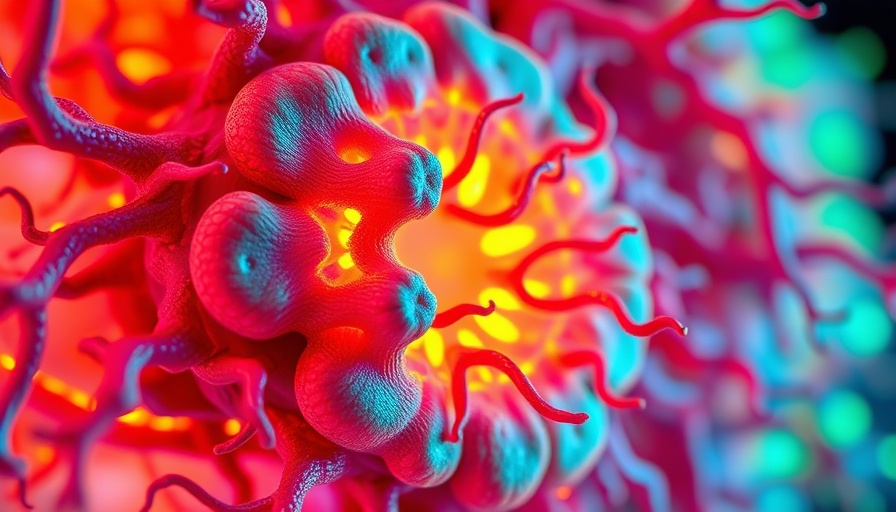
Intricate visualization of vascularized organoid for treatment.

Revolutionizing Organ Modeling: The Emergence of Vascularized Organoids

Recent advancements in stem cell research have sparked a thrilling shift in medicinal science as scientists have successfully grown organoids that contain a network of tiny blood vessels. This breakthrough, reported by a team from Stanford Medicine, marks a significant leap forward in the ability of organoids to mimic actual organ functions, which has implications for both research and treatment methodologies.

Understanding Organoids: Miniature Models of Human Organs

Organoids are small clusters of living cells that replicate the structure and function of specific organs, and have become invaluable tools for investigating various diseases and potential treatments. For instance, researchers have used brain organoids to simulate neurodevelopmental disorders, and lung organoids to better understand how COVID-19 interacts with human tissues. However, traditionally, these miniature models have a size limitation—beyond about 3 millimeters in diameter, organoids struggle to survive due to their inability to effectively transport oxygen and nutrients internally.

The Challenge of Vascularization: Why It Matters

As explained by Oscar Abilez, a senior scientist at Stanford, organoids face a critical hurdle—the lack of a vascular system. This limitation means that once they reach a certain size, the inner cells can die off from nutrient deprivation. With this new research, the development of vascularized organoids promises to solve these issues, enabling them to grow larger and more complex, while functioning closer to actual organs.

Implications for Regenerative Medicine: A Step Toward Treatment

The potential applications of these vascularized organoids are vast. According to Joseph Wu, director of the Stanford Cardiovascular Institute, there is a possibility that these tiny organs, cultivated from patients' own stem cells, could one day be utilized for implanting into individuals suffering from tissue damage or heart dysfunction. This progress not only paves the way for advancements in regenerative medicine but also offers hope for patients requiring organ transplants.

Enhancing Research Capabilities: What This Means for Scientists

The introduction of functional vascular structures in organoids could completely transform the landscape of biomedical research. Insights gained from these models could lead to more accurate simulations of human diseases, contributing to the development of targeted therapies. With these advancements, scientists could conduct drug screening directly on human-like tissues rather than traditional cell lines or animal models, which often fail to predict human responses effectively.

Exploring Future Trends: Where Do We Go From Here?

This breakthrough is only the starting point. The future of organoid research might hold even larger possibilities, such as constructing complex organ systems or even entire organs. Ongoing research could lead to innovations that align closer to real-life conditions, potentially reducing the timeframe for developing new treatments and enhancing patient outcomes.

Conclusion: The Promise and Potential of Vascularized Organoids

The development of organoids with vascular networks represents a momentous leap in biomedical science. As researchers continue to explore and refine these technologies, the path toward personalized regenerative therapies becomes clearer. For patients and medical professionals alike, this innovation could transform our understanding of health and disease treatment. The future appears promising, with the potential to revolutionize how we approach organ regeneration and therapy.

Health Tech

Write A Comment

*
*
Related Posts All Posts
12.09.2025

Astaxin Stockholm's Skincare Innovation: Recognized for Quality and Efficacy

Update Astaxin Stockholm: Leading the Way in Skincare Innovation AstaReal AB's skincare line, Astaxin Stockholm, has recently made waves by clinching two prestigious awards at the 2025 Stockholm Beauty Week, held on November 17. The series was named Skincare Series of the Year, while the Calm Face Cream won the accolade for Face Cream of the Year. This recognition is not merely a celebration of aesthetic appeal but speaks volumes about the potent formula that underlies Astaxin's success. The Astaxanthin Advantage Central to the Astaxin Stockholm line is astaxanthin, a powerful antioxidant renowned for its skin health benefits. Together with a blend of carefully selected active ingredients, astaxanthin works to enhance skin vitality and combat signs of aging. As emphasized by Annelie Gunnarsson, the brand manager at AstaReal AB, the awards reflect the growing consumer interest in skincare backed by science, a sentiment mirrored in the beauty trends currently observed in the U.S. market. Holistic Wellness: A Trend in Skincare The shift towards holistic wellness, particularly in skincare, beckons a deeper understanding of how inner health translates to outer beauty. Consumers are increasingly seeking products that not only beautify but also nurture their skin's natural integrity. A growing movement emphasizes this "inner radiance" - looking beyond traditional cosmetics to solutions that promote overall skin health. The success of Astaxin Stockholm is emblematic of this trend; its focus on harmonizing scientific efficacy with appealing cosmetic results resonates with modern consumers. Consumer and Industry Recognition Astaxin Stockholm’s recognition at Stockholm Beauty Week validates its commitment to quality and research. Gunnarsson notes that the dual awards signify appreciation from both consumers and industry professionals who understand the synergy created by combining scientific research with skincare. This recognition positions Astaxin as not just another skincare line, but rather a pivotal player in the broader shift towards scientifically driven beauty products. The Future of Skincare: Innovations on the Horizon Looking ahead, the skincare industry shows no signs of stagnation. The increasing integration of natural ingredients, such as astaxanthin, into skincare formulations has become more pronounced. Brands that can adeptly blend scientific principles with natural efficacy will likely outperform those leaning solely on traditional marketing. Astaxin Stockholm serves as a case study in how innovative products can capture market share in an ever-evolving landscape. How to Leverage Astaxin’s Success For those looking to integrate the benefits of astaxanthin into their skincare routines, Astaxin Stockholm is readily available for purchase through its official website. Through informed choices about the products you use, you can embrace the benefits that come with science-backed skincare and join the growing community that values both health and beauty. Conclusion The accolades received by Astaxin Stockholm not only underscore the quality of their offerings but also highlight a trend toward scientifically supported skincare solutions. As consumer preferences shift towards products that harmonize with their natural processes, skincare lines that embrace this philosophy will likely thrive.

12.09.2025

How ULM-Lite Uses Ultrasound to Visualize Brain Microvessels Efficiently

Update Revolutionizing Brain Imaging: The Power of ULM-Lite TechnologyThe latest advancement from researchers at the Daegu Gyeongbuk Institute of Science and Technology (DGIST) promises to transform the way we visualize blood vessels in the brain. This groundbreaking technique, dubbed 'ULM-Lite', leverages the principles of ultrasound localization microscopy (ULM) to provide a clearer picture of the human brain's microvasculature, which is crucial for diagnosing various neurological conditions.What Is ULM-Lite and Why Does It Matter?Conventional ultrasound imaging, although widely used in medical settings, struggles to visualize microvessels that are thinner than a strand of hair. The development of ULM addressed this limitation by tracking microbubbles in the bloodstream, thus allowing for the reconstruction of detailed vascular structures. However, the data volume generated by ULM proved to be a significant hurdle, often choking the capacity for real-time analysis and immediate application in patient care.Streamlined Imaging with Reduced Data RequirementsULM-Lite enhances ULM's functionality by dramatically reducing the data produced during imaging. By retaining only critical information needed for accurate vascular mapping, the ULM-Lite technique decreases the effective bandwidth of signal transmission by approximately 67%. This efficiency not only reduces the data volume to about one-third of what was previously necessary, but it also boosts image processing speeds by roughly 30%.Potential Applications in Brain HealthThe implications of ULM-Lite extend far beyond more efficient imaging. Researchers expect this innovative approach will play a crucial role in diagnosing and treating brain diseases. With its non-invasive nature and capability to visualize vascular structures in real time without the need for contrast agents, ULM-Lite opens new avenues in understanding and treating neurological disorders.Looking Ahead: The Future of Non-Invasive Brain ImagingAs researchers continue to refine this technology, the potential applications grow. According to Professor Jaesok Yu, who led the research, ULM-Lite could be combined with non-invasive ultrasound brain stimulation technology, paving the way for advanced therapeutic methods and enhanced research capabilities in the field of neurology.Embracing InnovationThe launch of ULM-Lite represents a critical evolution in medical imaging technology. By enabling clearer visualization with less strain on data processing, it allows for quicker diagnoses and potentially better outcomes for patients suffering from complex brain diseases. As we pivot toward an era where technology plays an increasingly integral role in healthcare, innovations like ULM-Lite will undoubtedly lead to substantial changes in medical practices.

12.09.2025

Explore How ULM-Lite Revolutionizes Ultrasound Imaging of Brain Microvessels

Update Introducing ULM-Lite: A Breakthrough in Ultrasound Imaging In a significant advancement for medical imaging, a team from the Daegu Gyeongbuk Institute of Science and Technology (DGIST) has unveiled a revolutionary technology named ULM-Lite. This new technique improves upon traditional ultrasound localization microscopy (ULM) by drastically reducing the amount of data needed to visualize microvessels in the brain while maintaining image clarity. This development paves the way for more efficient brain research and enhances diagnostic capabilities for various brain diseases. Understanding the Limitations of Conventional Ultrasound Traditional ultrasound methods have been invaluable in observing organs; however, they struggle with detecting minute structures such as microvessels, which are substantially smaller than a human hair. The limitation arises from the high resolution required to differentiate these tiny blood vessels, which previously rendered them invisible through standard practices. ULM emerged as a specialized method within the ultrasound spectrum that tracks the movement of ultrasound contrast agents called microbubbles. By meticulously tracing these agents, ULM reconstructs detailed maps of vascular structures that reveal their complexities. However, the inherent challenge was that ULM generated enormous amounts of data—often measuring in gigabytes per second—making its practical application in real-world settings cumbersome. How ULM-Lite Enhances Imaging Efficiency By implementing an innovative analysis methodology, the DGIST research team successfully addressed the data overload issue. The ULM-Lite technique retains only the essential information required for mapping blood vessel structures, effectively reducing the data volume by approximately one-third. This not only conserves storage space but also improves processing speeds by about 30%. And the best part? ULM-Lite can be utilized with existing ultrasound equipment without necessitating extensive upgrades, making its integration into current medical practices efficient and accessible. Significant Implications for Brain Research and Disease Monitoring The non-invasive nature of ULM-Lite allows for comprehensive brain visualization without the complications of surgical procedures or the introduction of fluorescent materials. This advancement is especially promising for researchers and clinicians working in the field of neuroscience, where monitoring structural changes in response to therapies is crucial. As Professor Jaesok Yu, a lead researcher on the project, noted: "We anticipate that this technology will be instrumental in diagnosing and treating various brain diseases, especially when combined with non-invasive ultrasound brain stimulation technology." This statement underlines the potential breadth of ULM-Lite’s applications in both clinical and research settings, potentially reshaping how we approach brain health. Future Perspectives: Combining Technologies for Enhanced Outcomes The future of ULM-Lite looks bright as it aligns with ongoing advancements in non-invasive brain stimulation techniques. By integrating these technologies, researchers can create holistic methods for diagnosing and treating neurological conditions. As the boundaries in medical imaging technology continue to expand, ULM-Lite exemplifies a leap toward achieving advanced, practical, and efficient solutions for brain health. Conclusion and Next Steps As the implications of ULM-Lite unfold, faith in enhanced diagnostics and treatments for brain diseases grows. This advancement not only showcases human ingenuity in healthcare innovation but also encourages further exploration in using ultrasound technology for complex biological systems. Continued research in this area will be essential for leveraging ULM-Lite's potential fully.

Terms of Service

Privacy Policy

Core Modal Title

Sorry, no results found

You Might Find These Articles Interesting

T
Please Check Your Email
We Will Be Following Up Shortly
*
*
*