

Tech Life Journal
update
Tech Life Journal 
update
  • Home
  • Categories
    • Innovation
    • Digital Tools
    • Smart Living
    • Health Tech
    • Gear Review
    • Digital Life
    • Tech Travel
    • Voices in Tech
  • Featured
May 29.2025
2 Minutes Read

What Google's Decision to Stop Nest Thermostat Support Means for Users

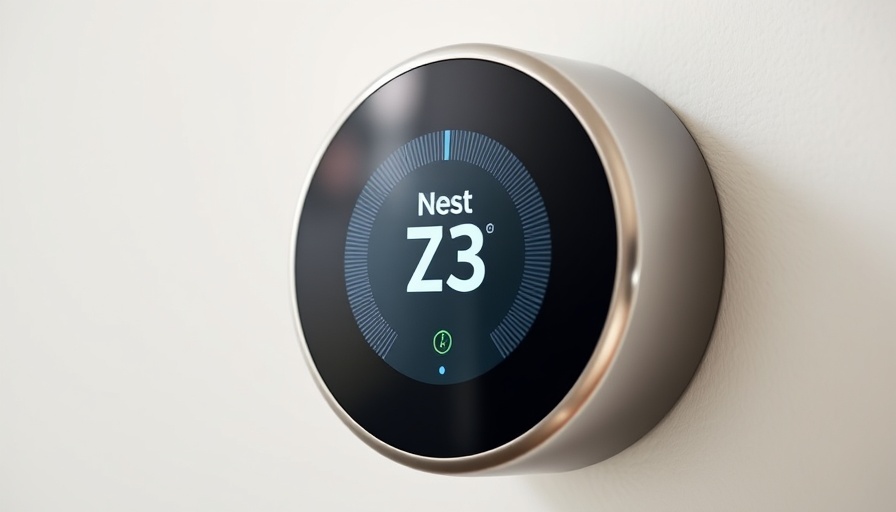
Close-up of modern Nest thermostat displaying temperature.

Google's Decision to End Support for Older Nest Thermostats

As of October 25, 2025, Google's commitment to its first and second-generation Nest thermostats will come to an official close. For those who have relied on these devices since their initial release in 2011 and 2012, the end of software updates marks a significant shift in functionality. Gone will be the conveniences that have defined the smart-device trend—remote access via smartphones and automated features will cease to exist.

What Happens When Support Ends?

While users can still manually control their thermostats post-update, their smart capabilities will diminish drastically. Control through the Nest or Google Home apps will no longer be available. For tech enthusiasts who valued the ability to adjust settings from anywhere in the house or while on the move, this change represents a regression in user experience. As smart home devices integrate into daily life, the loss of such features can be disheartening.

The Shift in Google's Market Strategy

The disbanding of support for older models also coincides with Google's broader market strategy. The company has decided to exit the European market for Nest thermostats entirely, citing the complexity of heating systems across different countries as a key challenge. Unlike the U.S., where thermostatic needs are more homogeneous, European systems vary widely from radiators to combi boilers. Rather than adapt its products to fit this diverse landscape, Google has opted to pull back its offerings.

Incentives for Upgrade

To cushion the transition, Google is incentivizing U.S. customers with a substantial $130 discount on the fourth-generation Nest thermostat. This price cut brings the total cost down significantly, potentially encouraging long-time users to upgrade. For residents of Canada, the discount is even better at $160, but European consumers looking for a replacement are presented with different alternatives. Google has partnered with Tado, offering a 50% discount on their Smart Thermostat X instead.

The Future of Smart Home Devices

The move raises questions about the direction of smart home technologies. As more users invest in devices that require ongoing software support, the reliance on updates and connectivity becomes paramount. The sunset of older Nest devices could serve as a catalyst for discussion surrounding digital sustainability and the need for manufacturers to consider longevity in their product lifecycle.

Conclusion: Time for Users to Adapt

In the face of these changes, Nest users face an important decision regarding their future smart home experiences. Those who value the conveniences that technology provides may need to adapt sooner rather than later. Whether that means investing in a new thermostat or exploring alternative options in the smart home market, staying informed and agile will be essential as technology continues evolving.

Innovation

0 Comments

Write A Comment

*
*
Please complete the captcha to submit your comment.
Related Posts All Posts
05.24.2026

SpaceX and OpenAI IPOs: Why Caution is Key for Investors

Update Understanding the Hype Around SpaceX and OpenAI IPOs As both SpaceX and OpenAI gear up for their potentially record-breaking initial public offerings (IPOs), it's essential for investors to understand the broader implications of these launches within the context of recent market history. Both companies are not just tech giants; they represent the forefront of innovation in the space and AI sectors, fueling significant investor interest and speculation. Market Dynamics: A Historical Lens Historically, IPOs from high-valued companies have had mixed results. A study of nearly 4,000 businesses since the year 2000 shows that while the average stock gained about 30% on its first day, many found their valuations chill significantly shortly afterward. Investors often see a rapid rise in stock price initially, followed by a sharp correction as early adopters cash out, leading to fear of speculative bubbles, particularly for companies like SpaceX, valued at roughly $1.25 trillion. SpaceX and OpenAI: The Numbers Behind High Valuation Recent financial structures indicate both firms will enter the market at staggering valuations—SpaceX aiming for around $75 billion in its IPO, while OpenAI could reach a valuation of $1 trillion. Such high starting points raise eyebrows; this means the market may not sustain these initial hype-driven valuations for long. With SpaceX recording a $5 billion loss against $18 billion in revenue, the focus must be on their future earnings potential and the sustainability of such valuations in investor strategy. Expert Insights: Cautions from Financial Analysts Notably, financial experts caution against rushing into buying shares at launch. Jim Cramer from CNBC articulated that the influx of shares from major IPOs can impact overall market liquidity. Michael Burry, well-known for his contrarian insights, suggests that while initial market euphoria may be strong, the long-term impact of these IPOs might be minimal in terms of market dynamics. Investor Sentiment: What Should You Consider? The looming IPOs of SpaceX and OpenAI can also be a reflection of broader market trends in technology and investments in artificial intelligence. With tech stocks reaching new heights and AI becoming integral in various sectors, there’s undoubtedly a sentiment of heightened speculative investment. The implications of both IPOs stretch far beyond immediate market dynamics, possibly signaling a shifting landscape towards tech and innovation-driven investments. What Investors Can Take Away For potential investors, the key is to stay informed and cautious. As the excitement around tech IPOs grows, being aware of the historical performance of similar launches can guide smarter investing decisions. One must weigh the present valuations against future profitability—especially since both companies hold the potential for extraordinary growth but may also present significant risks. Navigating the Future: Preparing for the Upcoming IPOs As SpaceX and OpenAI prepare to enter the public trading arena, the investment landscape is poised for a shakeup. These events should not only be viewed as opportunities but also as vital learning moments on market behavior, investor psychology, and financial lapses to avoid. Preparing intelligently with this backdrop in mind will position investors to navigate potential volatility effectively.

05.24.2026

How ECB Urges Banks to Mitigate AI Risks Exposed by Mythos

Update The European Central Bank Takes Action Against AI RisksIn a proactive response to the growing influence of artificial intelligence in banking, the European Central Bank (ECB) is taking steps to ensure that banks are adequately prepared to address the cybersecurity threats posed by emerging AI models. This initiative comes on the heels of concerns surrounding Anthropic's new AI model, Mythos, which experts warn could potentially enhance the sophistication of cyberattacks against financial institutions.Understanding the Threat of MythosMythos has been flagged as a significant cybersecurity risk, capable of identifying vulnerabilities in software and exploiting them at unprecedented speed and scale. With the complex nature of financial systems, regulators in both the U.S. and Europe are alarmed by the potential for AI to disrupt traditional banking operations. ECB officials have begun gathering insights on how banks plan to bolster their defenses against such advanced threats, emphasizing the need for preparedness in this rapidly evolving landscape.Regulators Seek Dialogue with BanksRather than organize an urgent meeting with top executives—or similar intervention strategies seen elsewhere—the ECB is relying on its standard communication channels with bank representatives. This approach aims to assess the current state of banks’ cybersecurity measures and their readiness to combat AI-driven techniques. The ECB has signaled that this analytical process will shape future regulatory efforts and risk assessments.Global Concerns Echoed in EuropeThe concerns raised by the ECB are echoed by various authorities around the globe. For instance, in the U.S., top officials have called for an urgent dialogue about the implications of AI in the banking sector, with President Trump publicly acknowledging the risks involved. British Technology Secretary Liz Kendall has also cautioned businesses about the heightened threat presented by Mythos, underlining a consensus among global leaders about the pressing need for robust cybersecurity frameworks in financial services.Strategic Responses in CybersecurityAs AI evolves, traditional cybersecurity measures may no longer suffice. Innovators like Anthropic are already shifting their strategies; Mythos will not be widely available to the public but will be tested with select partners to refine defensive capabilities against the very exploits it may enable. This collaborative effort among tech giants and financial institutions underlines the urgency of adapting to the new cyber landscape.The Role of Risk ManagementRisk management in the financial sector has increasingly emphasized AI's dual role—as both a potential asset and a formidable threat. The ECB has made tech risk a significant focus for its upcoming priorities, highlighting a comprehensive approach to understanding how cutting-edge technology impacts stability within the banking sector. With AI capabilities advancing rapidly, understanding these dynamics will be critical for regulators and institutions alike.Looking Ahead: Preparing for AI's ImpactAs technology evolves, the imperative for banks to adapt becomes clearer. Just as previous innovations demanded regulatory shifts, the rise of AI and its implications for cybersecurity will require a dynamic and responsive regulatory framework. For stakeholders within the financial systems, the call to action is clear: prioritize cybersecurity measures and cultivate a culture of robust risk management to navigate the complexities introduced by advances like Mythos.By reflecting on these developments, banking institutions can better prepare not just for the challenges posed by AI but also for the opportunities it may herald for greater efficiency and innovation in financial services. The dialogue initiated by the ECB is a critical step in fostering an environment where security and innovation can thrive side by side.

05.23.2026

OpenAI Hiring for Head of Preparedness to Ensure Safe Self-Improving AI

Update OpenAI's Bold Step Into Future AI Safety As AI technology advances, OpenAI is taking a proactive approach to ensure the safety and ethics of its developments, preparing for a future where artificial intelligence could autonomously improve itself. The tech giant recently announced plans to hire a "Head of Preparedness," a role designed to mitigate the potential dangers associated with AI advancements, including mental health concerns and cybersecurity risks. With a salary up to $555,000 a year, this role emphasizes the importance of having a safety-focused leader as AI becomes increasingly capable and complex. A Critical Role in an Uncertain Future OpenAI’s CEO Sam Altman made headlines with this announcement, marking it as a necessary evolution in the tech industry. The creation of this role reflects growing concerns within the tech community regarding the rapid progress of AI models and the tangible risks they pose. According to Altman, the individual in this position will play an instrumental role in guiding AI capabilities to be beneficial rather than harmful. In light of increasing reports of AI-related mental health issues—including “AI psychosis” and distress linked to interactions with chatbots—this hiring strategy showcases OpenAI’s commitment to addressing real-world impacts of their technology. Previous incidents, such as high-profile lawsuits stemming from AI-user interactions, have underscored the urgency for robust safety measures. Addressing Reports of AI-Related Harms Recent studies have linked interactions with AI tools like ChatGPT to growing mental health crises among users, particularly teenagers. Evidence suggests that the empathetic nature of chatbots may inadvertently support harmful behaviors or reinforce delusions. As OpenAI navigates these turbulent waters, hiring a dedicated Head of Preparedness underscores the organization's intent to better understand and manage potential abuses of their technologies, especially in sensitive contexts. OpenAI has already implemented changes to its safety features in response to user feedback, including the establishment of a council aimed at designing effective guardrails for mental health. However, Rapid advancements in AI require a more nuanced approach to safety and ethics, as acknowledged by Altman’s emphasis on evolving competencies alongside technological improvements. Regulatory Pressures and Industry Standards OpenAI’s shift towards a safety-centric approach comes as the regulatory landscape around artificial intelligence tightens. In Europe, the AI Act mandates rigorous assessments of powerful models, while in the U.S., executive orders are pushing for increased transparency in AI-related safety measures. By actively pursuing this new role, OpenAI aims to demonstrate its dedication to self-regulation before stringent governmental measures are put in place. This proactive strategy not only positions OpenAI at the forefront of AI innovation but also sets a standard for ethical considerations in technology development. As rival firms experiment with various safety frameworks, OpenAI’s decision to create a position focused on preparedness highlights the increasing importance of ethical AI practices in the tech industry. The Road Ahead for AI Development As we step into a future where AI could potentially operate with greater autonomy, OpenAI's commitment to hiring a Head of Preparedness marks a critical junction for the industry. The responsibilities vested in this role reflect a broader trend towards accountability in technology development. The overarching goal is clear: to harness the benefits of AI while safeguarding against its potential harms. In summary, OpenAI's forward-thinking approach showcases an awareness of the challenges ahead. With escalating capabilities come the necessity for equally robust safeguards. By committing to proactive safety measures, OpenAI is working to ensure that advancements in AI technology serve humanity rather than endanger it, paving the way for a more secure and ethical AI landscape.

Terms of Service

Privacy Policy

Core Modal Title

Sorry, no results found

You Might Find These Articles Interesting

T
Please Check Your Email
We Will Be Following Up Shortly
*
*
*