


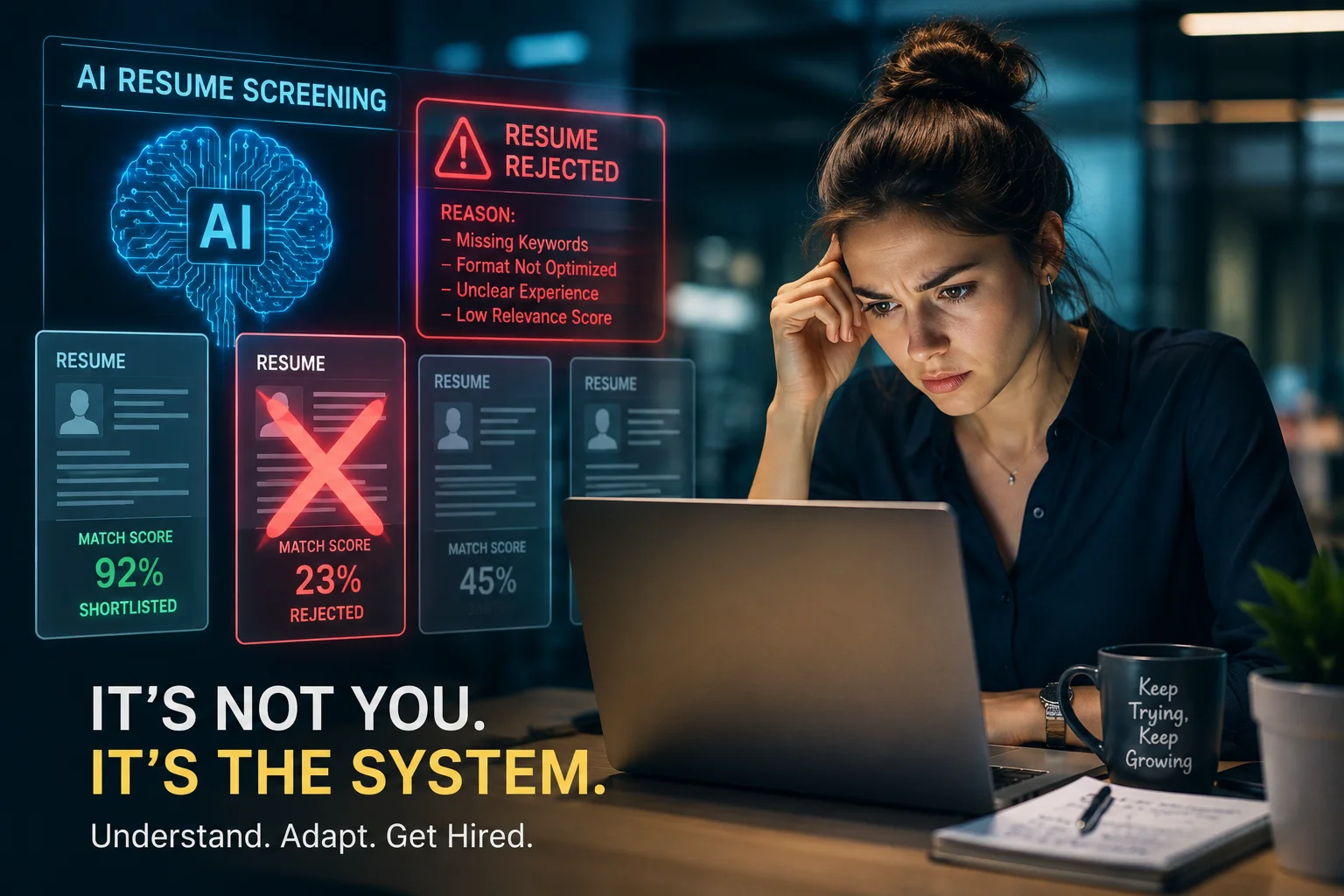
Did you know that up to 70% of qualified candidates are rejected by AI hiring systems due to algorithmic biases or keyword mismatches?
Understanding why AI rejects resumes is crucial to improving your chances in today’s job market. If you’ve ever felt defeated by online applications, you’re not alone. The rise of artificial intelligence (AI) in the hiring process has revolutionized how companies filter resumes—but it’s not always for the better.
In fact, those same systems can accidentally overlook the most qualified candidates. Let’s dive deep, bust myths, and give you the real-world tools and mindset to get your resume seen by a human again.
“Applicant tracking systems are being used to conduct initial application screenings — searching for key terms and skill and experience matching, for example — but humans are then looking at every application and making the final decisions as to who they will interview.” — Alyssa Hammond, Bentley University
Unlocking the Mystery: Why AI Rejects Resumes for Qualified Applicants
The question at the heart of every frustrated job seeker: Why does AI reject resumes from qualified candidates?
The answer is a mix of clever algorithms, imperfect science, and a little bit of digital luck. In an effort to sift through huge applicant pools quickly, companies “let the robots sort it out”—but that means screening resumes based on patterns, keywords, and formatting rather than actual aptitude or potential.
AI resume screening aims to help busy hiring managers, but when a qualified candidate is rejected by ATS (Applicant Tracking System) software, it can feel unfair and confusing.
Many employers hope AI will make hiring decisions efficiently—yet, as someone who’s been applying online for years, I’ve seen good people get weeded out by a misplaced word or creative job title. Understanding how ATS works is the first step to making sure your skills aren’t lost in cyberspace.
Whether you’re a career-changer, a student, or an experienced pro, knowing why AI rejects resumes arms you with the power to fight back and optimize your job search.
How AI resume screening works and why it sometimes misses the mark
Common pitfalls that lead to qualified candidates being overlooked
Practical strategies to improve your job search in an AI-driven world
Expert insights and real-life tips to navigate automated hiring systems
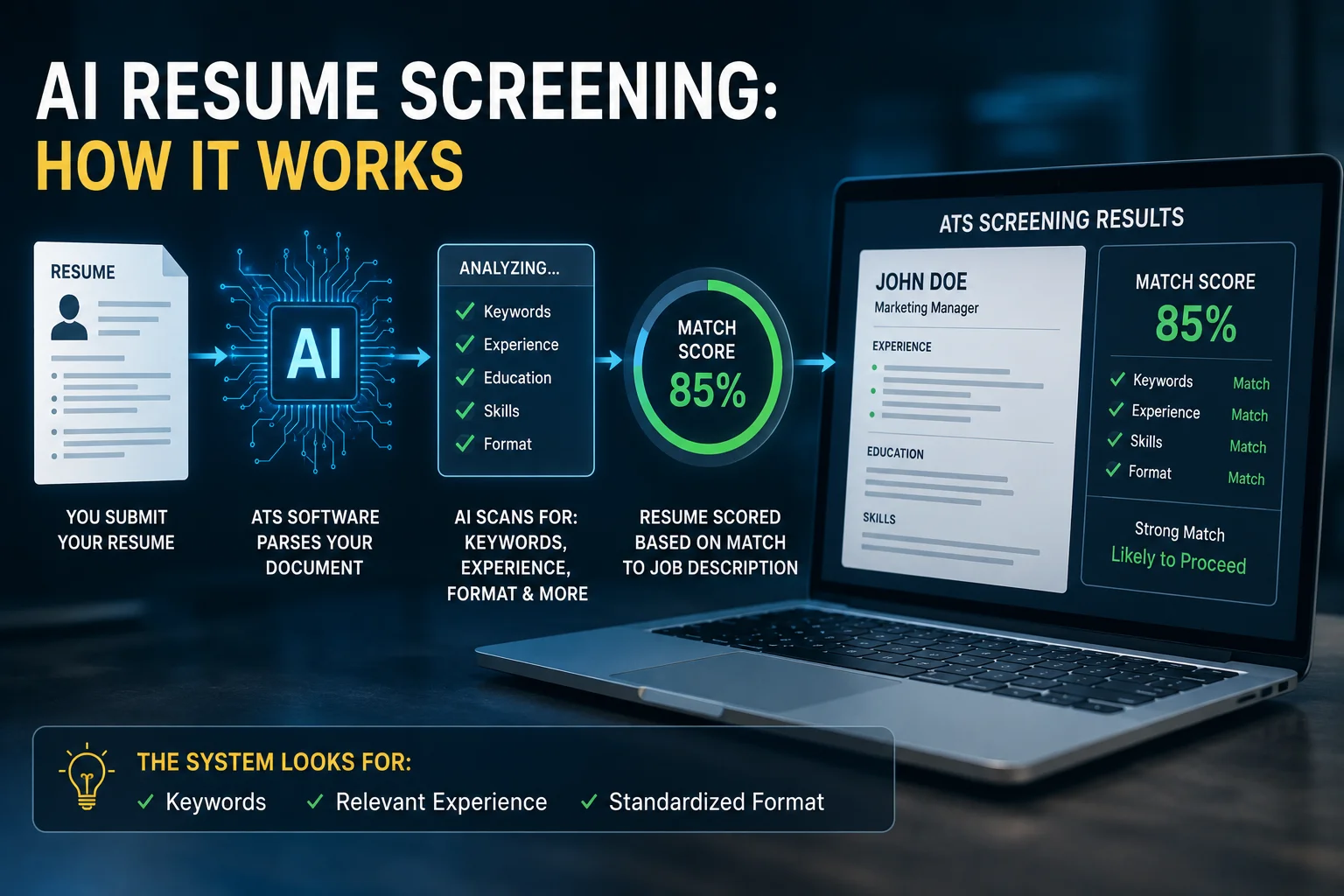
AI Resume Screening: A Double-Edged Sword
How AI Resume Screening Works (And Where It Fails)
Let’s start at the top: AI resume screening is designed to filter resumes using sophisticated algorithms. When you submit a resume online, ATS software parses your document, scoring it based on how closely it matches the job description. The system is looking for keywords, relevant experience, and a standardized format.
Sounds efficient, right?
But here’s where it gets tricky. The slightest difference—like using “Collaborated with stakeholders” instead of “Worked with stakeholders”—can mean your application disappears into the void.
It’s not just about keywords, either. Poor formatting (think fancy columns or creative graphics) can confuse the tracker, causing key info to be missed. These blind spots mean qualified candidates often slip through the cracks. Even with the best credentials, if your document isn’t ATS-friendly, you risk being overlooked before a recruiter or hiring manager even sees your resume.
“We haven’t seen a whole lot of evidence that there’s no bias here… or that the tool picks out the most qualified candidates.” — Hilke Schellmann, assistant professor of journalism at New York University

Algorithmic Bias in AI Resume Review
Here’s the hard truth: AI resume screening algorithms can introduce bias. These systems are trained on data from previous hires. If organizations historically favored certain types of candidates—say, those with “male names” or from specific schools—the AI can learn to unconsciously prefer those patterns. It’s unintentional but real.
In the effort to make hiring more objective and scalable, companies sometimes let bias slip in via the back door. And when this happens, a qualified candidate with a strong background but an uncommon title or different background may not even get a shot.
“AI resume parsing systems are only as good as the data and rules they’re trained on, which can unintentionally bake in bias.” — Dr. Nina Medina, HR Tech Analyst
For job seekers, the only defense is understanding how ATS works—and using that to your advantage. By recognizing likely pitfalls, you can avoid having your application automatically rejected by ATS due to issues out of your control.
Real-Life Anecdote: My First AI-Generated Rejection
I still remember the first time I got that automated “thanks but no thanks” email. I’d tailored every bullet point, double-checked my spelling, and fit the job description to a T. Weeks passed, and then—rejection. It wasn’t until I learned about applicant tracking systems that I realized: my creative formatting caused the ATS to miss my core experience entirely. It wasn’t a lack of skill—it was a tech thing. Knowing this literally changed my job search strategy, and I quickly saw more responses (and interviews) once I simplified my resume.
Top Reasons Why AI Rejects Resumes (Even If You’re Qualified)
Keyword Mismatches: The Great Filter
Poorly Formatted Resumes and AI Blind Spots
Over-Optimization and AI Red Flags
Missing or Weak Work Experience Descriptors
Unconventional Job Titles and Skills
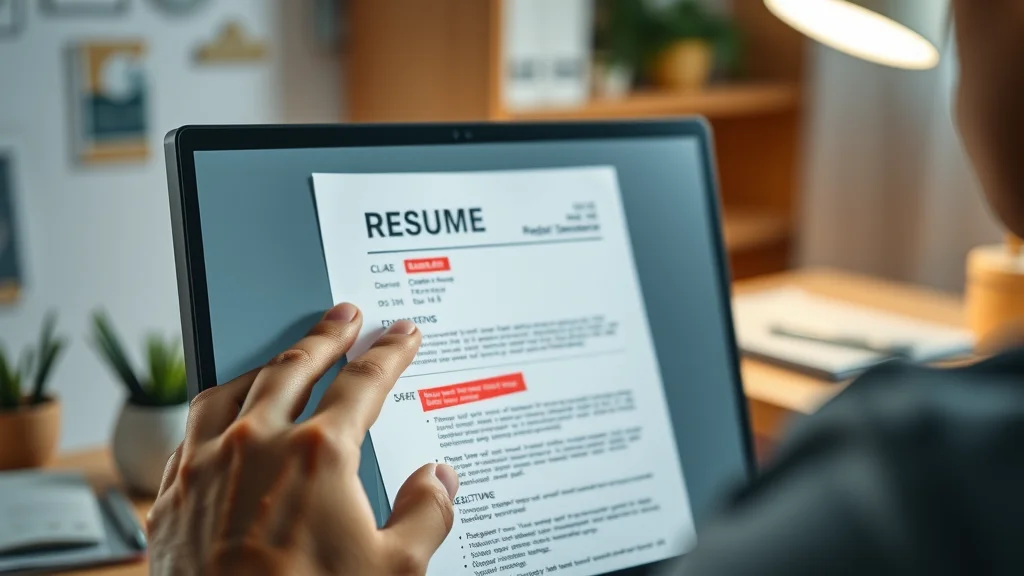
“Even the best-qualified person can be overlooked if their resume language doesn’t match what the AI is searching for.” — Raj Patel, Career Coach
Let’s break these down. Keyword mismatches are probably the biggest culprit. If your resume doesn’t echo the job posting, the AI might flag you as unqualified—even if your experience lines up perfectly. Poor formatting confuses even the smartest AI, hiding your info from essential fields. But beware of over-optimizing: stuffing a resume with repetitive keywords can trigger AI red flags, making you look inauthentic or like a bot yourself.
Weak descriptions (i. e. , not quantifying achievements) or odd job titles confuse AI algorithms, too. For instance, “Guru of Happiness” won’t get as far as “Customer Success Manager. ” So while it’s tempting to show your personality, save that for the interview and keep resume wording standard for the ATS.
How Job Search Strategies Can Outmaneuver AI Hiring Systems
Job Search Hacks to Get Past Automated Systems
Use the same keywords from the job description
Avoid images, graphics, and unusual fonts
Show measurable results and clear achievements
Leverage employee referrals whenever possible

“Networking and referrals remain the most underutilized yet effective job search strategy—AI can’t filter out a personal recommendation.” — Alicia Kim, Talent Acquisition Leader
Here’s your secret weapon arsenal: First, mirror the job description—that means rework your resume each time you apply to align with posted requirements. Second, skip graphical elements; a plain, well-organized layout makes it easier for AI to extract your data. Most importantly, employee referrals and networking can bypass the machine filter altogether. People are still at the heart of the hiring process, and a good word from inside the company is worth more than 50 perfectly optimized resumes.
And don’t forget to quantify achievements: “Increased sales by 18%” is much stronger than “Responsible for sales. ” This approach not only helps your resume survive the electronic culling but also resonates with human reviewers when your resume finally lands on their desks.
Cover Letter and Social Media: Supporting Your Job Search Beyond the Resume
Writing a Cover Letter That Bypasses AI Filters

Believe it or not, the humble cover letter can be your secret weapon. While many job seekers write off the cover letter as old-fashioned, it’s often still read by human reviewers—especially after ATS screening narrows the field. To maximize your chances, restate the most crucial keywords in your cover letter, and use it to add personal context that AI can’t detect. A great cover letter echoes the job description and makes a personal case for your fit, highlighting soft skills, passion, and culture fit—elements algorithms may miss.
If you’re applying online, always attach a tailored, concise cover letter unless explicitly told not to. Not only does this improve your odds with recruiters, but it also provides a meaningful introduction if your resume lacks that perfect keyword match.
Leveraging Social Media to Get Noticed by Real Recruiters
Social media platforms like LinkedIn are now essential for job seekers aiming to get past AI barriers. Your digital presence can attract human recruiters and hiring managers looking beyond resumes for cultural fit and professional connections. A strong, relevant LinkedIn profile—complete with matching keywords from your resume and job description—shows consistency and credibility.
Don’t underestimate the power of your online network. Connected employees or recruiters may find you even if your resume didn’t make it past the first round. Just ensure your social profiles are up-to-date, reflect your most recent achievements, and avoid obvious discrepancies between your resume and your online persona.
The Combined Power of Resume, Cover Letter, and Social Presence

The holy trinity in today’s job search is a well-written resume, an engaging cover letter, and a polished social media profile. When these tools work together, you look both algorithm-friendly and human-appealing. A recruiter or hiring manager is more likely to review your application if they see a consistent and compelling story across all touchpoints.
Think of these elements as your marketing package. Automated systems might handle the first round of screening, but humans make the final hiring decisions. A standout profile, solid resume, and sincere cover letter can tip the scales in your favor—especially if coupled with employee referrals or direct networking.
Table: How Different Resume Elements are Screened by AI
Resume Element |
AI Sensitivity |
Tips for Success |
|---|---|---|
Keywords |
High |
Mirror job description wording |
Formatting |
High |
Keep it simple (Word or PDF, standard fonts) |
Unusual Job Titles |
Medium |
Use industry-standard terminology |
Numbers & Stats |
Medium |
Show achievements with data |
Typos/Grammar |
High |
Triple-check for errors |
People Also Ask
Why does AI keep rejecting my resume?
Your resume may not have enough relevant keywords.
The formatting may be confusing for AI algorithms.
There could be inconsistencies or gaps in your work history.
What percentage of resumes are rejected by AI?
Estimates suggest a significant majority of resumes—some reports say up to 70%—never reach a human due to AI screening.
This means refining your resume for AI readability is essential.
Do employers reject AI-generated resumes?
Some employers use AI tools to detect AI-written materials.
Be authentic—add personal context and original phrasing to stand out.
Which 3 jobs will survive AI?
Creative roles (design, writing, art)
Emotional intelligence-driven jobs (counseling, coaching)
Strategic decision-making roles (executives, consultants)
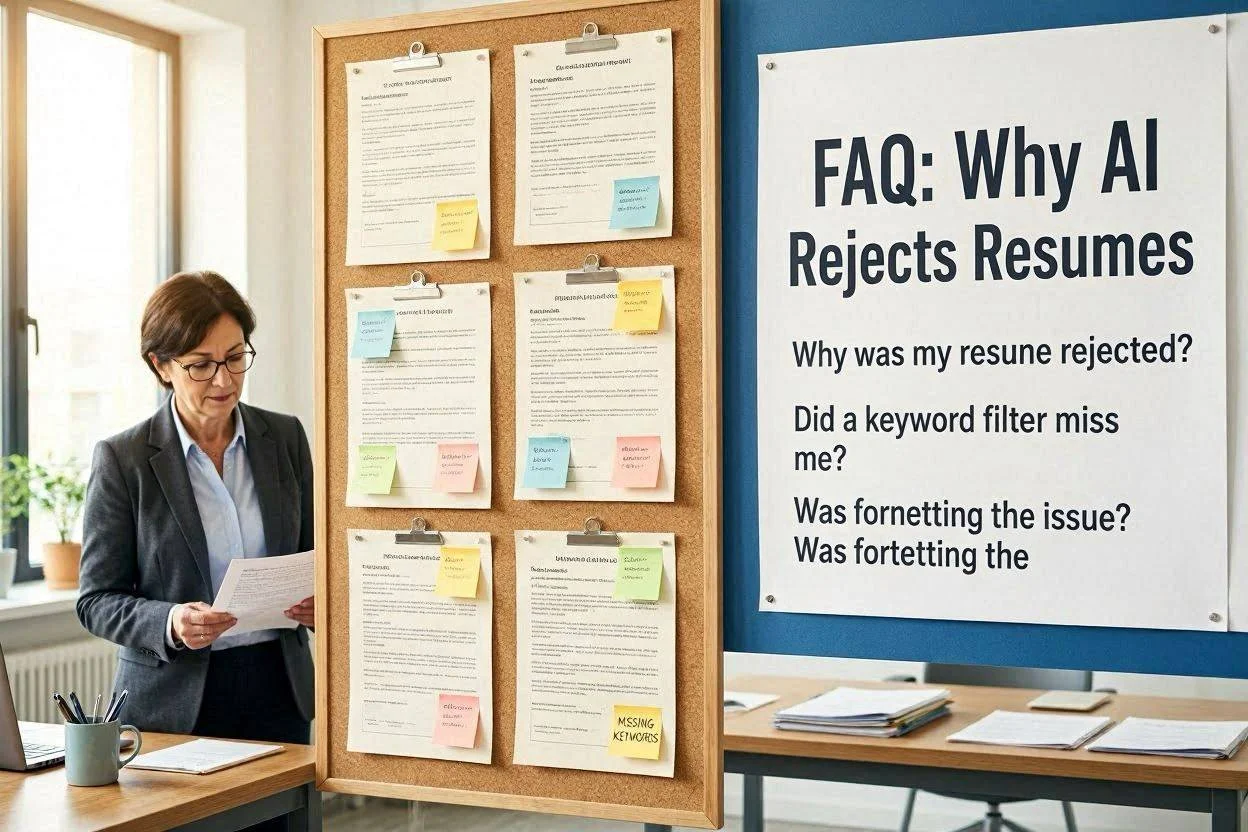
FAQ: More Burning Questions About Why AI Rejects Resumes
How can I tell if my resume is AI-friendly?
Run your resume through an ATS resume checker or use job description comparison tools. Make sure it’s simple, keyword-rich, and in a universally readable format. Avoid graphics and special columns. If you can easily copy-paste the text into a plain document, that’s a good sign your resume will be read correctly by automated systems.
What are the worst mistakes to avoid in an AI resume?
The biggest mistakes are ignoring keywords from the job description, using fancy formatting, and forgetting to quantify achievements. Avoid inconsistent dates, unexplained gaps, and generic descriptors like “hardworking employee”—these don’t show value to AI.
Is it worth using a professional resume writing service for AI screening?
If you’re lost or have been repeatedly rejected by ATS, an expert can be a good investment. Choose services that specialize in AI resume optimization and provide personalized advice. However, always review their work for authenticity and accuracy—it’s your story, after all!
How often should I update my keywords when job searching?
Update your keywords every time you apply for a new position. Tailor your resume for each job description, as requirements and phrasing change from role to role. Staying current increases your chances of catching the algorithm’s attention.
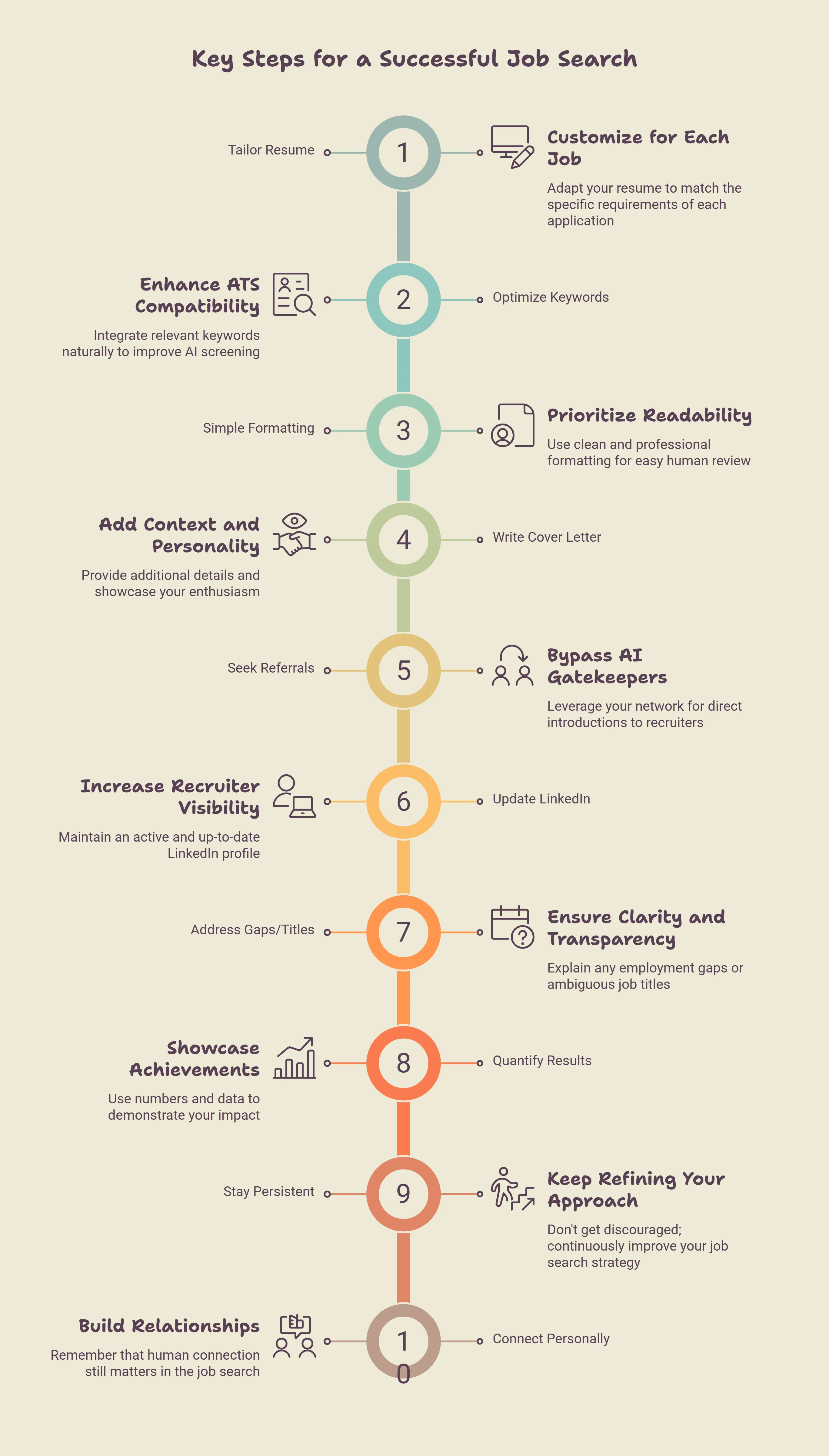
10 Key Takeaways to Remember When AI Rejects Resumes
Always tailor your resume to the job description.
Optimize keywords but keep your language natural.
Simple formatting beats fancy graphics every time.
Cover letters can add vital context for human reviewers.
Employee referrals can bypass the AI gatekeeper.
Keep your LinkedIn up to date for recruiter visibility.
Avoid unexplained gaps or ambiguous titles.
Numbers and results matter—show them off.
Don’t get discouraged—keep refining your approach.
AI is a tool, not a judge. Personal connection still counts!
Ready to take control of your job search?
Explore more of our TechLife adventures at: ITCertificationJump.com
Conclusion
Remember, AI rejects resumes for reasons you can overcome. Stay strategic, stay yourself—and don’t be afraid to network your way past the robots!
If you’re interested in taking a more holistic approach to your career and well-being, consider exploring the resources available at the NC Wellness Hub. Their platform goes beyond generic health and wellness tips, offering insights into personal development, workplace wellness, and strategies for thriving in today’s fast-changing professional landscape.
By integrating wellness and career growth, you can position yourself for long-term success—both in navigating AI-driven hiring and in building a fulfilling, resilient career. Discover new perspectives and actionable advice to support your journey.




Write A Comment