

By Linda Foster | Business & Finance Correspondent, Stratalyst Media Network | View Profile
While most landowners are busy depreciating the steel in their sheds, the most valuable tax asset they own is likely buried six inches beneath their boots.
For decades, the IRS treated soil as an undepreciable part of the land—a static asset that provided no immediate tax relief. However, IRS Section 180 has quietly turned the traditional agricultural balance sheet on its head. By classifying 'excess residual fertility' as an immediate business expense rather than a long-term capital investment, proactive landowners can now unlock deductions worth up to $2,000 per acre. If you have purchased or inherited farmland in the last decade, you aren’t just sitting on dirt; you’re sitting on a high-yield tax strategy that most CPAs are leaving on the table.
The Hidden Asset: Unlocking Excess Residual Fertility Under Section 180
Did you know that beneath your fields lies an untapped tax asset worth up to $2,000 per acre? While most landowners focus on depreciating barns or tractors, IRS Section 180 reveals that your soil’s fertility can qualify for a substantial, immediate tax deduction—potentially saving thousands each year. This “hidden asset” could mean the difference between leaving money on the table and supercharging your farm’s tax return.

"Most farms miss out on thousands in quick deductions by only focusing on above-ground assets—soil fertility is a goldmine beneath their feet."
Beneath the Surface: Why IRS Section 180 Is a Hidden Asset for Landowners
For generations, tax deductions on farms concentrated solely on above-ground structures—barns, tractors, and fencing—while overlooking what many now consider their greatest hidden asset: soil fertility. With IRS Section 180, landowners engaged in the business of farming can elect to treat the proven nutrient value held in their soil as an immediate tax deduction, rather than merely a long-term asset in their capital account. This means qualifying land—if acquired or inherited within the last 10 years—could create real-time, powerful tax savings each taxable year, simply by documenting “excess residual fertility. ”
Why is this so significant? Because soil and water conservation—and specifically, soil fertility—are now officially recognized in the internal revenue code. While fertilizers applied during annual crop production count as a routine expense, the pre-existing fertility already present in your field on day one can be treated under Section 180 for an outright deduction. Ignoring this IRS Section 180 opportunity, as many CPAs and farmers still do, amounts to overlooking a key strategy for locking in tax deductions early—and maximizing your bottom line now, instead of over decades.
From Dirt to Immediate Tax Deduction
When acquiring or inheriting farmland, most owners see the investment above the ground—crops, outbuildings, machinery—but rarely appreciate that a deep, independently-verified soil test could generate a tax deduction rivaling the value of the equipment itself. The IRS acknowledges that, where excess residual fertility above baseline is documented following a grid-based sampling protocol, landowners are eligible to immediately deduct this asset, turning an invisible benefit into financial reality. If you’ve purchased or inherited productive land in the past decade, your soil’s residual fertility may translate into major tax savings this tax return season.
Recognizing the business value of your soil as a depreciable asset aligns with modern agricultural best practices and the IRS’s evolving approach to asset classification. This means a one-time soil survey, performed according to Section 180 requirements, could reveal profit lying literally beneath your boots—delivering both a smarter tax strategy and a new appreciation for the business of farming.
Understanding the nuances of IRS Section 180 is crucial, but it’s equally important to see how the deduction for excess residual fertility is calculated and documented in practice. For a deeper dive into the specifics of qualifying for and substantiating this deduction, explore the detailed guidance on IRS Section 180: Excess Residual Fertility Deduction and learn how to maximize your claim with confidence.
What You'll Learn about IRS Section 180 and Soil Tax Deductions
How IRS Section 180 transforms soil fertility into instant tax deductions
The compliance process and key requirements
Common mistakes to avoid
Real-world examples showing results
FAQs and next steps to claim your deduction
Breaking Down IRS Section 180: What Is It and Why Does It Matter?
IRS Section 180, a hidden gem in the Internal Revenue Code, empowers landowners engaged in farming to claim immediate tax deductions for soil and water conservation expenditures—including the often-overlooked value of robust soil fertility. Unlike classic capital assets (barns or tractors), IRS Section 180 focuses on non-tangible, below-the-surface property with measurable agronomic value. If your land was purchased—or inherited with a stepped-up basis—within the past ten years, you’re the primary candidate for unlocking these powerful tax benefits.
The purpose of IRS Section 180 is to incentivize stewardship while recognizing that acquiring land rich with nutrient reserves is as important as maintaining visible infrastructure. The deduction is neither automatic nor routine; it requires independent soil sampling that proves “excess residual fertility” beyond regional norms. When executed correctly, Section 180 allows for the deduction of covered soil fertility costs in the year of purchase, creating critical tax savings without the drawn-out timelines associated with traditional asset depreciation.
Inside the IRS Code: Section 180 in Focus

Section 180 of the IRS code specifically addresses tax deductions for “soil and water conservation expenditures. ” What sets this provision apart is its potential to let you deduct expenses associated with documented soil fertility immediately—without waiting years for depreciation schedules. According to the code, eligible landowners must be actively engaged in the business of farming, and only land used in farming qualifies. The expenditure is not about ongoing fertilizer application, but residual or “locked-in” fertility that exists at acquisition.
A notable feature is that Section 180 is not self-executing. Landowners must “elect to treat” these expenditures and clearly document their deduction on the tax return for the appropriate taxable year—usually the year of purchase. Eligibility depends on the property’s use and acquisition timeline, and on following specific compliance steps prescribed by law, including extensions if necessary.
The 10-Year Rule: Timing and Eligibility for Section 180
One of the most crucial elements for unlocking the Section 180 deduction is timing. The IRS stipulates that the deduction is available for land purchased or inherited with a stepped-up basis within the past ten taxable years. Any longer, and your eligibility may expire—a fact often missed by landowners who acquire property and wait too long to initiate cost segregation.
The ten-year window aligns with the IRS’s intent to offer the deduction to those who are genuinely bringing land into active agricultural production or who have recently transferred ownership within a family or an estate. Failing to meet this requirement might mean foregoing thousands in tax savings. The process to file an amended return is also available under certain conditions, provided that the application is made within the timeframe prescribed by law and including extensions. Engaging a tax advisor to evaluate the timing and documentation is often essential for compliance.
Grid-Based Soil Sampling: Meeting IRS Requirements Under Section 180
At the heart of Section 180 is stringent documentation. The IRS requires that any claimed deduction for soil fertility must be supported by independent, grid-based soil testing. This protocol provides a verifiable, scientific assessment of residual nutrients—such as phosphorus, potassium, and organic matter—across a representative sample of your fields. Piecemeal, non-grid samples or tests completed by unqualified personnel typically do not meet IRS standards and could jeopardize your deduction on audit.
"A qualified, grid-sampled soil test is not optional—it’s your ticket to unlocking the Section 180 tax deduction."
Meeting IRS protocol also often means hiring an independent soil consultant (not just your farm advisor or crop input supplier). These professionals generate a report showing documented “excess residual fertility” above the regional baseline. Without this, IRS Section 180 deductions for soil and water conservation are at risk of disqualification, leaving valuable tax benefits unclaimed. Investing upfront in rigorous, compliant testing is a best practice landowners can’t afford to ignore.
Turning Soil Fertility into a Tax Deduction: How Section 180 Works
IRS Section 180 recognizes that soils rich in nutrients and residual fertility represent a bona fide, monetizable business asset for landowners. Instead of treating pre-existing soil fertility as simply part of your capital account at acquisition, the IRS allows you to deduct expenses tied to “excess residual fertility” that meets or exceeds local agronomic norms. Rather than count as a depreciable asset, the value can now be written off immediately in the year of qualifying land acquisition—a compelling tax benefit for proactive operators.
The IRS Section 180 deduction process starts with a proper soil fertility assessment, which must be both scientifically rigorous and independently verified. Once documented, the value of “excess” phosphorus, potassium, and organic matter—beyond what would be considered average—forms the basis for your Section 180 deduction. This approach turns what was once invisible into a line-item tax benefit, improving cash flow and freeing up resources for reinvestment or future conservation expenditures.
Understanding Residual Fertility and Soil Fertility Assessment
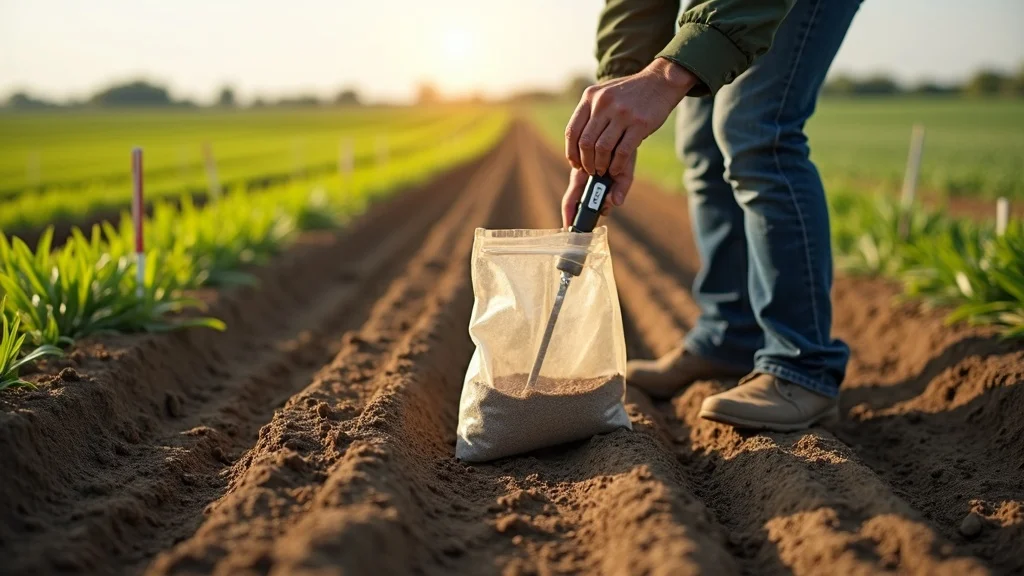
Residual fertility refers to the nutrient reserves—such as phosphorus, potassium, and organic content—already present in the soil at the time of land transfer or acquisition. Unlike annual inputs, this existing asset can be quantified, monetized, and immediately deducted under the guidance of IRS Section 180, given proper sampling and reporting protocols. Accurate assessment matters: only nutrients proven through grid sampling and expert analysis can form the basis of your deduction.
The assessment often involves dividing fields into scientifically determined grids and collecting soil samples from each location. This ensures a representative and legally defensible profile of residual fertility. Standard grid sizes might range from 2. 5 to 5 acres, but the exact methodology should be agreed upon with your independent soil consultant, who is familiar with the nuances of the revenue code and IRS expectations for documentation. The end goal: a detailed soil report ready to support your claim for an immediate tax deduction.
Soil and Water Conservation: How Section 180 Recognizes Agronomic Value
IRS Section 180 is unique among IRS provisions in specifically affirming the agronomic and economic value of soil and water conservation improvements. Instead of focusing solely on new construction or inputs, it provides a mechanism to formally recognize pre-existing strengths—such as fertile, nutrient-dense soils—brought onto your farm through new acquisition or inheritance. These “invisible” assets are now considered tax-deductible, vastly expanding the reach and impact of agricultural tax planning.
Improvements tied to soil and water conservation—including sustainable field drainage, erosion mitigation, and documented residual soil fertility—are explicitly acknowledged in the code. For landowners committed to maintaining or enhancing long-term productivity, Section 180 rewards good stewardship and careful recordkeeping with immediate, often sizable, tax savings. This is a forward-thinking approach, blending environmental and financial incentives in a way few other revenue code provisions can match.
Step-by-Step Guide to Documenting Soil and Water Improvements
Claiming your IRS Section 180 tax deduction isn’t as simple as presenting a receipt. To maximize compliance and audit-proof your tax position, follow this robust documentation process:
Engage a qualified, independent soil consultant to plan and supervise the sampling procedure.
Divide fields into scientifically valid grid sections based on acreage and cropping history.
Obtain representative soil samples from each grid, ensuring a broad, unbiased nutrient profile.
Analyze samples at an accredited laboratory for key fertility indicators (N, P, K, organic matter, micronutrients, and pH).
Produce a detailed report quantifying “excess residual fertility” against regional agronomic benchmarks.
Retain all supporting documentation—including GPS maps, lab analyses, and professional verification—to meet IRS standards.
Work with a knowledgeable tax advisor to properly account for and report the deduction on your tax return, conforming to the requirements prescribed by law.
Pro Tip: For a technical deep-dive into the specific agronomic benchmarks and IRS reporting requirements, read BirdDog’s Guide to IRS Section 180 and Excess Residual Fertility.
Comparison of Section 180 Deductions vs. Depreciation of Physical Assets (Barns, Tractors, etc.)
Asset Type |
Deduction Timing |
Typical Value per Acre |
IRS Section Applied |
Documentation Standard |
|---|---|---|---|---|
Soil Fertility (Section 180) |
Immediate (Year of Acquisition) |
$750 – $2,000 |
Section 180 |
Grid-Based Soil Sampling & Professional Report |
Barns, Tractors, Buildings |
Depreciated Over 5–30 Years |
Varies by Asset |
Section 179 / MACRS |
Purchase Invoice / Appraisal |
Common Mistakes and Misunderstandings about IRS Section 180

Overlooking the deduction for recent land purchases
Failing to use independent soil consultants
Not maintaining documentation compliant with IRS requirements
Misunderstandings around IRS Section 180 often center on the belief that only expenditures for visible improvements (like fencing or irrigation) count, or that all landowners can qualify regardless of acquisition year. In truth, Section 180 applies only to soil and water conservation expenditures related to “excess residual fertility” and only when rigorously documented shortly after purchase (or inheritance). Many landowners also risk deductions by employing non-independent consultants or by storing incomplete, disorganized paperwork—potentially nullifying their tax savings if audited. Being proactive and thorough from the beginning is the surest way to avoid costly mistakes.
Another pervasive error arises when landowners assume that grid sampling or independent verification is “extra,” rather than an essential IRS-mandated step. Without following the precise steps outlined in the law and retaining all supporting materials, the deduction could be denied or—as is all too common—never recognized at all, leaving significant tax benefits behind.
How to Comply and Maximize Your IRS Section 180 Tax Deduction
Maximizing your IRS Section 180 tax deduction requires more than just recognizing the opportunity: it demands precise compliance, expert collaboration, and advance planning focused on soil and water conservation. From the initial stages of grid-based sampling to the final step of reporting your deduction on the tax return, every move must be carefully documented, using qualified professionals where needed.
The process rewards those who treat soil fertility as a true business asset—engaged in the business of farming—with a strategy as proactive as any physical infrastructure investment. Leveraging experienced soil consultants alongside agricultural tax advisors ensures that the details of compliance—such as sampling methodology, lab certification, and documentation archiving—align perfectly with both IRS Section 180 and your larger farm management goals.
Essential Documentation: Grid Sampling Protocols for IRS Section 180
At the center of Section 180 compliance is the grid sampling protocol—a scientific process that divides your farm’s acreage into uniform grids, allowing for objective and defensible measurement of residual fertility. Key documentation includes:
Detailed GPS mapping of sampled areas
Chain-of-custody records for soil samples
Accredited lab analysis of each grid’s fertility
Comprehensive professional report comparing results to local agronomic norms
Signed attestation by the independent soil consultant
Each element of the documentation serves as proof in case of IRS review and may be requested as part of the audit process. Inadequate or incomplete records will almost certainly eliminate your eligibility for the deduction—even if residual fertility is present. Ensure everything is stored, organized, and ready for scrutiny before filing your claim.
Choosing Qualified Professionals: Soil Consultants & Tax Advisors
Selecting the right advisors is vital for success under IRS Section 180. Independent soil consultants bring agronomic expertise, credibility, and objectivity to the sampling and assessment process, removing conflict of interest concerns. Similarly, an agricultural tax advisor familiar with the internal revenue code will ensure that your documentation and reporting are ironclad and optimized for the maximum allowable deduction.
Engaging non-independent or poorly credentialed consultants is a common reason why Section 180 claims fail. The IRS is explicit in requiring independent expertise: reports must withstand scientific and regulatory scrutiny. Combining soil consultants’ fieldwork with a tax advisor’s deep understanding of capital accounts, deduction strategies, and IRS timelines gives you a competitive edge. Don’t leave your farm’s tax benefit to chance—invest in the best team to secure your rightful savings.
Checklist: IRS Section 180 Compliance Steps
Verify eligibility: Is your farmland acquired or inherited (with stepped-up basis) within the last 10 years?
Engage an independent soil consultant for a grid-based fertility survey
Collect and archive GPS maps, lab reports, consultant attestation
Work with a tax advisor to properly “elect to treat” these expenses according to IRS requirements
Submit deduction with supporting documentation in the taxable year of purchase or inheritance
Following this checklist transforms a technical, often-overlooked IRS Section 180 benefit into tangible tax deductions, placing your farm’s soil fertility alongside tractors, barns, and other visible business assets.
Section 180 in Action: Case Studies and Real-World Examples

Seeing Section 180 come to life on actual farms brings the benefit into sharp focus. From newly purchased land yielding thousands in deductions per acre, to legacy properties enjoying a stepped-up basis and immediate tax relief, these examples prove that below-ground assets can shape above-ground financial outcomes.
These successes hinge on following the right compliance steps and collaborating with professionals who understand both the science and the tax law. Let’s examine a couple of illustrative cases that spell out the Section 180 opportunity for today’s land stewards.
Example 1: Soil Fertility Deduction on a Recently Purchased Farm
Three years ago, a landowner acquired a well-managed, fertile 300-acre farm. Working with an independent soil consultant, he completed a grid-based survey that showed above-average phosphorus and potassium levels across the field. The consultant’s detailed report—benchmarked against local baselines—supported a qualifying Section 180 deduction of $1,500 per acre. Partnering with a seasoned tax advisor, the farmer was able to deduct the total from his tax return for the year of purchase, creating immediate tax savings that were reinvested into next year’s crop inputs and farm improvements.
Without awareness of Section 180, this asset would have gone unclaimed, added to the capital account, or poorly depreciated over decades. Instead, the deduction turned dormant fertility into liquid capital, driving both agronomic and financial performance.
Example 2: Inherited Land with Stepped-Up Basis and Section 180
A family inherited a 500-acre crop operation from a late relative, receiving a “stepped-up basis” for tax purposes. Realizing the potential of IRS Section 180, they commissioned a qualified soil consultant who discovered high levels of residual nutrients—substantially above the regional baseline. By documenting these values and engaging a tax professional versed in the revenue code, the inheritors claimed Section 180 deductions totaling over $800,000. These funds offset estate tax obligations and enabled the next generation to invest in advanced soil and water conservation technology, enhancing both farm profitability and sustainability.
This outcome underscores the hidden value of methodical planning and the importance of recognizing soil fertility not as “dirt”—but a core business asset in the tax code’s eyes.
People Also Ask: Answers to Top IRS Section 180 Questions
What is Section 180 of the IRS Code?
Section 180 is a provision in the IRS code that allows landowners to deduct the costs associated with soil and water conservation improvements, including documented excess soil fertility. This deduction typically applies to land purchased or inherited within the past 10 years and can range from $750 to $2,000 per acre, depending on proven fertility levels.
What are common misunderstandings about section 180?
Common misunderstandings include believing only physical improvements qualify, assuming all landowners are eligible regardless of timing, or neglecting the need for rigorous, grid-based soil sampling and independent consultant verification.
How can I comply with section 180?
Complying requires recent land acquisition (or inheritance with a stepped-up basis), performing grid-based soil sampling to document ‘excess residual fertility’, and engaging independent qualified professionals. All reports and documentation must meet IRS standards.
What are some section 180 examples?
Examples include a farm purchased five years ago undergoing a soil survey that documents high potassium and phosphorus, resulting in a $1,500/acre deduction; or inherited land with improved fertility levels above the regional baseline, documented for a substantial immediate write-off.
FAQs: IRS Section 180 and Soil Fertility Tax Deductions
Can all farms claim Section 180?
No. Eligibility is specific to landowners actively engaged in the business of farming who have purchased or inherited land (with a stepped-up basis) within the last 10 years. You must also meet rigorous IRS documentation standards to qualify.How do I initiate the grid-based soil sampling process?
You must hire an independent, accredited soil consultant. They will establish a scientific grid-based protocol, oversee field collection, and manage laboratory analysis to ensure the data is legally defensible and compliant with IRS specifications.What specific documentation does the IRS require for Section 180?
The To audit-proof your claim, you need:
1. GPS-stamped grid maps of the sampled areas.
2. Accredited lab analyses of nutrient levels.
3. Independent consultant attestations and reports.
4. Regional baseline comparisons proving "excess" fertility.Is there a strict deadline for claiming this deduction?
Yes. The "10-Year Rule" is critical. The deduction is typically available only for land acquired or inherited within the past ten taxable years. If you miss this window, the asset often reverts to your non-deductible capital account.Can dSection 180 be used alongside other agricultural tax credits?
Yes. Section 180 can often be integrated into a broader tax strategy including conservation easements or equipment depreciation. However, because agricultural tax law is complex, it is vital to coordinate with a specialized tax advisor.
Key Takeaways: The Soil Fertility Advantage
Instant Liquidity: Section 180 transforms invisible soil nutrients into an immediate, high-value tax deduction.
Compliance is King: Success relies on independent soil testing and professional "excess residual fertility" documentation.
The 10-Year Window: This is a time-sensitive opportunity for recent buyers or heirs to recover capital.
Competitive Edge: Utilizing Section 180 is an advanced wealth-management strategy that separates modern operators from traditional farmers.
Ready to Unlock your Land's Hidden Capital?
Stop treating your soil as "dirt" and start treating it as a high-performing business asset. Every year you wait is a year of potential tax savings left in the ground.
Calculate Your Section 180 Savings Now
Section 180 is only the beginning of modern land optimization. Whether you are looking for innovative stewardship, diversified income streams, or advanced cost-segregation strategies, your land has more to offer than just crop yield.
Explore the future of land ownership. Visit BirdDog’s Landowner Solutions to transform your acreage into a high-yield asset and ensure you’re capturing every financial advantage available in today's market. Access the BirdDog Landowner Portal to map your parcels.

This article was published in Tech Life Journal, as part of the Stratalyst Media Network.
Stratalyst Media is an independent publishing network focused on expert-driven reporting across business, technology, and industry-specific topics. Articles are developed through structured editorial processes designed to prioritize clarity, accuracy, and real-world applicability.
Learn more at StratalystMedia.com





Write A Comment